
Banner
Social Media Is A Faster Source For Unemployment Data Than Government

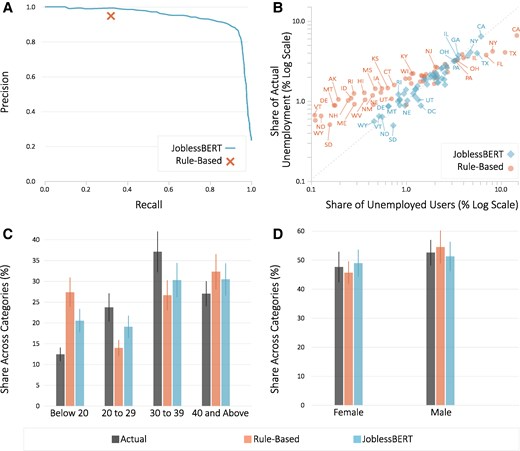
Government unemployment data today are what Nielsen TV ratings were decades ago - a flawed metric...

Gestational Diabetes Up 36% In The Last Decade - But Black Women Are Healthiest

Gestational diabetes, a form of glucose intolerance during pregnancy, occurs primarily in women...

Object-Based Processing: Numbers Confuse How We Perceive Spaces

Researchers recently studied the relationship between numerical information in our vision, and...

Males Are Genetically Wired To Beg Females For Food

Bees have the reputation of being incredibly organized and spending their days making sure our...

User picture.
News StaffRSS Feed of this column.

News Releases From All Over The World, Right To You... Read More »

Blogroll

After injury, even adult muscles can heal very well because they have a reserve supply of muscle stem cells, called satellite cells, which they can utilize for repair. Until now, it was unclear how this supply of satellite and muscle progenitor cells, out of which both muscle cells as well as satellite cells develop, keeps itself “fresh”. Developmental biologists Professor Carmen Birchmeier, Dr. Elena Vasyutina, and Diana Lenhard of the Max Delbrück Center for Molecular Medicine (MDC) Berlin-Buch, Germany, have now demonstrated that a molecular switch, abbreviated RBP-J, regulates this “fountain of youth”. If the switch is absent, the satellite cells generate muscle cells in an uncontrolled way, resulting in the depletion of the satellite cell reserves.

A group of European researchers has developed a spinal cord model of the salamander and implemented it in a novel amphibious salamander-like robot. The robot changes its speed and gait in response to simple electrical signals, suggesting that the distributed neural system in the spinal cord holds the key to vertebrates’ complex locomotor capabilities.


The EPFL Salamander Robot walks down to the waters of Lake Geneva. Credit: Photograph by A. Badertscher, courtesy Biologically Inspired Robotics Group, EPFL

ver wonder why some women seem to be more ill-tempered than others? University of Pittsburgh researchers have found that behaviors such as anger, hostility and aggression may be genetic, rooted in variations in a serotonin receptor gene. Indrani Halder, Ph.D., of the Cardiovascular Behavioral Medicine Program at the University of Pittsburgh, will present the findings today at the American Psychosomatic Society's Annual Meeting, held in Budapest, Hungary.

Previous studies have associated the hormone serotonin with anger and aggression in both humans and animals and have shown that increased serotonin activity is related to a decrease in angry and aggressive behaviors.

Several times a week, astronomers detect the violent death cry of a massive star -- an extraordinarily energetic release of gamma rays that takes place in just a matter of seconds to minutes, called a gamma-ray burst (GRB). The GRB's ejecta, which is thought to be beamed in narrow jets, slams into interstellar gas at near light speed. This violent collision shocks the material and produces a bright afterglow that can radiate brightly at X-ray and other wavelengths for several days, or even a few weeks.

Like a piece of chalk dissolving in vinegar, marine life with hard shells is in danger of being dissolved by increasing acidity in the oceans.

Ocean acidity is rising as sea water absorbs more carbon dioxide released into the atmosphere from power plants and automobiles. The higher acidity threatens marine life, including corals and shellfish, which may become extinct later this century from the chemical effects of carbon dioxide, even if the planet warms less than expected.

A new study by University of Illinois atmospheric scientist Atul Jain, graduate student Long Cao and Carnegie Institution scientist Ken Caldeira suggests that future changes in ocean acidification are largely independent of climate change.

Acrux announced positive results from its Phase 1 clinical studies
using two unique contraceptive skin sprays, each containing a progestin and an estrogen.

The first study was a Phase I, pharmacokinetic study, investigating the delivery of a formulation combining Nestorone® and the synthetic estrogen, Ethinyl Estradiol. A single dose of the combination formulation was applied to the forearm of healthy volunteers.

The results showed that the dosing of the contraceptive spray provided effective delivery of both contraceptive agents, with blood concentrations of Nestorone® and Ethinyl Estradiol in the target range expected to provide effective contraception.

The spray was well tolerated, with no serious adverse events recorded.




