Banner
Social Media Is A Faster Source For Unemployment Data Than Government

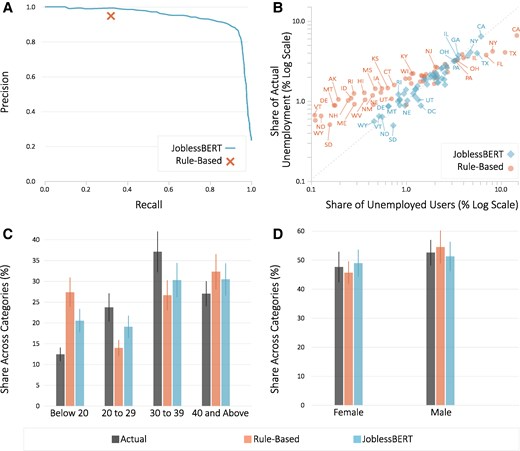
Government unemployment data today are what Nielsen TV ratings were decades ago - a flawed metric...
Gestational Diabetes Up 36% In The Last Decade - But Black Women Are Healthiest

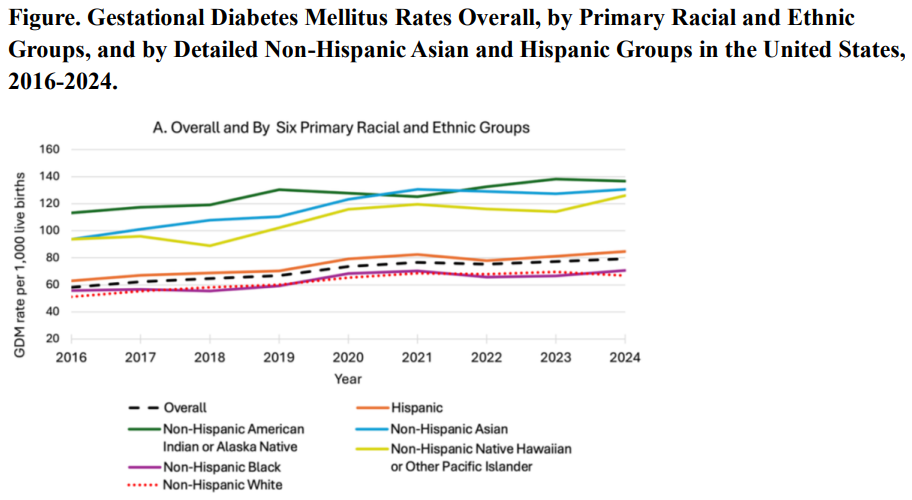
Gestational diabetes, a form of glucose intolerance during pregnancy, occurs primarily in women...

Object-Based Processing: Numbers Confuse How We Perceive Spaces

Researchers recently studied the relationship between numerical information in our vision, and...

Males Are Genetically Wired To Beg Females For Food

Bees have the reputation of being incredibly organized and spending their days making sure our...

User picture.
News StaffRSS Feed of this column.

News Releases From All Over The World, Right To You... Read More »

Blogroll

Humans acquired pubic lice from gorillas several million years ago, but this seemingly seedy connection does not mean that monkey business went on with the great apes, a new University of Florida study finds.

Rather than close encounters of the intimate kind, humans most likely got the gorilla's lice from sleeping in their nests or eating the giant apes, said David Reed, assistant curator of mammals at the Florida Museum of Natural History on the UF campus, one of the study's authors. The research is published in the current edition of the BMC Biology journal.

"It certainly wouldn't have to be what many people are going to immediately assume it might have been, and that is sexual intercourse occurring between humans and gorillas," he said.

Biofuels have been an increasingly hot topic on the discussion table in the last few years. In 2003 the European Union introduced a Directive suggesting that Member states should increase the share of biofuels in the energy used for transport to 2% by 2005 and 5.75% by 2010. In 2005 the target was not reached and it will probably not be reached in 2010 either (we are in 2006 at approximately 0.8%), but anyway the Directive showed the great interest that the European Commission places on biofuels as a way to solve many problems at once. The new European energy strategy, presented on 10th January 2007, establishes that biofuels should represent at least 10% of the energy used for transport.

The buildup of greenhouse gases in Earth’s atmosphere and oceans continues to provoke changes in the natural environment that scientists have been working to measure for decades. Global increases in temperature are just one facet of a much larger issue that scientists at the Rosenstiel School of Marine and Atmospheric Science are dedicated to uncovering. "The Marine Inorganic Carbon Cycle," a paper recently published in the journal Chemical Reviews, attempts to quantify over 60 years of research, reviewing a vast array of science that brings into question the Earth’s natural ability to rebound from the increase in inorganic carbon dioxide in the atmosphere and oceans.

Dr.

Americans in their early to mid-50s today report poorer health, more pain and more trouble doing everyday physical tasks than their older peers reported at the same age in years past, a recent analysis has shown.

So do baby boomers just complain more than their ancestors or are they actually worse off?

The research, published in print and online this week by the nonprofit National Bureau of Economic Research (NBER), was supported by the National Institute on Aging (NIA), a component of the National Institutes of Health.

The study was conducted by Beth J. Soldo, Ph.D., Olivia Mitchell, Ph.D., and John McCabe, Ph.D., of the University of Pennsylvania, and Rania Tfaily, Ph.D., of Carleton University, Ottawa, Ontario.

Researchers at Texas A&M University are shedding light on a rare form of early blindness, identifying the cells involved and paving the way for possible therapies to treat or even prevent what is currently an incurable disease.

The findings, funded by Fight for Sight and the National Institutes of Health, are published in the March 5-9 online Early Edition (EE) of the Proceedings of the National Academy of Sciences.

Since his post-doctoral days at Harvard University, Texas A&M biologist Dr. Brian Perkins has been studying protein transport within photoreceptors—the rod and cone cells that allow organisms to detect their visual worlds—in zebrafish, a vertebrate whose eye physiology is essentially identical to that of a human.

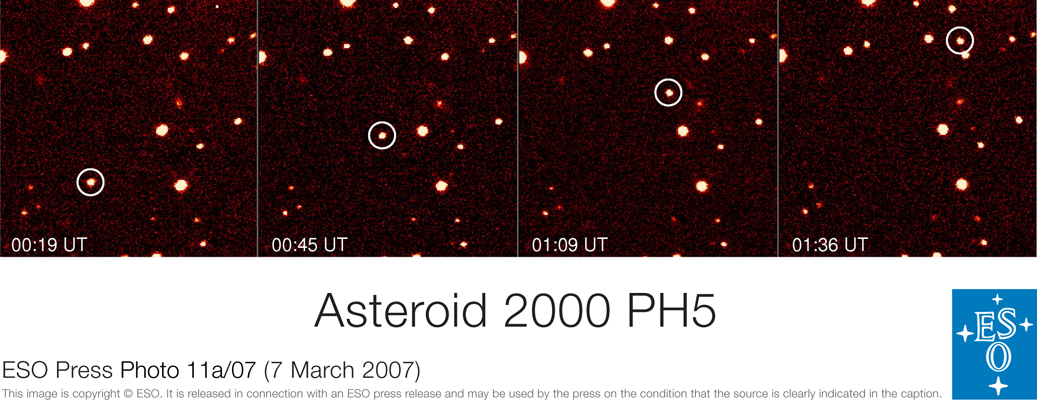
For the very first time, astronomers have witnessed the speeding up of an asteroid's rotation, and have shown that it is due to a theoretical effect predicted but never seen before. The international team of scientists used an armada of telescopes to discover that the asteroid's rotation period currently decreases by 1 millisecond every year, as a consequence of the heating of the asteroid's surface by the Sun.