Banner
Social Media Is A Faster Source For Unemployment Data Than Government

Government unemployment data today are what Nielsen TV ratings were decades ago - a flawed metric...

Gestational Diabetes Up 36% In The Last Decade - But Black Women Are Healthiest

Gestational diabetes, a form of glucose intolerance during pregnancy, occurs primarily in women...

Object-Based Processing: Numbers Confuse How We Perceive Spaces

Researchers recently studied the relationship between numerical information in our vision, and...

Males Are Genetically Wired To Beg Females For Food

Bees have the reputation of being incredibly organized and spending their days making sure our...

User picture.
News StaffRSS Feed of this column.

News Releases From All Over The World, Right To You... Read More »

Blogroll

A drug commonly taken to prevent seizures in epilepsy may surprisingly protect the eyesight of people with multiple sclerosis (MS), according to a study released today that will be presented at the American Academy of Neurology's 67th Annual Meeting in Washington, DC, April 18 to 25, 2015.

For the study, the researchers randomly selected 86 people with acute optic neuritis within two weeks of having symptoms to receive either the epilepsy drug phenytoin or a placebo for three months. The researchers then used medical imaging to measure the thickness of the retina, the light sensitive nerve layer at the back of the eye at the beginning of the study and then six months later. Each patient's eyesight (including sharpness and color perception) was also tested. 

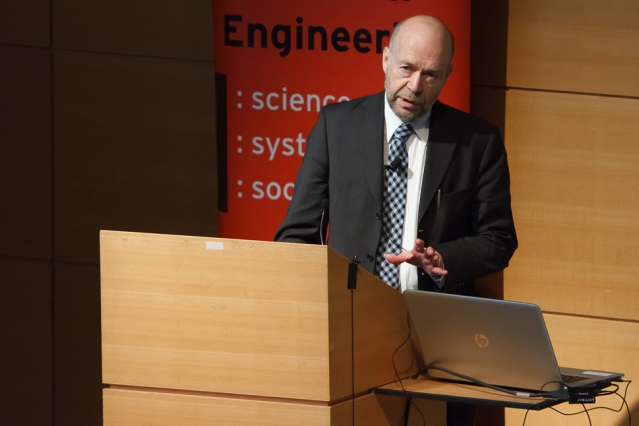
James Hansen, a former head of NASA’s Goddard Institute for Space Studies who was one of the first scientists to raise concerns about global climate change, spoke at MIT Tuesday in the biennial David J. Rose Lecture, sponsored by the Department of Nuclear Science and Engineering (NSE).

 Hansen came to prominence in the late 1980s, when he first testified before Congress about the perils of accumulating carbon dioxide in the atmosphere.
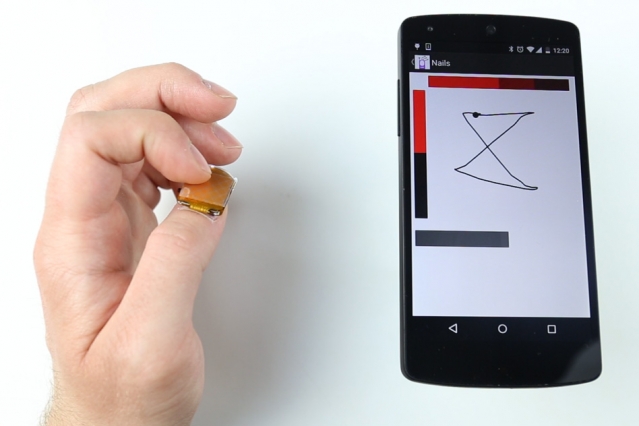
A new wearable device turns the user’s thumbnail into a miniature wireless track pad, which could let users control wireless devices when their hands are full or enable subtle communication in circumstances that require it, such as sending a quick text to a child while attending an important meeting.

Next week at the Association for Computing Machinery’s Computer-Human Interaction conference in Seoul, MIT researchers will describe the prototype of NailO.

Using technology like tablets in schools has turned into a heated political debate. Los Angeles infamously spent $1.3 billion on a program to give iPads to each student, a program that has been plagued with problems.

In the United Kingdom, the head of the National Association of Head Teachers claimed he was dubious about using tech as a teaching aid in non-IT classes. 

Neuroscientists say the brain hormone oxytocin acts on individual brain cells to prompt specific social behaviors. 

Until now, oxytocin - the "love" hormone - has been linked to sexual attraction and things like regulating breast feeding and promoting maternal-infant bonding, but its precise effect in social behaviors is not known.

Uninsured cancer patients are asked to pay anywhere from 2 to 43 times what Medicare would pay for chemotherapy drugs, according to a new paper. Uninsured patients who did not negotiate the billed amounts could expect to pay $6,711 for an infusion of the colorectal cancer drug oxaliplatin. However, Medicare and private health plans only pay $3,090 and $3,616 for the same drug, respectively.

Although uninsured cancer patients were asked to pay on average two times more than Medicare paid for expensive chemotherapy drugs, very high payment differences were seen for drugs that were quite inexpensive on Medicare. For example, carboplatin was estimated at $26 for one infusion with Medicare, but the estimate for uninsured patients was $1,124.