Banner
Social Media Is A Faster Source For Unemployment Data Than Government

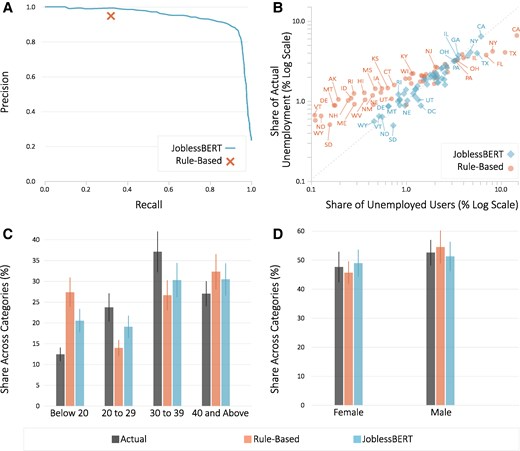
Government unemployment data today are what Nielsen TV ratings were decades ago - a flawed metric...

Gestational Diabetes Up 36% In The Last Decade - But Black Women Are Healthiest

Gestational diabetes, a form of glucose intolerance during pregnancy, occurs primarily in women...

Object-Based Processing: Numbers Confuse How We Perceive Spaces

Researchers recently studied the relationship between numerical information in our vision, and...

Males Are Genetically Wired To Beg Females For Food

Bees have the reputation of being incredibly organized and spending their days making sure our...

User picture.
News StaffRSS Feed of this column.

News Releases From All Over The World, Right To You... Read More »

Blogroll

A pair of air pollutants linked to climate change could also be a major contributor to the unparalleled rise in the number of people sneezing, sniffling and wheezing during allergy season. The gases, nitrogen dioxide and ground-level ozone, appear to provoke chemical changes in certain airborne allergens that could increase their potency. That, in combination with changes in global climate, could help explain why airborne allergies are becoming more common.

The findings will be presented today at the 249th National Meeting & Exposition of the American Chemical Society (ACS), the world's largest scientific society. The meeting features nearly 11,000 reports on new advances in science and other topics. It is being held here through Thursday.

A new study adds fuel to the already hot debate about whether electric vehicles are more environmentally friendly than conventional vehicles by uncovering two hidden benefits.

They show that the cool factor is real - in that electric vehicles emit significantly less heat. That difference could mitigate the urban heat island effect, the phenomenon that helps turn big cities like Beijing into pressure cookers in warm months.

Moreover, the cooling resulting from replacing all gas-powered vehicles with electric vehicles could mean city dwellers needing less air conditioning, another environmental win.

Scientists have grown the first 3-D mini lungs from stem cells, which means research is one step closer to being able to create one of the Big 5 organs from a patient's stem cells rather than having waiting lists for donors.

The University of Michigan scientists succeeded in growing structures resembling both the large proximal airways and the small distal airways.

Their recipe: 

Embryonic stem cells

Proteins involved in lung development

Growth factors

Inhibitors of intestine development

Growing media

Petri dish

Protein mixture

Method for "morphogenesis in a dish"

The marketing, prescribing and selling of testosterone and growth hormone as panaceas for age-related problems is disease mongering, write the authors of a paper in Journal of the American Geriatrics Society .

Disease mongering is inventing new broader definitions of disease in conjunction with widespread marketing to increase sales of specific drugs and therapies.
When we look at a known word, our brain sees it more like a picture than a series of letters needing to be processed, according to a new paper in the Journal of Neuroscience.

Neurons respond differently to real words, such as turf, than to nonsense words, such as turt, showing that a small area of the brain is "holistically tuned" to recognize complete words, says the study's senior author, Maximilian Riesenhuber, PhD, who leads the Georgetown University Medical Center Laboratory for Computational Cognitive Neuroscience. 

The brain learns words quickly by tuning neurons to respond to a complete word, not parts of it.  

Young children who received the 4CMenB vaccine as infants to protect against serogroup B meningococcal disease had waning immunity by age 5, even after receiving a booster at age 3 ½, according to new research in CMAJ (Canadian Medical Association Journal)

Serogroup B meningococcal disease is the leading cause of meningitis and blood infections in developed countries. Infants and young children under the age of 5 years are especially at risk, and there is a second peak of cases in the late teenage years.