Effective tuberculosis control in India needs political will and commitment. Unless this happens, TB will continue to be India's silent epidemic and a death sentence for poor people, warns consultant physician and public health specialist, Zarir Udwadia in BMJ.
20 years ago it was widely believed that India was successfully on its way to controlling its alarming tuberculosis (TB) epidemic yet India still has 2.2 million new cases and more than 300,000 deaths each year. Economic numbers are a guess at best but in the article he claims losses of $23 billion. At the heart of this crisis is the failure of India's Revised National Tuberculosis Control Program (RNTCP) to engage and monitor the country's large and unregulated private sector, argues Udwadia.
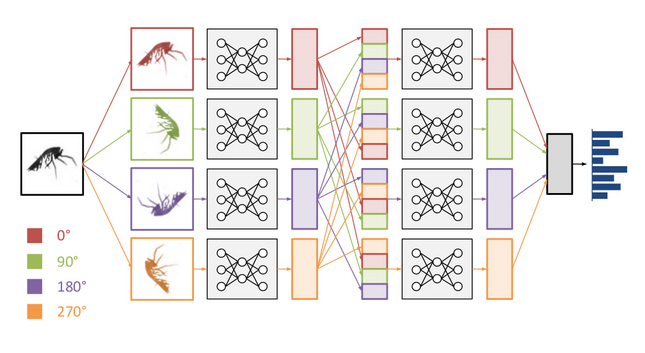
A team that developed an algorithm capable of automating the analysis of plankton populations – a critical step in measuring ocean health - has won the inaugural
National Data Science Bowl.
A 10 year project to observe and analyze regular data about ocean circulation and how it impacts on Britain’s climate has provided new insight into Atlantic Meridional Overturning Circulation (AMOC), a major system of currents in the North Atlantic.
10 years is too short a time to be meaningful but it is an important milestone. Since 2004, the project team has been monitoring the AMOC at 26.5N degrees, near where it carries its maximum heat, using instruments moored at 30 locations across the Atlantic between the Canary Islands and the Bahamas - so-called fixed arrays. The arrays’ instruments measure the temperature, salinity and pressure of the ocean, from which the AMOC’s strength and structure can be calculated.
We may have Jupiter to thank for our unusual solar system.
Before the inner planets we now call Mercury, Venus, Earth, and Mars formed, a great inward-and-then-outward journey that Jupiter made early in the solar system's history may have torn apart a number of super-Earths - planets larger than Earth but smaller than Neptune - and caused their giant remnants to fall into the sun billions of years ago.
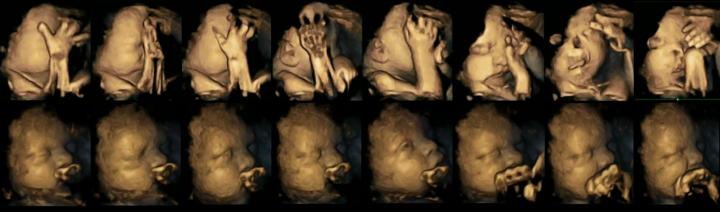
High-definition scans lead a team of researchers to conclude that the harmful effects of smoking during pregnancy may be reflected in the facial movements of mothers' unborn babies.
In the small pilot study, the scholars observed 4-d ultrasound scans and found that fetuses whose mothers were smokers showed a significantly higher rate of mouth movements than the normal declining rate of movements expected in a fetus during pregnancy. The researchers suggested that the reason for this might be that the fetal central nervous system, which controls movements in general and facial movements in particular did not develop at the same rate and in the same manner as in fetuses of mothers who did not smoke during pregnancy.
Latency is so ingrained into modern communication we almost forget about it but in live or recorded events, like performances or rehearsals over a long distance, it is crippling.
When recording a soundtrack over a pre-recorded base, the latency is perceptible to the human ear if a delay of 15-20 milliseconds occurs - the track seems displaced from the rest, giving the sense of being poorly played. To resolve displacement over long distances, elements such as sound capture, sound coding and decoding servers, intermediate network elements, lines of communication and the software used all must be factored in.


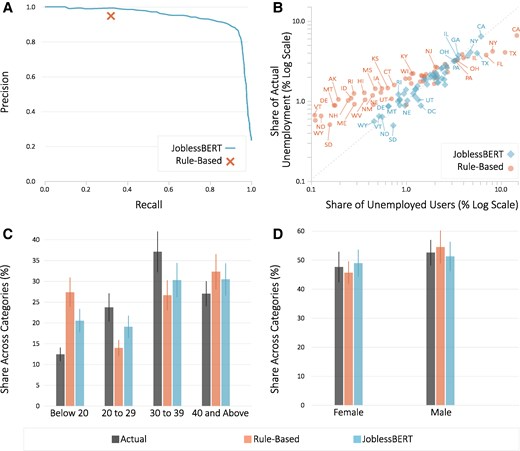 Social Media Is A Faster Source For Unemployment Data Than Government
 Gestational Diabetes Up 36% In The Last Decade - But Black Women Are Healthiest
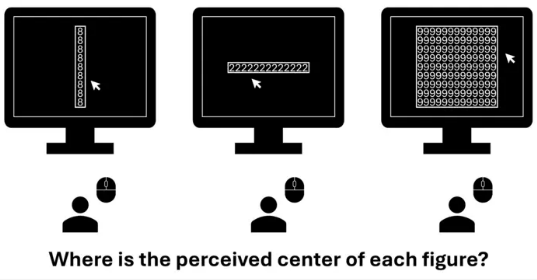 Object-Based Processing: Numbers Confuse How We Perceive Spaces
 Males Are Genetically Wired To Beg Females For Food