Banner
Social Media Is A Faster Source For Unemployment Data Than Government

Government unemployment data today are what Nielsen TV ratings were decades ago - a flawed metric...

Gestational Diabetes Up 36% In The Last Decade - But Black Women Are Healthiest

Gestational diabetes, a form of glucose intolerance during pregnancy, occurs primarily in women...

Object-Based Processing: Numbers Confuse How We Perceive Spaces

Researchers recently studied the relationship between numerical information in our vision, and...

Males Are Genetically Wired To Beg Females For Food

Bees have the reputation of being incredibly organized and spending their days making sure our...

User picture.
News StaffRSS Feed of this column.

News Releases From All Over The World, Right To You... Read More »

Blogroll
In parts of the country that do not have icebergs washing up on shore or falling from the sky, it is almost spring planting season. 

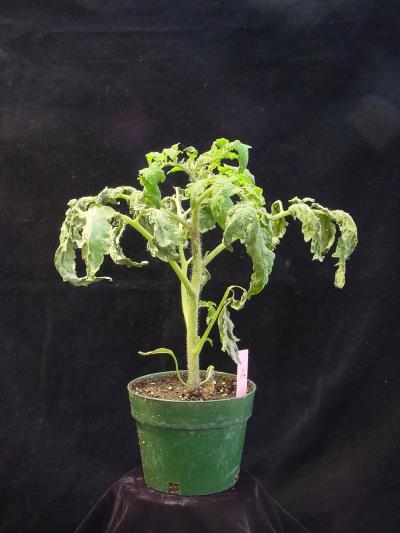
For tomatoes, that mean unless you use a toxic organic or synthetic chemical, there is a chance of bacterial infection, leading to stunted growth and less nutritional value. The discovery of new regulations of defense pathways for plants could lead to helping those home-grown tomatoes fight off certain bacteria better and even have implications for pear trees, roses, soybeans and rice.


Tomatoes infected with speck disease often have wilted leaves and damaged fruit. Credit: University of Missouri
A team of scientists have successfully transferred a receptor that recognizes bacteria from the model plant Arabidopsis thaliana, a dicot, to wheat, a monocot.

The receptor can trigger a defensive response and confers increased resistance to bacterial disease. The research findings demonstrate that the signaling pathways or circuitry downstream of the receptor are conserved between evolutionary distant monocots and dicots. 

A new paint makes robust self-cleaning surfaces and can be applied to clothes, paper, glass and steel and when combined with adhesives, maintains its self-cleaning properties after being wiped, scratched with a knife and scuffed with sandpaper.

Self-cleaning surfaces work by being extremely repellent to water but often stop working when they are damaged or exposed to oil. The new paint creates a more resilient surface that is resistant to everyday wear and tear, so could be used for a wide range of real-world applications from clothing and cars, say the researchers.

Bacteria that live on iron were found for the first time at three well-known vent sites along the Mid-Atlantic Ridge, one of the longest undersea mountain ranges in the world. Scientists report that these bacteria likely play an important role in deep-ocean iron cycling, and are dominant members of communities near and adjacent to sulfur-rich, black-smoker hydrothermal vents prevalent along the Mid-Atlantic Ridge.

The origin of life remains a mystery with more questions than answers. How were molecules created? How did they assemble into large structures? 

Among the conundrums, the "homochirality" phenomenon upon which amino acids and sugars form is particularly fascinating.  

The single-handedness of biological molecules has fascinated scientists since Pasteur first separated the enantiomorphic crystals of a tartrate salt more than 150 years ago because the homochirality of biological molecules is a signature of life.
Would you want to know if you or your children had risk of hereditary cancer, a genetic risk for cardiovascular disease or carried the gene associated with developing Alzheimer's disease - even if they were risks that wouldn't be relevant for possibly decades or didn't have a cure?

 Researchers used data from a cross-sectional online survey of a nationally-representative sample of the U.S. population that was conducted as part of the C.S. Mott Children's Hospital National Poll on Children's Health and found that 80 percent showed the same interest in genome sequencing for themselves as they did for their kids and 59 percent wanted to know if they had disease risks.