Banner
Why Antarctic Sea Ice Stopped Growing In 2015

Though numerical models and popular films like An Inconvenient Truth projected Arctic ice...
Wealth Correlated To Loneliness

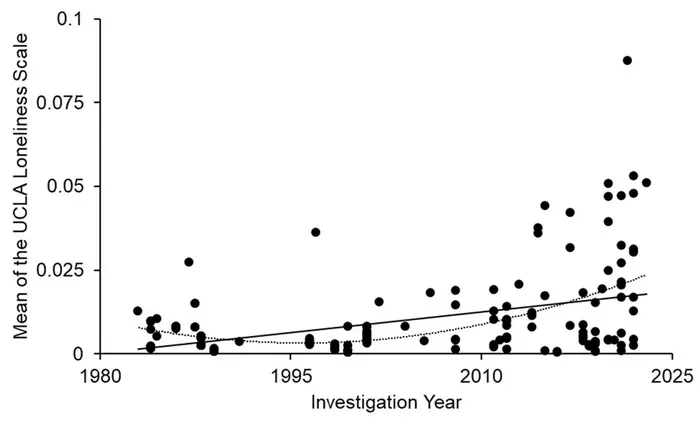
You may have read that Asian cultures respect the elderly more than Europe but Asian senior citizens...

Ousiometrics Analysis Says All Human Language Is Biased

A new tool drawing on billions of uses of more than 20,000 words and diverse real-world texts claims...

Wavelengths Of Light Are Why CO2 Cools The Upper Atmosphere But Warms Earth

There are concerns about projected warming on the Earth’s surface and in the lower atmosphere...

User picture.
News StaffRSS Feed of this column.

News Releases From All Over The World, Right To You... Read More »

Blogroll

Without antibodies we would be at the mercy of pathogens or cancer cells. Therapeutic antibodies are used as passive vaccines, for cancer therapy or for controlling autoimmune diseases such as multiple sclerosis. According to "bccresearch.com" the global market for antibody drugs was worth nearly 70 billion USD in 2014 and should rise to 122 billion USD until 2019.

Two thirds of those molecules are produced biotechnologically using Chinese hamster ovary cells (CHO). Actually the major cost factor for industry is purification using "protein A" affinity chromatography where tens of thousands of liters of culture volume have to be processed annually. About 80 % of the production costs fall upon purification.

Humans, worms and flies are all completely different organisms and yet we have a more or less common set of genes.

Given that similar DNA blueprint, how do species develop such vast differences in physical shape, size, and complexity?

One so-called "central dogma" of molecular biology says that genetic information passes faithfully from genomic DNA to messenger RNA to the synthesis of proteins but a new study finds that such information can be significantly altered along the way by a variety of means, including by precision "editing" at the RNA stage to fine-tune the type of proteins that will be produced. 

In diseases such as asthma and chronic obstructive pulmonary disease (COPD), the body produces too much mucus, making breathing difficult. New research from Washington University School of Medicine in St. Louis provides clues to potentially counteract inappropriate mucus production.

"The new study lays the groundwork for developing treatments for diseases such as asthma, COPD, cystic fibrosis and even certain cancers," said senior author Thomas J. Brett, PhD, assistant professor of medicine. "It also solves a 20-year mystery about the role of a protein that has long been associated with these diseases."

How does a mother transition genetic control to offspring early in development?

It's part of a larger mystery regarding how embryos regulate cell division and differentiation into new types of cells.

A new article in Cell provides some insight into the mechanism for this genetic hand-off, which happens within hours of fertilization, when the newly fertilized egg is a zygote.
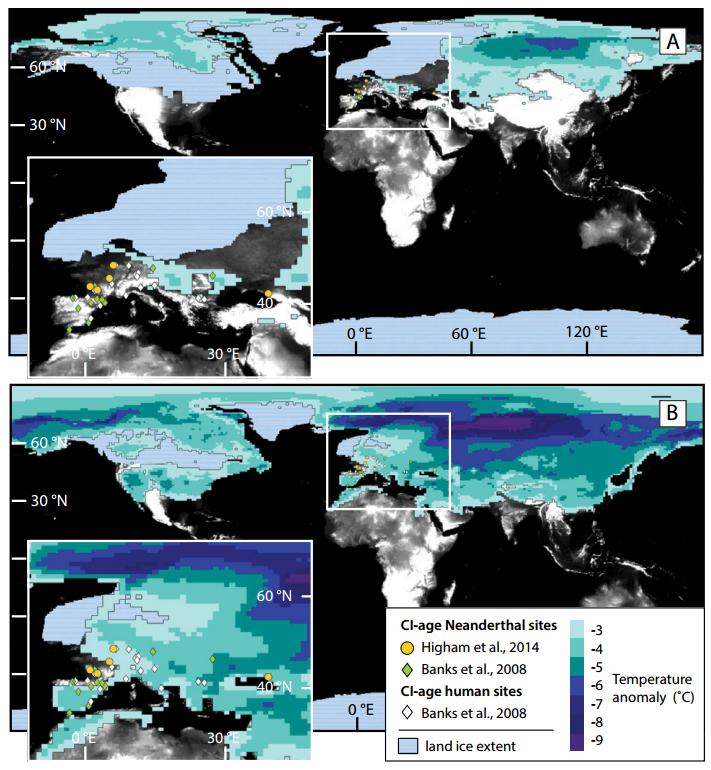
A new paper notes that the Campanian Ignimbrite eruption in Italy 40,000 years ago, one of the largest volcanic cataclysms in Europe and responsible for injecting a significant amount of sulfur-dioxide (SO2) into the stratosphere, coincided with the final decline of Neanderthals as well as with dramatic territorial and cultural advances among modern humans.  

Scientists have long debated if this eruption and the resulting volcanic sulfur cooling and acid deposition could have contributed to the final extinction of the Neanderthals more than climate change or hominin competition. 

A new paper tests this hypothesis using a climate model. 
The leading theory of what causes ice ages around the world -- changes in the way the Earth orbits the sun- has been cast into doubt by a new study.

The study raises questions about the Milankovitch theory of climate, which says the expansion and contraction of Northern Hemisphere continental ice sheets are influenced by cyclic fluctuations in solar radiation intensity due to wobbles in the Earth's orbit; those orbital fluctuations should have an opposite effect on Southern Hemisphere glaciers.