Banner
Why Antarctic Sea Ice Stopped Growing In 2015

Though numerical models and popular films like An Inconvenient Truth projected Arctic ice...

Wealth Correlated To Loneliness

You may have read that Asian cultures respect the elderly more than Europe but Asian senior citizens...

Ousiometrics Analysis Says All Human Language Is Biased

A new tool drawing on billions of uses of more than 20,000 words and diverse real-world texts claims...

Wavelengths Of Light Are Why CO2 Cools The Upper Atmosphere But Warms Earth

There are concerns about projected warming on the Earth’s surface and in the lower atmosphere...

User picture.
News StaffRSS Feed of this column.

News Releases From All Over The World, Right To You... Read More »

Blogroll

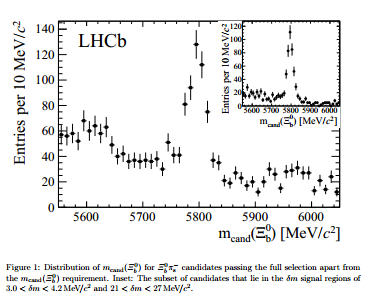
The LHCb experiment collaborators at the Large Hadron Collider have announced discovery of two new particles in the baryon family.

The particles, known as the Xi_b'- and Xi_b*-, were predicted to exist by the quark model but had never been seen before. A related particle, the Xi_b*0, was found by the CMS experiment at CERN in 2012. 

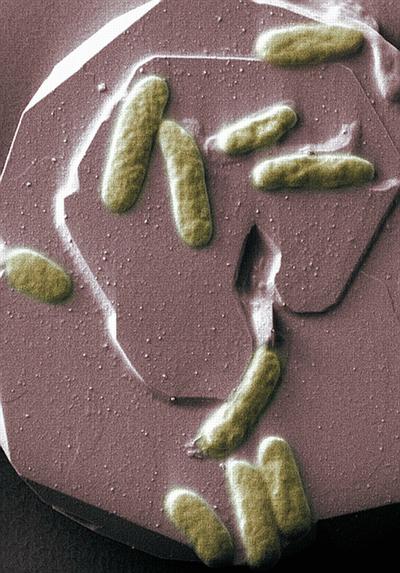
Bacteria are everywhere and so efforts to make cleaner energy using them are ongoing.

A report today shows how electrons hop across otherwise electrically insulated areas of bacterial proteins, and that the rate of electrical transfer is dependent on the orientation and proximity of these electrically conductive 'stepping stones'. It is hoped that this natural process can be used to create viable 'bio batteries' which could produce energy for portable technology such as mobile phones, tablets and laptops - powered by human or animal waste. So using your tablet on the toilet would then make even more sense.

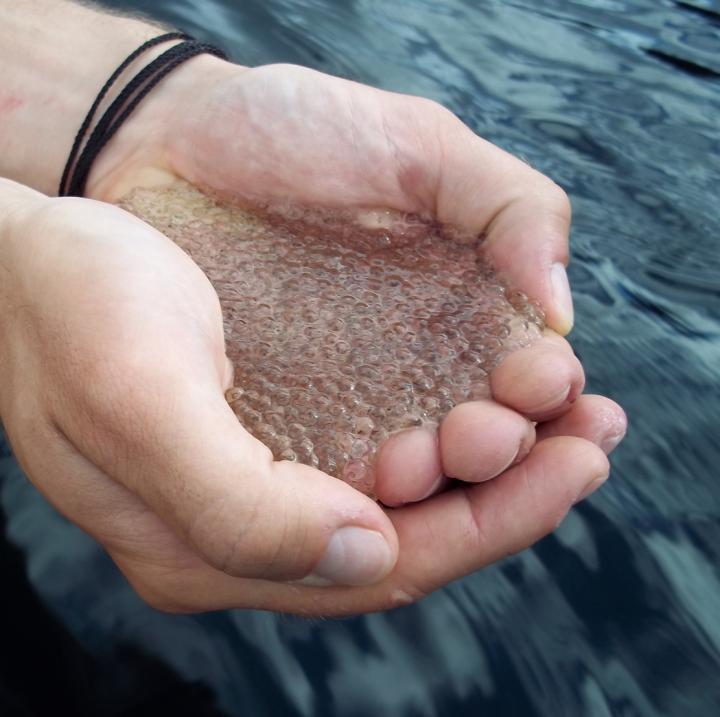
Historical acid deposits have greatly reduced calcium levels in Canadian lakes and that is dramatically impacting populations of calcium-rich plankton such as Daphnia - water fleas that dominate these ecosystems. 

It is commonly believed that one key issue in brain again is that it becomes less flexible - plastic - and that learning may therefore become more difficult.

A new study contradicts that and shows that plasticity did occur in seniors who learned a task well, it just occurred in a different part of the brain than in younger people.

When many older subjects learned a new visual task, the researchers found, they unexpectedly showed a significantly associated change in the white matter of the brain. White matter is the the brain's "wiring," or axons, sheathed in a material called myelin that can make transmission of signals more efficient. Younger learners, meanwhile, showed plasticity in the cortex, where neuroscientists expected to see it.

Scientists have found that seed dormancy, a property that prevents germination when conditions are not right, was present in the first seeds 360 million years ago.

Seed dormancy is a phenomenon that has intrigued naturalists for decades, since it conditions the dynamics of natural vegetation and agricultural cycles. There are several types of dormancy, and some of them are modulated by environmental conditions in more subtle ways than others.

In an article published in the New Phytologist journal, the scientists studied the evolution of dormancy in seeds using more than 14.000 species. 

Time is relative. What is a long time to humans is nothing to a mountain. Like humans, mountains usually burst on the scene, then they stand tall and finally age wears them down and their sharp features soften and they become grow shorter and rounder.

Not all mountains, though. The Gamburtsev Mountains in the middle of Antarctica look quite young for their age. Though the Gamburtsevs were discovered in the 1950s, they remained unexplored until government budget increases and few things left above ground to explore led scientists to fly ice-penetrating instruments over the mountains 60 years later.