Banner
Why Antarctic Sea Ice Stopped Growing In 2015

Though numerical models and popular films like An Inconvenient Truth projected Arctic ice...

Wealth Correlated To Loneliness

You may have read that Asian cultures respect the elderly more than Europe but Asian senior citizens...

Ousiometrics Analysis Says All Human Language Is Biased

A new tool drawing on billions of uses of more than 20,000 words and diverse real-world texts claims...

Wavelengths Of Light Are Why CO2 Cools The Upper Atmosphere But Warms Earth

There are concerns about projected warming on the Earth’s surface and in the lower atmosphere...

User picture.
News StaffRSS Feed of this column.

News Releases From All Over The World, Right To You... Read More »

Blogroll
Patients with Amyotrophic lateral sclerosis (ALS), commonly known as Lou Gehrig's Disease, have difficulty with action verbs: Why action verbs and not regular verbs or nouns? 

According to some papers, the fact that ALS patients experience it isn't the actual severe motor deficits of the disease, the greater linguistic difficulty with verbs denoting action compared to nouns depends on the motor deficit.

The motor system plays a role in the semantic encoding of action verbs? Real or spurious correlations? A new tested this hypothesis and their conclusion suggests a major role for the “executive function”.

In the NFL, teams share revenue from national television contracts and to sell local tickets, if a team has not sold at least to a specific threshold, the game is blacked out locally. If enough people are attending, the game is shown to fans in the region

That appeals to 'hometown' fans. One satellite network shows all games to its package subscribers but otherwise fans are only going to see their local team. If they don't have one, they see something nearby. It is a rule and there is no choice.

In the modern mobile population, that may not be a wise strategy. Fans no longer live within an hour of where they grew up and a new paper finds that choosing to broadcast the local team isn't always the smartest ratings decision. Writing in 

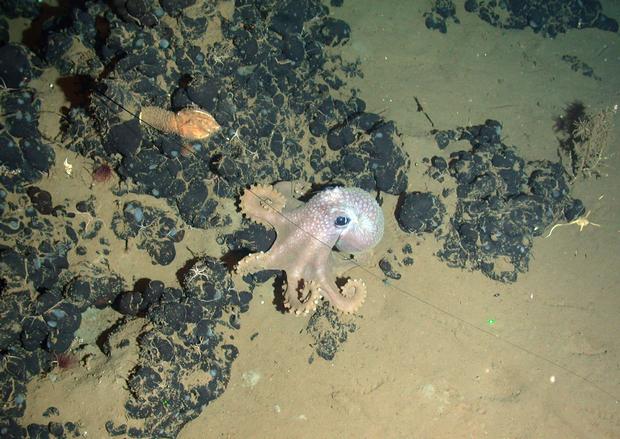
Over a mile beneath the West African ocean, off the coast of Angola, are over 2,000 mounds of asphalt containing a wealth of deep-water creatures.

A paper in Deep-Sea Research 1 examined the images and data captured at the site to build an intriguing picture of the life and geology of this underwater area. The naturally-occurring asphalt mounds are made up of the same substance that covers our roads. They range in size from single football-sized blobs to small hills several hundred meters across.

What is the best way to learn a dance sequence?

Professional dancers make it look easy. A choreographer rattles off a long list of moves, kicks and turns and the dancers somehow remember it all. But what about the rest of us who will be hitting the club this weekend?

Researchers from Bielefeld University and the Palucca University of Dance in Dresden are here to help. They  researched whether dancers learn a dance sequence better by seeing or by listening, that is, if a dance instructor first demonstrates the sequence, or if he or she first gives a spoken explanation.

An experiment with 42 people under functional magnetic resonance imaging (fMRI) found that if people see pictures of others being loved and cared for, it subsequently reduces
the brain's threat monitor, the amygdala,
 response to threats. 

This occurred even if the person was not paying attention to the content of the first pictures.

The study in Social, Cognitive and Affective Neuroscience, suggests that being reminded of being loved and cared for dampens the threat response and may allow more effective functioning during, and activation of soothing resources after, stressful situations. This was particularly true for more anxious individuals.

In World War II, did people with bird feeders have substantially different chirping friends than we see today?

Probably not, but a group of researchers warns than 2075 might look a lot less like then, or even 1975, or today. The distribution of birds in the United States could change a lot.

A new U.S. Geological Survey study in PLOS ONE predicts where 50 bird species will breed, feed and live in the conterminous U.S. by 2075. While some types of birds, like the Baird's sparrow, could lose a significant amount of their current U.S. range, other ranges could nearly double.