Banner
Why Antarctic Sea Ice Stopped Growing In 2015

Though numerical models and popular films like An Inconvenient Truth projected Arctic ice...

Wealth Correlated To Loneliness

You may have read that Asian cultures respect the elderly more than Europe but Asian senior citizens...

Ousiometrics Analysis Says All Human Language Is Biased

A new tool drawing on billions of uses of more than 20,000 words and diverse real-world texts claims...

Wavelengths Of Light Are Why CO2 Cools The Upper Atmosphere But Warms Earth

There are concerns about projected warming on the Earth’s surface and in the lower atmosphere...

User picture.
News StaffRSS Feed of this column.

News Releases From All Over The World, Right To You... Read More »

Blogroll
A team of scholars say genetic markers that may help in identifying individuals who could benefit from the alcoholism treatment drug acamprosate - patients carrying these genetic variants have longer periods of abstinence during the first three months of acamprosate treatment.

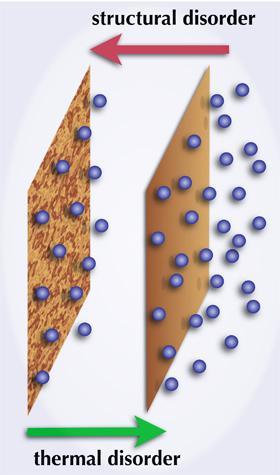
It's common sense that if you have ne mess and add another mess, you have created an even bigger mess.

But in arcane statistics, economics and social science, a bigger mess can lead to more order - a concept known as antifragility. 

In a paper published in The Journal of Chemical Physics, researchers found a counterintuitive interplay between two different types of disorder. One is thermodynamic disorder, or entropy. The other is the structural disorder—defects in an idealized system that can change its properties.

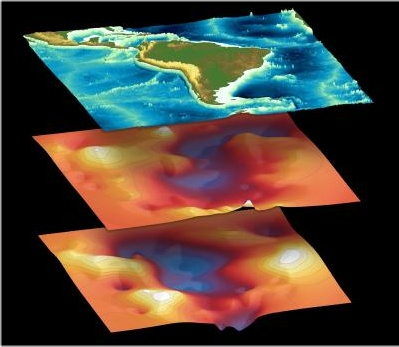
Tectonic plates, which make up the outer layer of the earth, are rigid. It is giant layers of rock, after all. But that is a bit of a simplification. They are not rigid and don't fit together as nicely as we imagine, according to a new paper in Geology by Corné Kreemer, an associate professor at the University of Nevada, Reno, and his colleague Richard Gordon of Rice University, which quantifies deformation of the Pacific plate and challenges the central approximation of the plate tectonic paradigm that plates are rigid. 

There are a number of government-funded campaigns to promote more participation in Science, Technology, Engineering and Math (STEM) fields, with the promise that a PhD means basic discovery and improving the human condition.

Yet what is left out of expensive marketing efforts is that there are now 6 PhDs for every job in academia - just because more people want to work at a university does not mean the government will increase funding to pay for it.  Instead of selling STEM careers to students, the National Science Foundation would be doing a greater service by showing students that academia is a lot like the corporate world - you will have to compete to get ahead, otherwise you will be trapped in a low-end job in a lab forever.

It's hard to have our steak and eat it too. Red meat was once implicated in a wave of studies and linked to heart disease and other maladies, before being absolved.

But the microbiome and the surge in advertising for probiotics to promote 'healthy' gut bacteria has implicated red meat again - this time by correlating a nutrient that the authors say is changed by gut bacteria into an atherosclerosis-causing metabolite, which means hardening of the arteries.

There is concern about pollution, overfishing and even climate change when it comes to reduced wild fish populations.

Farmed fish is the obvious solution but critics have a response for that also - they contend that hatchery-raised fish won't be as well adapted to their new environments or that the wild population will be "tainted" by breeding with domesticated counterparts.