Banner
Why Antarctic Sea Ice Stopped Growing In 2015

Though numerical models and popular films like An Inconvenient Truth projected Arctic ice...

Wealth Correlated To Loneliness

You may have read that Asian cultures respect the elderly more than Europe but Asian senior citizens...

Ousiometrics Analysis Says All Human Language Is Biased

A new tool drawing on billions of uses of more than 20,000 words and diverse real-world texts claims...

Wavelengths Of Light Are Why CO2 Cools The Upper Atmosphere But Warms Earth

There are concerns about projected warming on the Earth’s surface and in the lower atmosphere...

User picture.
News StaffRSS Feed of this column.

News Releases From All Over The World, Right To You... Read More »

Blogroll
The Royal Swedish Academy of Sciences has awarded the 2014 Nobel Prize in Chemistry to Eric Betzig of Janelia Research Campus, Howard Hughes Medical Institute, Stefan W. Hell of the 
Max Planck Institute for Biophysical Chemistry and William E. Moerner of Stanford University “for the development of super-resolved fluorescence microscopy”.

Optical microscopy was once held back by a limitation: that it could never obtain a better resolution than half the wavelength of light. Helped by fluorescent molecules the Nobel Laureates in Chemistry 2014 ingeniously circumvented this limitation and brought optical microscopy into the nanodimension.

Pre-school kids have a lot to learn. They often don't even know how to tie their shoelaces or count to 100. But that is an applications issue. When it comes to skepticism, even kids at age 5 show critical thinking skills. 

A new study published in PLOS ONE finds that by the age of five, children become wary of information provided by people who make overly confident claims. 

Dr. Patricia Brosseau-Liard, a
Concordia University
postdoctoral fellow, recruited 96 four- and five-year-olds and then with University of British Columbia psychologists Tracy Cassels and Susan Birch had the youngsters weigh two important cues to a person's credibility — prior accuracy and confidence — when deciding what to believe. 

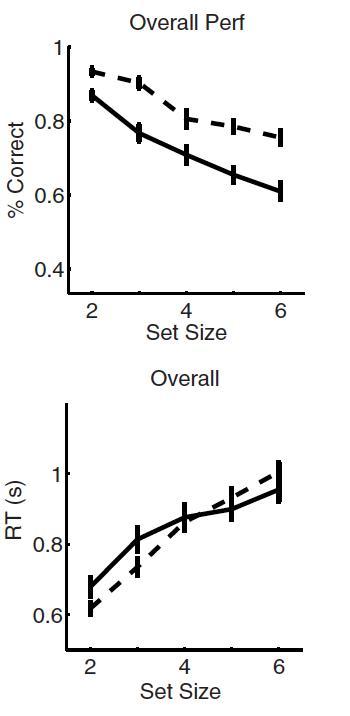
A new study has pinpointed working memory as a cause of learning difficulties in people with schizophrenia.

Working memory is known to be affected in 1 percent of the population who have schizophrenia, but it has been unclear whether that has a specific role in making learning more difficult, said Brown University postdoctoral researcher Anne Collins, lead author of the paper
in the Journal of Neuroscience

Though numerous experts and policy makers have called for hospitals to screen patients for methicillin-resistant Staphylococcus aureus (MRSA) infections and isolate anyone testing positive to prevent the spread "Superbugs" in healthcare settings, it's too economically burdensome.
 
Several states have enacted laws requiring patients be screened for MRSA upon admission but  two new abstracts, scheduled for presentation on Friday at IDWeek, the annual scientific meeting for infectious disease specialists, found universal MRSA screening and isolation of high-risk patients will help prevent MRSA infections but may be too economically burdensome for an individual hospital to adopt. 

Sauropods,  large, long-necked plant-eating dinosaurs such as Diplodocus and Brachiosaurus, are the largest animals to have ever walked the Earth, with the biggest weighing 80 tons.

Clearly, a single creature the size of 11 elephants would have needed vast amounts of food. How did multiple sauropod species live alongside one another in prehistoric ecosystems between 210 and 65 million years ago?

New research from the University of Bristol and the Natural History Museum, London details the community of the Late Jurassic Morrison Formation, a distinctive sequence of sedimentary rock in the western United States from which over 10 species of sauropod are known.

Researchers have created a molecule known as a peptide mimic that displays a functionally critical region of the virus that is universally conserved in all known species of Ebola. This new tool can be used as a drug target in the discovery of anti-Ebola agents that are effective against all known strains and likely future strains. 

Ebola is a lethal virus that causes severe hemorrhagic fever with a 50 percent to 90 percent mortality rate. There are five known species of the virus. Outbreaks have been occurring with increasing frequency in recent years, and an unprecedented and rapidly expanding Ebola outbreak is currently spreading through several countries in West Africa with devastating consequences.