Banner
Why Antarctic Sea Ice Stopped Growing In 2015

Though numerical models and popular films like An Inconvenient Truth projected Arctic ice...

Wealth Correlated To Loneliness

You may have read that Asian cultures respect the elderly more than Europe but Asian senior citizens...

Ousiometrics Analysis Says All Human Language Is Biased

A new tool drawing on billions of uses of more than 20,000 words and diverse real-world texts claims...

Wavelengths Of Light Are Why CO2 Cools The Upper Atmosphere But Warms Earth

There are concerns about projected warming on the Earth’s surface and in the lower atmosphere...

User picture.
News StaffRSS Feed of this column.

News Releases From All Over The World, Right To You... Read More »

Blogroll

A key indicator of how successfully one species of monkey will breed can be determined by skin color, a new study has shown. Skin coloration in male and female rhesus macaques is an inherited quality – the first example of heritability for a sexually-selected trait to be described in any mammal.

The team collected more than 250 facial images of free-ranging rhesus macaques, which are native to South, Central and Southeast Asia and which display red skin coloring around the face, as well as the genital and hind-quarter areas.

So much for patriarchy. When it comes to evolution, female populations have always been larger than male populations throughout human history, according to a new study in Investigative Genetics which used paternal genetic information to analyse the demographic history of males and females in worldwide populations.

Diabetes doubled in the U.S. from 1990 to 2008 and while it remains high, new data suggest at least it isn't continuing to rise across the board. Rates among adults from 2008 and 2012 for adults leveled among whites, though it continued to increase in Hispanic and black adults, according to a study in JAMA.

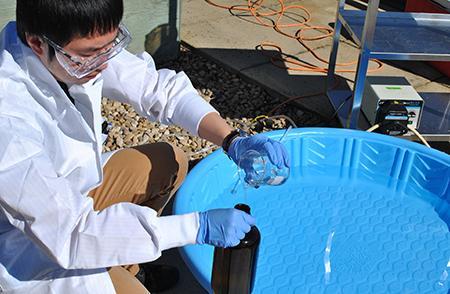
Civil engineering scholars have created a method that uses solar energy to accelerate pond reclamation efforts by industry and that means cleaning up oil sands tailings could be a lot greener.

Instead of using UV lamps as a light source to treat oil sands process affected water (OSPW) retained in tailings ponds, University of Alberta
 professors Mohamed Gamal El-Din and James Bolton have found that using the sunlight as a renewable energy source treats the wastewater just as efficiently but at a much lower cost. 

Oilsands tailings ponds contain a mixture of suspended solids, salts, and other dissolvable compounds like benzene, acids, and hydrocarbons. Typically, these tailings ponds take 20 plus years before they can be reclaimed.

Man has domesticated animals for almost long as man has domesticated crops. In both cases, humans have engaged in genetic modification, selecting the best traits possible.

Because of that legacy, livestock such as sheep offer an intriguing way to examine adaptation to climate change, with a genetic legacy of centuries of selected breeding and a wealth of livestock genome-wide data available. 

In a first-of-its kind study that combined molecular and environmental data, professor Meng-Hua Li et al., performed a search for genes under environmental selection from domesticated sheep breeds. 

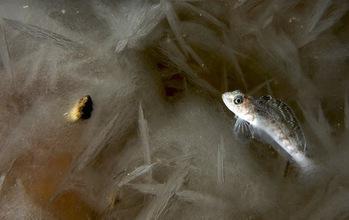
Five families of notothenioid fish inhabit the Southern Ocean, the frigid sea that encircles Antarctica, manufacture their own "antifreeze" proteins to survive.

Their ability to live in the icy seawater is so extraordinary that they make up more than 90 percent of the fish biomass of the region.
 They also suffer an unfortunate side effect: The protein-bound ice crystals that accumulate inside their bodies resist melting even when temperatures warm.