Banner
Why Antarctic Sea Ice Stopped Growing In 2015

Though numerical models and popular films like An Inconvenient Truth projected Arctic ice...

Wealth Correlated To Loneliness

You may have read that Asian cultures respect the elderly more than Europe but Asian senior citizens...

Ousiometrics Analysis Says All Human Language Is Biased

A new tool drawing on billions of uses of more than 20,000 words and diverse real-world texts claims...

Wavelengths Of Light Are Why CO2 Cools The Upper Atmosphere But Warms Earth

There are concerns about projected warming on the Earth’s surface and in the lower atmosphere...

User picture.
News StaffRSS Feed of this column.

News Releases From All Over The World, Right To You... Read More »

Blogroll

Researchers at Harvard School of Medicine and the University at Buffalo have discovered a sleep-promoting circuit located deep in the primitive brainstem, only the second "sleep node" identified in the mammalian brain whose activity appears to be both necessary and sufficient to produce deep sleep. 

Writing in Nature Neuroscience, the study demonstrates that fully half of all of the brain's sleep-promoting activity originates from the parafacial zone (PZ) in the brainstem. The brainstem is a primordial part of the brain that regulates basic functions necessary for survival, such as breathing, blood pressure, heart rate and body temperature.

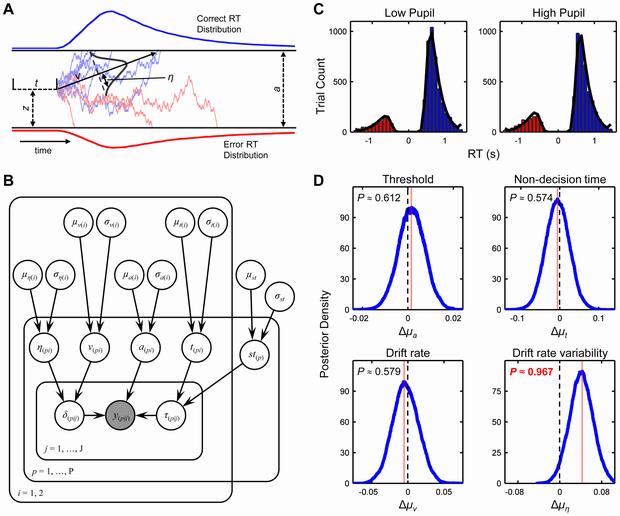
A new paper believes it can measure the precision with which people make decisions - by pupil size before they are presented with any information.

Spontaneous, moment-to-moment fluctuations in pupil size predicted how a selection of participants varied in their successful decision making. A larger pupil size indicated poorer upcoming task performance, due to more variability in the decisions made once the relevant information was presented. The authors also found that certain individuals who had the largest pupils overall also tended to be the least consistent in their decisions.

Investigators have announced discovery of a new molecule, the first of its kind, which allows for the multiplication of stem cells in a unit of cord blood. Umbilical cord blood contains adult stem cells used for transplants aimed at curing a number of blood-related diseases, including leukemia, myeloma and lymphoma.

For many patients this therapy comprises a treatment of last resort. 

Even a single dose of  the commonly prescribed antidepressant SSRI (serotonin reuptake inhibitor) is enough to produce dramatic changes in the functional architecture of the human brain. Brain scans taken of people before and after an acute dose of SSRI reveal changes in connectivity within three hours, according to results in Current Biology.

To fight leukemia, we have to fight on its terms, and that means understanding the nature of the fight for superiority between mutated genes and normal genes, according to a paper that investigated Acute Myeloid Leukemia to understand why leukemic cells are not able to develop normally into mature blood cells.

Stem cells in the bone marrow generate billions of different blood cells each day. The process resembles a production line with genes acting as regulators to control each step of the blood formation. Leukemia arises when the DNA encoding regulators in the stem cells is changed by a mutation. When a mutation occurs in the relevant regulator genes, the finely balanced order of the production line is disrupted with drastic consequences. 

Tropical rabbitfish have devastated algal forests in the eastern Mediterranean Sea and pose a major threat to the entire Mediterranean basin if their distribution continues to expand as the climate warms, according to a new study
in the Journal of Ecology.

The members of the team surveyed more than 1000 kilometers of coastline in Turkey and Greece, where two species of rabbitfish have become dominant since they moved into the region via the Suez Canal.