Banner
Why Antarctic Sea Ice Stopped Growing In 2015

Though numerical models and popular films like An Inconvenient Truth projected Arctic ice...

Wealth Correlated To Loneliness

You may have read that Asian cultures respect the elderly more than Europe but Asian senior citizens...

Ousiometrics Analysis Says All Human Language Is Biased

A new tool drawing on billions of uses of more than 20,000 words and diverse real-world texts claims...

Wavelengths Of Light Are Why CO2 Cools The Upper Atmosphere But Warms Earth

There are concerns about projected warming on the Earth’s surface and in the lower atmosphere...

User picture.
News StaffRSS Feed of this column.

News Releases From All Over The World, Right To You... Read More »

Blogroll
If you never care about Haiti until a hurricane hits, are you really altruistic or did you instead imagine how others will perceive your actions? Can altruism even exist or does it all come down to social exchange?

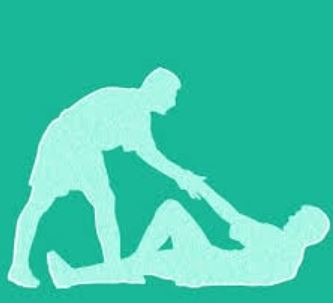
When people see someone in distress, neural pathways in the brain create facets of imagination that allow people to see the episode as it unfolds, finds a recent paper. That "episodic simulation", essentially the ability of individuals to re-organize memories from the past into a newly-imagined event simulated in the mindmay help them envision how to aid those in need.
Millennials, the first "Net Generation," say they can use many technologies simultaneously, masterfully switching from emails to instant messaging, app notifications, RSS feeds, and rants on Twitter much better than older generations.

Maybe they can. Generation Z certainly can.

A new study simulated a typical working environment, complete with technology interruptions, to allow scholars to track the effects on participants' inhibitory processes. College-age participants (naturally) totaling and a few other folks totaling 177 were divided into three groups: those who received IT interruptions; those who did not, and a control group. 
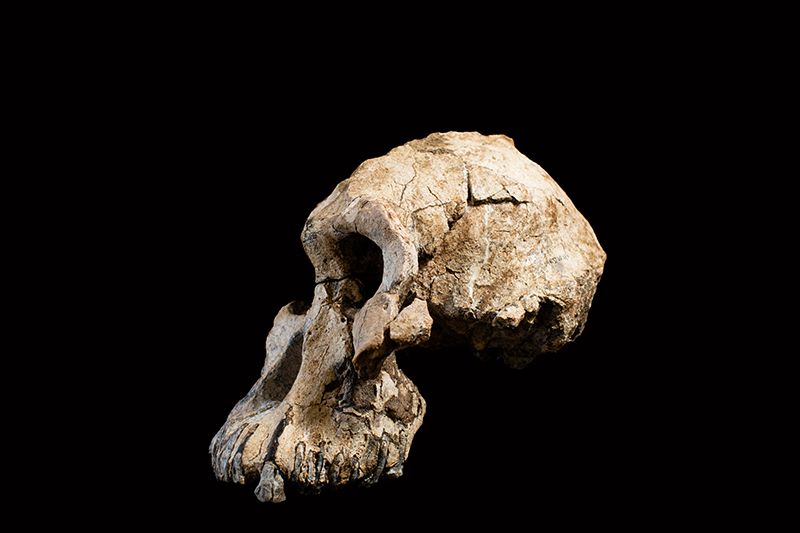
Discovery of a "remarkably complete" cranium  (MRD-VP-1/1, shortened to MRD) in February 2016 from a 3.8-million-year-old early human ancestor from the Woranso-Mille paleontological site, located in the Afar region of Ethiopia, represents a time interval between 4.1 and 3.6 million years ago when early human ancestor fossils are extremely rare, especially outside the Woranso-Mille area.
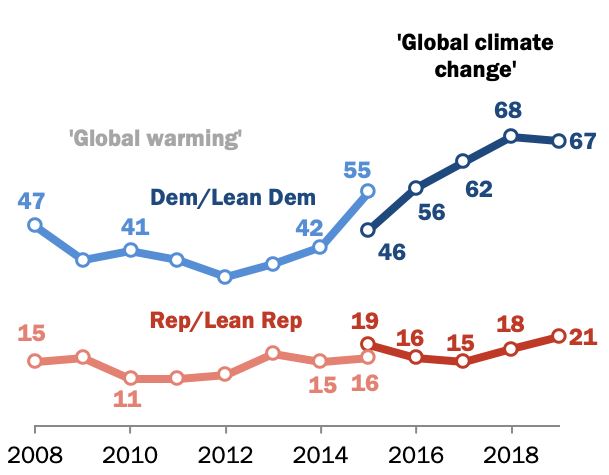
In recent Pew Survey data, 75 percent of moderate Democrats believe global climate change is a major threat to the well-being of the United States while 94 percent of Democrats who skew farther left believe that, up 30 percent from 2013.

Overall, more Americans feel that way, 57 percent this year versus 40 percent in 2013, but that increase is almost all on the left. Among the right, Republicans and people who vote Republican, that belief was 27 percent in 2019, up from 22 percent in 2013.
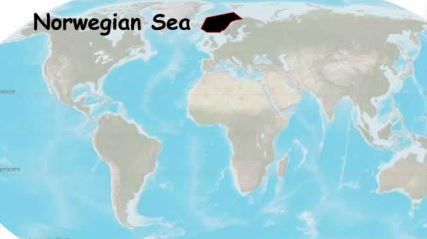
The salty ocean is the last place you'd expect to find fresh water but a remote-controlled vehicle deployed from the research vessel G.O. Sars found, collected and measured just that during a Norwegian Sea expedition in 2017. 

The Norwegian Sea is near the Arctic, between the North Sea and the Greenland sea, separated from the Atlantic Ocean by Iceland. 


The leakage likely originated from a large pocket of fresh water, otherwise known as an aquifer, hidden beneath the sediment of the seabed, a remnant of the last ice age.
If you insist your baby has to breastfeed for a year you have a cultural heritage to justify it. Extinct species such as Australopithecus africanus likely breastfed for that long.

How could scholars determine how long A. africanus  breastfed? Like trees, teeth contain growth rings that can be counted to estimate age. Teeth rings also incorporate dietary minerals as they grow. Breast milk contains barium, which accumulates steadily in an infant's teeth and then drops off after weaning. In a new study, researchers analyzed trace minerals in two sets of fossilized A. africanus teeth from the Sterkfontein Cave outside Johannesburg, South Africa.