Banner
Why Antarctic Sea Ice Stopped Growing In 2015

Though numerical models and popular films like An Inconvenient Truth projected Arctic ice...

Wealth Correlated To Loneliness

You may have read that Asian cultures respect the elderly more than Europe but Asian senior citizens...

Ousiometrics Analysis Says All Human Language Is Biased

A new tool drawing on billions of uses of more than 20,000 words and diverse real-world texts claims...

Wavelengths Of Light Are Why CO2 Cools The Upper Atmosphere But Warms Earth

There are concerns about projected warming on the Earth’s surface and in the lower atmosphere...

User picture.
News StaffRSS Feed of this column.

News Releases From All Over The World, Right To You... Read More »

Blogroll
An antibody is an agent of the immune system that attaches to an antigen. Usually antibodies recognize antigens on a virus or bacteria and attach to the invader to mark it for destruction by other immune cells.

In a new study,  University of Colorado Anschutz researchers engineered an antibody to recognize and attach to a protein called EGFR. Bladder tumors (but not healthy cells) are often covered in EGFR. Other researchers have hooked molecules of chemotherapy to antibodies that recognize EGFR and have used this antibody-antigen system to micro-target the delivery of chemotherapy. In this case, researchers used nifty chemistry to attach gold nanoparticles to antibodies.
In April 2017, journalists promoted a claim about plastic bag eating caterpillars which led to sensationalistic coverage in worldwide media. They could eat the sea-sized floating islands of plastic bags that don't actually exist.

The science community was skeptical. 
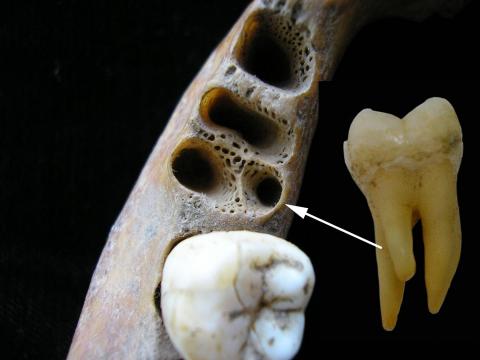
An analysis of a 160,000-year-old archaic human molar fossil discovered in China points to a different evolutionary path a rare trait primarily found in modern Asians than previously accepted timelines after Homo sapiens dispersed from Africa.

The study centers on a three-rooted lower molar and reveals the first morphological evidence of interbreeding between H. sapiens and the Denisovans, a sister group of Neanderthals
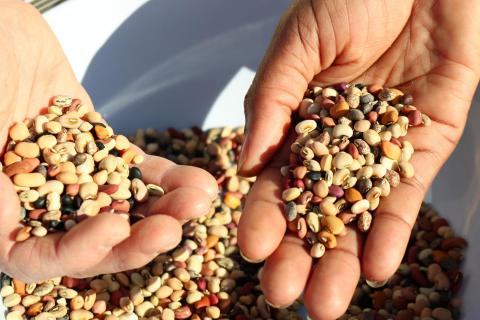
Black-eyed peas, a global dietary staple for centuries due to their environmental toughness and nutritional qualities, are small beans with dark midsections. In sub-Saharan Africa they remain the number one source of protein in the human diet. 

Now it's gotten its genome decoded, a problem almost as tough as the legume itself. 

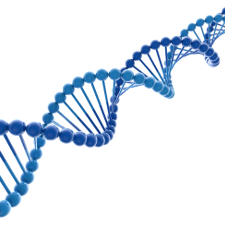
A genome is the full collection of genetic codes that determine characteristics like color, height, and predisposition to diseases. All genomes contain highly repetitive sequences of DNA that University of California Riverside Professor of Computer Science Stefano Lonardi likens to "hundreds of thousands of identical jigsaw puzzle pieces."
Kratom, derived from the leaves of the southeast Asian tree Mitragyna speciosa, is a supplement that is not useless, it actually does something. It contains psychoactive compounds and users also like it as an analgesic, but because it is a plant users and kratom trade groups insist it should not have to go through clinical trials, even while they sell it as a product that is a drug.
Fish, insects, crustaceans, and even some plants possess the ability to change the sex of their offspring before they are born.

It's a genetic skill mammals lack. Or did.

A new study reveals a genetic system in mammals that enables two animals to mate and produce only females. A similar system based on identical principles would produce only males.

This proof of concept is in mice - an instance where a mouse study is actually valid - but the real benefit is for agriculture, where farmers may want dairy cows and egg-laying chickens and not have to deal with random chance.