Banner
Here's Where Your Backyard Was 300 Million Years Ago

We may use terms like "grounded" and terra firma to mean stability and consistency but geology...

Convergent Evolution Cheat Sheet Now 120 Million Years Old

One tenet of natural selection is a random walk of genes but nature may be more predictable than...

Synchrotron Could Shed Light On Exotic Dark Photons

There are many hypothetical particles proposed to explain dark matter and one idea to explore how...

The Pain Scale Is Broken But This May Fix It

Chronic pain is reported by over 20 percent of the global population but there is no scientific...

User picture.
News StaffRSS Feed of this column.

News Releases From All Over The World, Right To You... Read More »

Blogroll
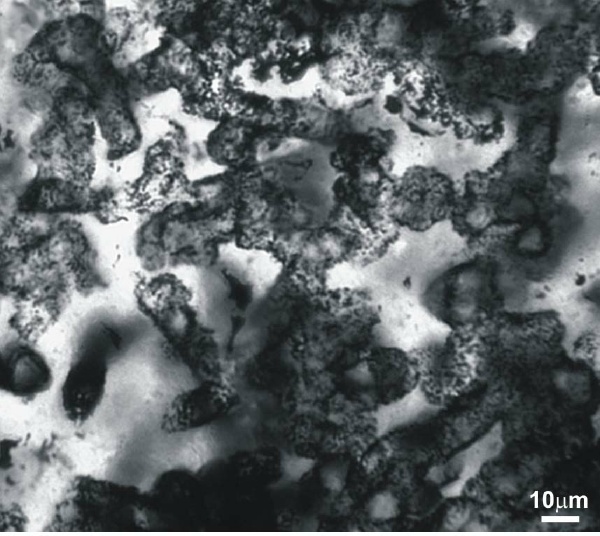
The fossils of 3.4-billion-year-old microbes that used sulfur compounds for energy have been found in rocks from Western Australia, reports a paper published in Nature Geoscience

David Wacey, Martin Brasier and colleagues analyzed microstructures present in rocks from the Strelley Pool Formation in Western Australia, and determined that they were the fossils of ancient microbes. The fossils were associated with tiny crystals of pyrite, a mineral composed of iron and sulfur. The isotopic composition of the sulfur suggests that the pyrite was formed as a by-product of cellular metabolism based on sulphate and sulfur.
At Science 2.0 we are not big fans of being clever just for the sake of being clever - we were smart kids and there are smart kids today and the belief by government funding agencies that STEM outreach needs to be cartoons and video games and mascots is a little patronizing to intelligent young people.

So young people do not need to be talked down to but some things are just cool and everyone likes cool - magic goggles and interactive maps are just that.

Gaetano Ling, an Imperial College London postgraduate, has developed interactive tools to make museums and galleries a little less 'dry' for children, including magic goggles, a Harry Potter style map and brushes that make sounds.
Pharaoh Hatshepsut lived around 1450 B.C.  A tiny flash owned by the queen, a flacon, which is on exhibit in the permanent collection of the Egyptian Museum of the University of Bonn may have held a deadly secret for 3,500 years, according to Head of the collection Michael Höveler-Müller and Dr. Helmut Wiedenfeld from the university’s Pharmacology Institute.

After two years of research it is now clear that the flacon did not hold a perfume but was a kind of skin care lotion or even medication for a monarch suffering from eczema. The pharmacologists found a strongly carcinogenic substance.  Queen Hatshepsut may have been killed by her medicine.
Just what computer scientists want - dumb jocks getting all of the credit for artificial intelligence.

Or maybe computer scientists are simply letting football players think they matter, and they are really just data.

For artificial intelligence to get out of its 20-year rut, a computer has to be able to observe a complex operation, learn how to do it, and then optimize those operations or accomplish other related tasks. What if a computer could watch video of football plays, learn from them, and then design plays and control players in a football simulation or video game?  

Our solar system, with planets over a range of sizes and moving in near-circular paths, seems to be unusual, according to a model in t Monthly Notices of the Royal Astronomical Society which finds that forming planetary systems may be knocked around by crashes with nearby clumps of material, leading to systems where planets have highly inclined orbits and where the smaller - and potentially habitable - worlds are thrown out completely.

Researchers  have developed an inexpensive way to grade the ethanol potential of perennial grasses at the biorefinery's loading dock - the first use of near-infrared sensing (NIRS) to measure 20 components in switchgrass biomass that determine its potential value to biorefiners. These components include cell wall sugars, soluble sugars and lignin. With this information, 13 traits can be determined, including the efficiency of the conversion from sugars to ethanol.

This is the first use of NIRS to predict maximum and actual ethanol yields of grasses from a basic conversion process. This capability already exists for corn grain using NIRS.