Banner
Here's Where Your Backyard Was 300 Million Years Ago

We may use terms like "grounded" and terra firma to mean stability and consistency but geology...

Convergent Evolution Cheat Sheet Now 120 Million Years Old

One tenet of natural selection is a random walk of genes but nature may be more predictable than...

Synchrotron Could Shed Light On Exotic Dark Photons

There are many hypothetical particles proposed to explain dark matter and one idea to explore how...

The Pain Scale Is Broken But This May Fix It

Chronic pain is reported by over 20 percent of the global population but there is no scientific...

User picture.
News StaffRSS Feed of this column.

News Releases From All Over The World, Right To You... Read More »

Blogroll

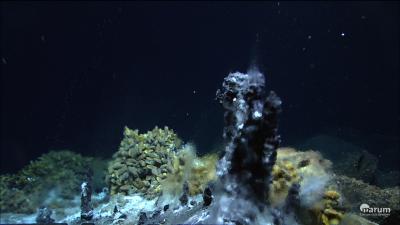
Researchers searching for new ways to make hydrogen a viable part of our energy future have a new place to look; a natural example of a living hydrogen-powered 'fuel cell'.

During a recent expedition to hydrothermal vents in the deep sea, researchers from the Max Planck Institute of Marine Microbiology and the Cluster of Excellence MARUM discovered mussels that have their own on-board fuel cells in the form of symbiotic bacteria that use hydrogen as an energy source. Their results suggest that the ability to use hydrogen as a source of energy is widespread in hydrothermal vent symbioses.

Golf is a good walk spoiled, according to both proponents and detractors.  It isn't just the outrageously fickle game that takes abuse, the golf courses, known for their calm scenic views and precise grass patterns, get hammered every day as well.  

Divots created by golf strokes are common  and can be a costly problem for golf course maintenance operations. Although previous research has identified differences in divot recovery across species of bermudagrass and zoysiagrass, little has been developed about actual divot resistance.

Rocks collected from the Franklin Mountains in West Texas and Coats Land in Antarctica have the exact same composition of lead isotopes, according to new research, the strongest evidence yet that parts of North America and Antarctica were connected 1.1 billion years ago, long before the supercontinent Pangaea formed.

Earlier analyses showed the rocks to be the exact same age and have the same chemical and geologic properties. The new work in Geology strengthens support for the so-called SWEAT hypothesis, which posits that ancestral North America and East Antarctica were joined in an earlier supercontinent called Rodinia.
Our more militant brethren in the science and science media community paint all religious people as intellectually immature but AAAS surveys show nearly 40 percent of AAAS members are religious and a new University of Nebraska-Lincoln study challenges the common belief that more intelligent people are less religious.

Instead, the article in Review of Religious Research contends, education has a positive effect on Americans' churchgoing habits and their emphasis on religion in daily life.
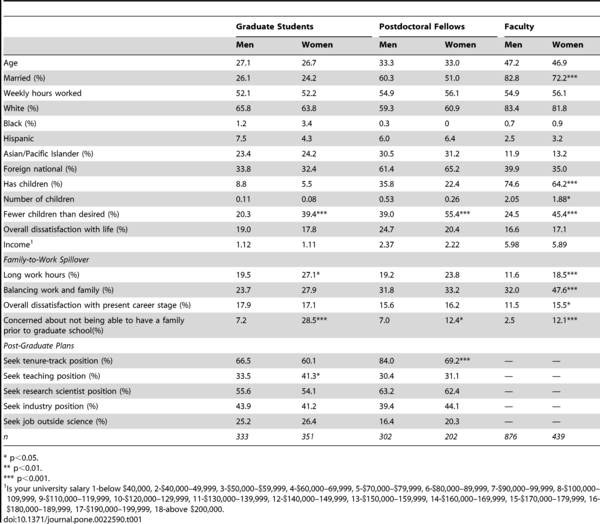
Almost 50% of female scientists and 25% of male scientists at the nation's top research universities say career kept them from having as many children as they wanted, something they might do over given the chance.

As the saying goes, no one on their death bed ever says they wish they had spent more time at the office.

Sociologists Elaine Howard Ecklund of Rice and Anne Lincoln of SMU  spent three years asking what junior and senior scientists in physics, astronomy and biology think about discrimination, family life and the state of their careers. They found that both men and women say having a science career means they will have fewer children than they wanted.
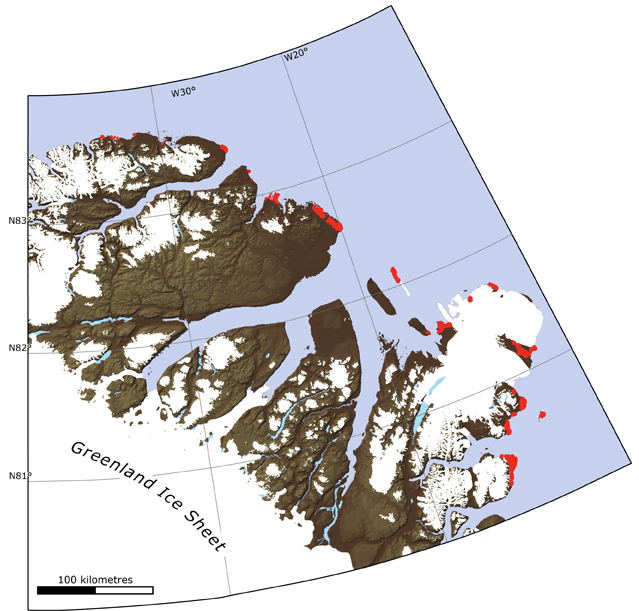
If you are worried about big changes in Arctic sea ice, you are not alone - but it is hard to know how much is worth worrying about.  If you are worried, there is some slightly good news - even if we lose half, it will not be a 'point of no return' according to a new study.

Sea ice comes and goes without leaving a record so our knowledge about variations and extent was limited before we had satellite surveillance and observations from airplanes and ships.  Not any more.  Researchers at The Centre for Geogenetics at the Natural History Museum of Denmark, University of Copenhagen say have developed a method by which it is possible to measure the variations in the ice several millennia back in time.