Amelia Fraser-McKelvie is not a career researcher or a post-doctoral fellow or even in graduate school, but working on a summer scholarship at the Monash School of Physics, she conducted a targeted X-ray search for the matter called the Universe's 'missing mass' and found it – or at least some of it.
The School of Physics put out a call for students interested in a six-week paid astrophysics research internship during a recent vacation period, and chose Fraser-McKelvie. Dr. Kevin Pimbblet, lecturer in the School of Physics put the magnitude of the discovery in context by explaining that scientists had been hunting for the Universe's missing mass for decades.
Does high-fructose corn syrup, a common ingredient in soft drinks and snacks and too many products to count, make you fatter than sugar? The Sugar Association, Inc., which represents sugar growers, certainly wants you to think so.
But, like cultural pundits who insist Ronald McDonald makes kids fat, there needs to be more than one study funded by an interested party to make the case. A review of studies analyzing research on High Fructose Corn Syrup (HFCS) and other sweeteners found there is no evidence of any significant variation in the way the human body metabolizes HFCS as opposed to standard table sugar, or any difference in impact on risk factors for chronic disease.
The rapid development of Mars, as little as two to four million years after the birth of the solar system (far more quickly than Earth) explains why it is so small by comparison, according to a new paper.
Mars probably is not a terrestrial planet like Earth, which grew to its full size over 50 to 100 million years via collisions with other small bodies in the solar system, says Nicolas Dauphas, a geophysicist at the University of Chicago. "Earth was made of embryos like Mars, but Mars is a stranded planetary embryo that never collided with other embryos to form an Earthlike planet."
The astrocyte, most common cell in the human nervous system, is finally getting some respect; researchers have used embryonic and induced pluripotent stem cells to cultivate the star-shaped astrocyte.
Not just putty in the brain and spinal cord
The ability to make large, uniform batches of astrocytes, explains stem cell researcher Su-Chun Zhang, opens a new avenue to more fully understanding the functional roles of the brain's most commonplace cell, as well as its involvement in a host of central nervous system disorders ranging from headaches to dementia. What's more, the ability to culture the cells gives researchers a powerful tool to devise new therapies and drugs for neurological disorders.
The American College of Obstetricians and Gynecologists doesn't like births outside expensive hospitals and recently issued a statement disapproving of the practice. Regardless, mothers, Caucasian at least, are not listening and a new analysis shows that home births, common throughout history but declining since 1990, jumped up again after 2004. An increase of 20 percent.
28,357 home births occurred in 2008 - 0.67 percent of the approximately 4.2 million births in the United States, which may sound negligible but it is the highest reported proportion since 1990. This change was largely driven by a 28 percent increase in home births for white women, for whom more than 1 percent of all births now occur at home.
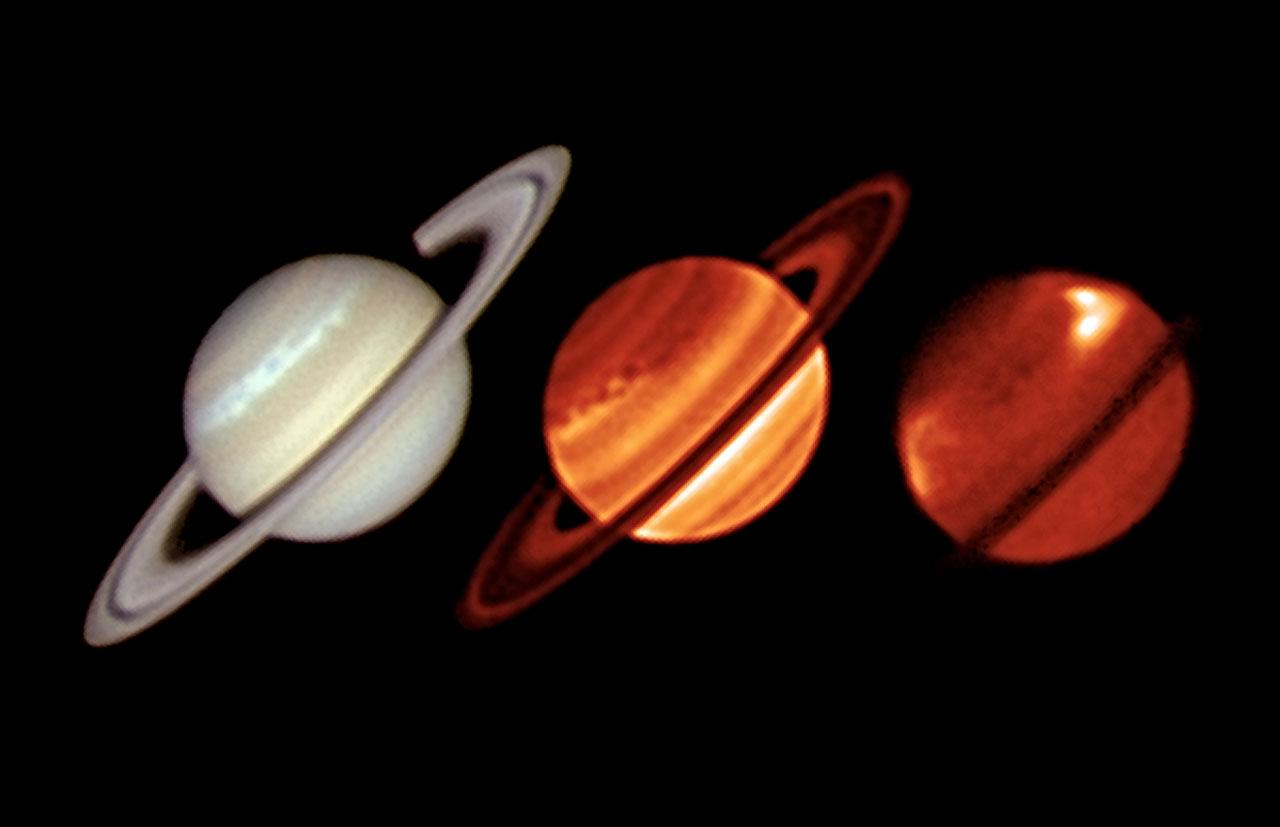
Saturn may look like a nice place to visit through a telescope but once each Saturn year (that's 30 years to you and me) 'spring' arrives in the northern hemisphere of the giant planet and things go nuts.


 Here's Where Your Backyard Was 300 Million Years Ago
 Convergent Evolution Cheat Sheet Now 120 Million Years Old
 Synchrotron Could Shed Light On Exotic Dark Photons
 The Pain Scale Is Broken But This May Fix It