In Australia, babies born since 1971 have had drops of blood taken, which are then tested for a variety of genetic conditions such as cystic fibrosis.
It has been an effective health check, according to Dr. Diana Bowman from the Melbourne School of Population Health, but because there are no laws which define the ownership, storage and use of those blood drops, it could threaten public trust in newborn screening (NBS) programs in Australia. The tests and what is done with the blood afterwards raises many legal questions.
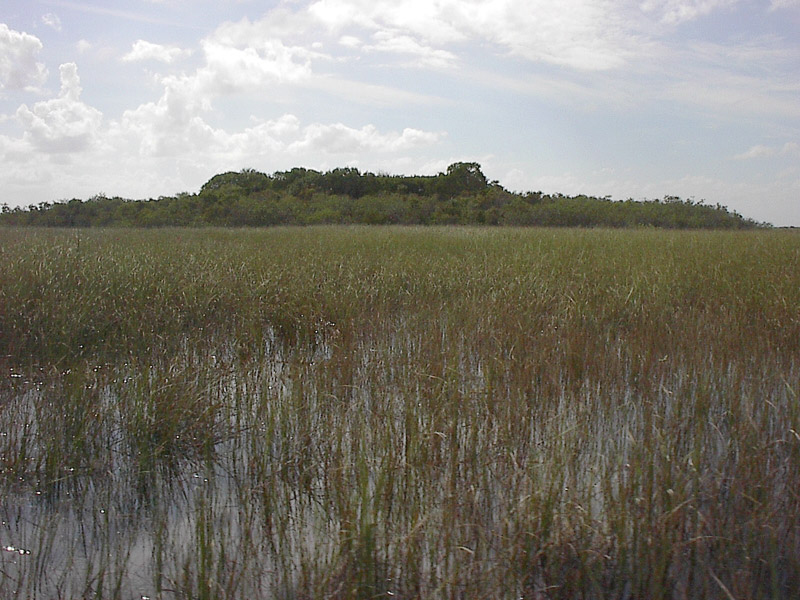
Tree islands, patches of high, dry ground a meter high that dot the marshes of the Florida Everglades, are elevated enough to allow trees to grow and provide a nesting site for alligators and a refuge for birds, panthers, and other wildlife.
And those critters may have anthropogenic garbage left by early man to thank for it. Garbage mounds left by prehistoric humans might have driven the formation of many of those Everglades' tree islands, distinctive havens of exceptional ecological richness in the sprawling marsh that are today threatened by human development.
Because of the time difference, many discovered the news of the Tohoku earthquake hours after the 9.0 magnitude tremor was recorded 81 miles off the Japanese East Coast - an earthquake so epic that the resulting tsunami reached across the Pacific and the coasts of America and New Zealand. But also for much of the waking world, news about the unfolding crisis happened instantaneously - because of the amazing reach of social media.
Infants and toddlers can suffer serious mental health disorders, yet are unlikely to receive treatment that could prevent lasting developmental problems, according to an analysis in American Psychologist.
Language may have an undervalued role in learning the meanings of numbers. A study based on research using deaf people in Nicaragua who never learned formal sign language showed that people who communicate using self-developed gestures (homesigns) were unable to comprehend the value of numbers greater than three because they had not learned a language containing symbols used for counting.
Recent research indicates that bilingual speakers can outperform monolinguals in certain mental abilities, such as editing out irrelevant information and focusing on important information, said Judith Kroll, Distinguished Professor of Psychology, Penn State. These skills make bilinguals better at prioritizing tasks and working on multiple projects at one time. Kroll said that these findings counter previous conclusions that bilingualism hindered cognitive development.


 Here's Where Your Backyard Was 300 Million Years Ago
 Convergent Evolution Cheat Sheet Now 120 Million Years Old
 Synchrotron Could Shed Light On Exotic Dark Photons
 The Pain Scale Is Broken But This May Fix It