The production of high quality chocolate will benefit from the recent sequencing and assembly of the chocolate tree genome - Theobroma cacao - considered by chocolate experts to produce the world's finest chocolate. The Maya domesticated this variety of Theobroma cacao, 'Criollo', about 3,000 years ago in Central America and it is among the oldest domesticated tree crops, though today many growers prefer to grow hybrid cacao trees ('Trinitario') that produce chocolate of lower quality but are more resistant to disease.
New findings indicate that weight gain of infants is influenced by not just formula versus breast feeding but also the type of formula the infant is consuming, which the researchers say could have implications related to the infant's risk for the development of obesity, diabetes and other diseases later in life.
Formula-fed babies gain more weight than breast-fed babies but the study set out to determine differences between formula types. Most infant formulas are cow's milk-based and alternatives include soy-based and protein hydrolysate-based formulas. Protein hydrolysate formulas contain pre-digested proteins and typically are fed to infants who cannot tolerate the intact proteins in other formulas.
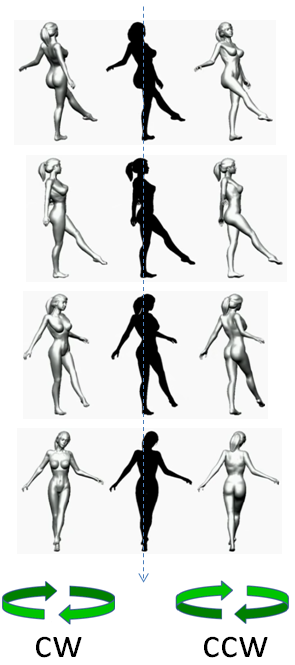
In the Silhouette Illusion (video at the bottom), a silhouetted woman is seen spinning on one foot, her leg extended.
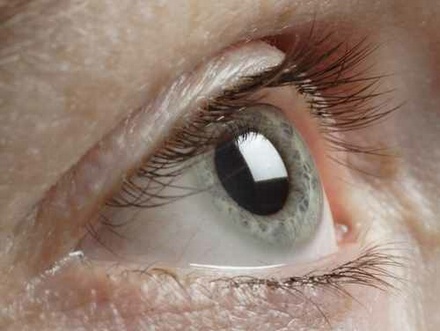
Scientists writing in Cognition have said that our ability to recognize and remember faces peaks at ages 30 to 34 - a decade later than most of our other mental abilities.
Some prior studies had suggested that face recognition might be slow to mature but fewer suspected that facial recognition might continue building for so many years into adulthood. The late-blooming nature of face recognition may simply be a case of practice making perfect.
If you were around in the early days of the iPhone, you may have thought users were in love with it. Proponents spoke of it in romantic terms and looked for reasons to discuss it, with questions like, "So what kind of phone do you have?"
It turns out they may have been and a similar effect occurs in people passionate about things like cars and guns - it looks like love, according to a new study in the Journal of Consumer Research. "Is it possible for consumers to be in love with their possessions?" ask authors John L. Lastovicka (Arizona State University) and Nancy J. Sirianni (Texas Christian University). When it comes to technology, cars, bicycles, and firearms, the answer seems to be a big yes.
A 30,000-year-old finger bone found in a cave in southern Siberia came from a young girl that was neither an early modern human nor Neanderthal, but instead belonged to a previously unknown group of human relatives who may have lived throughout much of Asia during the late Pleistocene epoch, according to new research (Reich, D. et al. Nature 468, 1053-1060 2010.


 Here's Where Your Backyard Was 300 Million Years Ago
 Convergent Evolution Cheat Sheet Now 120 Million Years Old
 Synchrotron Could Shed Light On Exotic Dark Photons
 The Pain Scale Is Broken But This May Fix It