In all of the excitement about 'renewable' energy that can replace fossil fuels, we look to the future - algae, seaweed, switchgrass, we have articles on practically every new idea - but forget to look to the past, like in wood.
Unlike 50 years ago, we now know how to make wood truly renewable (the Christmas tree industry was a wonderfully efficient proof of concept) and, say researchers at Fraunhofer Institute for Environmental, Safety and Energy Technology UMSICHT in Oberhausen, Germany, with modern techniques wood is comparable to natural gas in efficiency of heat supply.
A million years is a blink of an eye in evolution but that doesn't mean newer genes matter less in life itself.
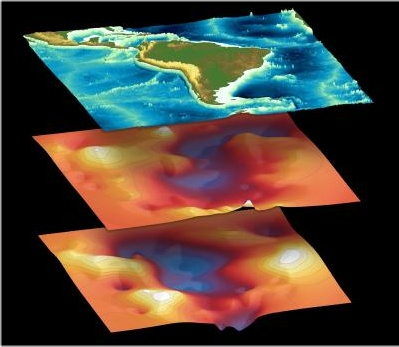
A geophysicist has made the first-ever measurement of the strength of the magnetic field 1,800 miles underground - inside Earth's core.
The magnetic field strength is 25 Gauss, they say, 50 times stronger than the magnetic field at the surface that makes compass needles align north-south, the middle range of what geophysicists predicted, but it puts constraints on the identity of the heat sources in the core that keep the internal dynamo running to maintain this magnetic field.
Metabolic engineering may rescue our energy future. A new strain of yeast that is more efficient at fermenting galactose might make red seaweed a viable future biofuel.
Producers of biofuels made from terrestrial biomass crops have had difficulty breaking down recalcitrant fibers and extracting fermentable sugars. The harsh pretreatment processes used to release the sugars also resulted in toxic byproducts, inhibiting subsequent microbial fermentation.
But perhaps marine biomass can be more easily degraded to fermentable sugars, leading to production rates and range of distribution higher than terrestrial biomass.
An asteroid the size of a Volvo exploded over Sudan's Nubian Desert in 2008 and initial research was focused on classifying the meteorite fragments soon after they were strewn across the desert and tracked by NASA's Near Earth Object astronomical network. Now in a series of 20 papers published in Meteoritics and Planetary Science and the diversity of these fragments introduces as many questions as it does answers.
Humans are essentially unsatisfied creatures - if you take a starving dog out of the rain and feed him, he will love you forever. After a few weeks of nice treatment, many humans will decide they deserved to be taken out of the rain and maybe even that they are doing you a favor.
So it goes with wealth. Money does buy happiness, contrary to folk wisdom - it just doesn't last. In the case of entire nations that get a better standard of living, after about a decade happiness is no longer rising with wealth. Let's not kid ourselves, people in wealthier nations are happier, on average, than people in poor ones, but it does not rise forever.


 Here's Where Your Backyard Was 300 Million Years Ago
 Convergent Evolution Cheat Sheet Now 120 Million Years Old
 Synchrotron Could Shed Light On Exotic Dark Photons
 The Pain Scale Is Broken But This May Fix It