Banner
Here's Where Your Backyard Was 300 Million Years Ago

We may use terms like "grounded" and terra firma to mean stability and consistency but geology...

Convergent Evolution Cheat Sheet Now 120 Million Years Old

One tenet of natural selection is a random walk of genes but nature may be more predictable than...

Synchrotron Could Shed Light On Exotic Dark Photons

There are many hypothetical particles proposed to explain dark matter and one idea to explore how...

The Pain Scale Is Broken But This May Fix It

Chronic pain is reported by over 20 percent of the global population but there is no scientific...

User picture.
News StaffRSS Feed of this column.

News Releases From All Over The World, Right To You... Read More »

Blogroll

We accept that genetics make some people smarter though few consider instead that genes may be making us dumber, but deleting the RGS14 gene in mice did make them smarter - by unlocking a mysterious region of the brain considered to be relatively inflexible, scientists at Emory University School of Medicine have found.

Bring on the psychic fans!

The spread of mass panic through Short Message Service (SMS) and text on phones and services like Twitter is unnecessary and people need to learn to look at information with a more critical eye.   People in general are too quick to pass on information without checking - especially if they want to believe what it says - and propagating dubious or false information can have devastating results. 

Mass-panic through technology is not a new phenomenon - in 1938 the first segment of HG Wells' "War of the Worlds" was aired over the Columbia Broadcasting System (CBS) radio network and as the first episode was done as a simulated news bulletin, many listeners who came on late thought that an actual Martian invasion was taking place.

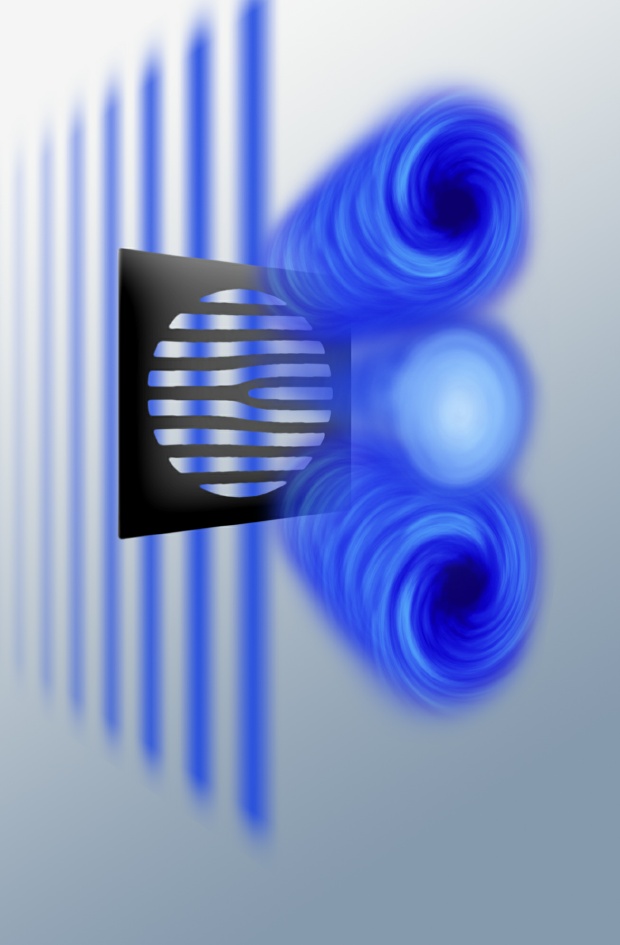
A group of researchers have developed what are known as vortex beams - rotating electron beams - which make it possible to investigate the magnetic properties of materials and in the future it may be possible to manipulate the tiniest components in a targeted manner and set them in rotation also.

Electron beams have been used to analyze materials for a while, such as in electron microscopes. For the most part, the beams' rotation does not affect this analysis because in classical physics, an electron current in a vacuum does not have any orbital angular momentum. But in quantum mechanics, the electrons must be envisaged as a wavelike current, which can rotate as a whole about its propagation direction, similar to the air flow in a tornado.
Obesity is on the rise and one cause for that may be that young people do even less on the weekend than they do during the week - the number of those with inactive lifestyles goes up 100% when they're out of school.   Instead, boys primarily play video games and teenage girls prefer to surf the Internet.

The research, which forms part of the European HELENA study, has shown how the proportion of young people who watch television and play on the computer for more than two hours per day doubles at the weekend.
Two popular supplements taken by millions of people around the world to combat joint pain, glucosamine and chondroitin, do not work, according to research published today - but they don't hurt you either.  Basically, they are expensive placebos.

Glucosamine and chondroitin are either taken on their own or in combination to reduce the pain caused by osteoarthritis in hips and knees.  The researchers, led by Professor Peter Jüni at the University of Bern in Switzerland, state that although they don't work these supplements are not dangerous - "we see no harm in having patients continue these preparations as long as they perceive a benefit and cover the cost of treatment themselves."
A non-mythological unicorn?   So it seems.   Unicorns have been mentioned throughout history, in mythology and in the works of The Bible and Pliny the Elder's Natural History.    Today the modern westernized unicorn is pure white and hangs out with virgins.

In zoology, it is never so simple.

In 1992, in Vietnam's Vu Quang Nature Reserve near the country's border with Laos, a spectacular zoological discovery occurred.  A creature with long horns (sorry unicorn fans - two of them) and white facial markings, and resembling the antelopes of North Africa but more closely related to wild cattle, a new species called the Saola was discovered.