The global climate trend since Nov. 16, 1978 is +0.14 C per decade, according to scientists from the Earth System Science Center (ESSC) at The University of Alabama in Huntsville
April temperatures (preliminary)
Global composite temp.: +0.50 C (about 0.9 degrees Fahrenheit) above 20-year average for April.
Northern Hemisphere: +0.80 C (about 1.44 degrees Fahrenheit) above 20-year average for April.
Southern Hemisphere: +0.21 C (about 0.38 degrees Fahrenheit) above 20-year average for April.
Tropics: +0.63 C (about 1.34 degrees Fahrenheit) above 20-year average for April.
March temperatures (revised):
Global Composite: +0.66 C above 20-year average
Spices commonly used to season cooked ground beef may also reduce the risk of consuming compounds called heterocyclic amines (HCAs) that can cause cancer .
HCAs are the carcinogenic compounds that are produced when muscle foods, such as ground beef patties, are barbecued, grilled, boiled or fried. Consuming HCAs through meat increases risk factors for colorectal, stomach, lung, pancreatic, mammary and prostate cancers.
J. Scott Smith, a Kansas State University food chemistry professor, found that certain spices containing natural antioxidants would reduce HCA levels by 40 percent when applied to beef patties during cooking.
The widely held notion that warming global temperatures will lead to a future intensification of malaria and an expansion of its global range is at odds with the available evidence, according to a new study in Nature.
The research, conducted by the Malaria Atlas Project (MAP), suggests that current interventions could have a far more dramatic – and positive – effect on reducing the spread of malaria than any negative effects caused by climate change.
A steady stream of modeling studies have predicted that malaria will worsen and its range will spread as the world gets warmer.
In the last yen years, astronomers have discovered scads of strange exploding stars, one-offs that may point to new and unusual physics.
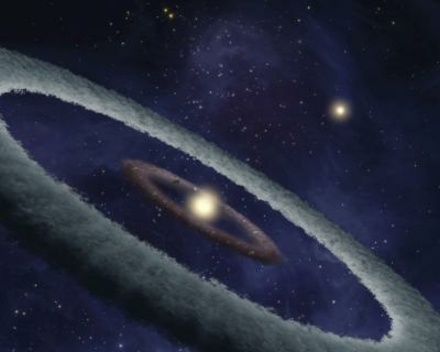
Supernova (SN) 2005E, discovered five years ago by the University of California, Berkeley's Katzman Automatic Imaging Telescope (KAIT), is one of eight known "calcium-rich supernovae" that seem to stand out from the rest.
By studying receptors in the brain, researchers at the Swedish medical university Karolinska Institute have managed to show that the dopamine system in healthy, highly creative people is similar in some respects to that seen in people with schizophrenia.
High creative skills have been shown to be somewhat more common in people who have mental illness in the family. Creativity is also linked to a slightly higher risk of schizophrenia and bipolar disorder. Certain psychological traits, such as the ability to make unusual pr bizarre associations are also shared by schizophrenics and healthy, highly creative people. And now the correlation between creativity and mental health has scientific backing.
What is the volume of the world's oceans? 1.332 billion cubic kilometers, according to scientists at the Woods Hole Oceanographic Institution.
The researchers report that the world's total ocean volume is less than the most recent estimates by a volume equivalent to about five times the Gulf of Mexico, or about 0.3% lower than the estimates of 30 years ago.
The results reveal how accurate scientists were in the past, using cruder techniques to measure ocean depth. As long ago as 1888, for example, John Murray dangled lead weights from a rope off a ship to calculate an ocean volume—the product of ocean area and mean ocean depth—just 1.2% greater than the new figure reported in Oceanography.


 Here's Where Your Backyard Was 300 Million Years Ago
 Convergent Evolution Cheat Sheet Now 120 Million Years Old
 Synchrotron Could Shed Light On Exotic Dark Photons
 The Pain Scale Is Broken But This May Fix It