Banner
Here's Where Your Backyard Was 300 Million Years Ago

We may use terms like "grounded" and terra firma to mean stability and consistency but geology...

Convergent Evolution Cheat Sheet Now 120 Million Years Old

One tenet of natural selection is a random walk of genes but nature may be more predictable than...

Synchrotron Could Shed Light On Exotic Dark Photons

There are many hypothetical particles proposed to explain dark matter and one idea to explore how...

The Pain Scale Is Broken But This May Fix It

Chronic pain is reported by over 20 percent of the global population but there is no scientific...

User picture.
News StaffRSS Feed of this column.

News Releases From All Over The World, Right To You... Read More »

Blogroll
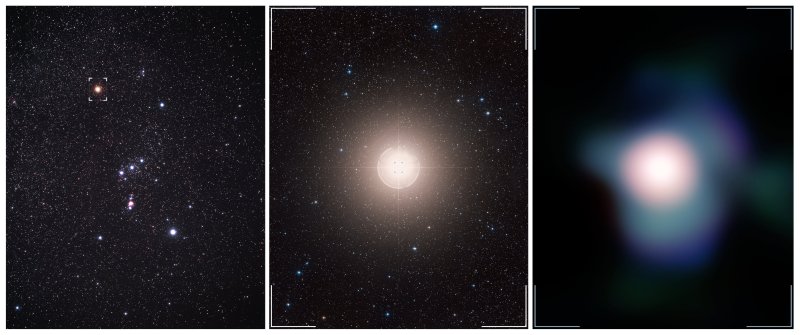
Betelgeuse, the second brightest star in the constellation of Orion (the Hunter), is a red supergiant, one of the biggest stars known, and almost 1,000 times larger than our Sun.

To put that in perspective, if Betelgeuse were at the center of our Solar System it would extend out almost to the orbit of Jupiter, engulfing Mercury, Venus, Earth, Mars and the main asteroid belt.
The world's environment ministers, government officials, diplomats and campaigners are preparing for the biggest poker game of their lives - the COP15 conference in Copenhagen in December 2009.

It's one of the most complicated political deals the world has ever seen but third world countries are holding the cards.

In Environmental Research Letters, the paper 'Tripping Points: Barriers and Bargaining Chips on the Road to Copenhagen' lays bare the main tripping points – those political barriers and bargaining chips – which need to be overcome for countries to reach a consensus on how to address global climate change. 
Organic solar cells that can be produced easily and inexpensively are the perfect solution to future 'personalized' power generation.  

Major obstacles remain, such as coaxing these carbon-based materials to reliably form the proper structure at the nanoscale level - tinier than 2-millionths of an inch - and be efficient in converting light to electricity,  transforming at least 10 percent of the sunlight that they absorb into usable electricity.
There's an irrational belief held by some about economics that if a technology is subsidized, the magic of capitalism will make it cheaper even though there being no benefit to consumers or industry to do so, since it is already cheap for one and profitable as is for another.

So it goes with hybrid vehicles, though you can insert ethanol or wind power or solar panels and the math is the same.  Despite major costs to taxpayers in the U.S. and Canada, government programs that offer rebates to hybrid vehicle buyers are failing to produce environmental benefits, according to a new University of British Columbia study.

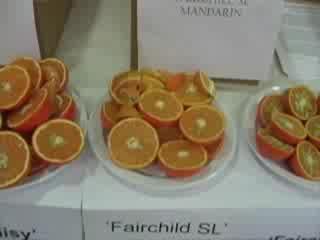
Researchers at the University of California Riverside (UCR) have developed a new mid-season maturing variety of tangerine. They call it DaisySL, for for Daisy seedless. It is made from an irradiated bud of the seedy diploid mandarin cultivar 'Daisy,' that is a hybrid of the mandarins Fortune and Fremont

Supervised by staff scientist Timothy Williams, the planting of the trees and performed evaluations and selections of promising varieties were meticulously monitored. It was 'DaisySL' that had the right characteristics he and Mikeal Roose, a professor of genetics in the Department of Botany and Plant Sciences at UCR, were looking for in a new variety: beautiful appearance, exceptional flavor, and hardly any seeds.

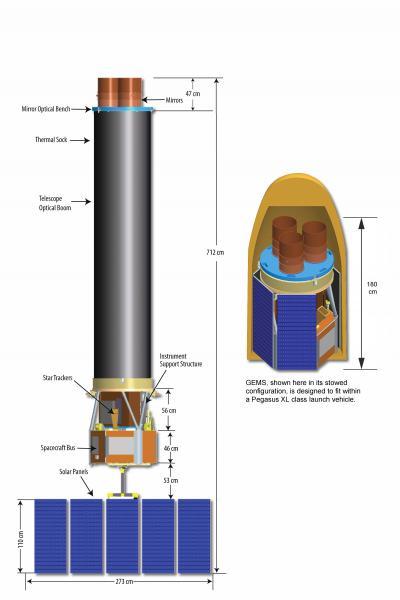
Electromagnetic radiation (light, radio waves, X-rays, and microwaves) contains a varying electric field. When we talk about Polarization of this field, we refer to its direction. A new satellite named the Gravity and Extreme Magnetism Small Explorer (GEMS),  will be the first to systematically measure the polarization of cosmic X-ray sources. It is a new astrophysics mission led by NASA's Goddard Space Flight Center in Greenbelt, Md.