Banner
Here's Where Your Backyard Was 300 Million Years Ago

We may use terms like "grounded" and terra firma to mean stability and consistency but geology...

Convergent Evolution Cheat Sheet Now 120 Million Years Old

One tenet of natural selection is a random walk of genes but nature may be more predictable than...

Synchrotron Could Shed Light On Exotic Dark Photons

There are many hypothetical particles proposed to explain dark matter and one idea to explore how...

The Pain Scale Is Broken But This May Fix It

Chronic pain is reported by over 20 percent of the global population but there is no scientific...

User picture.
News StaffRSS Feed of this column.

News Releases From All Over The World, Right To You... Read More »

Blogroll
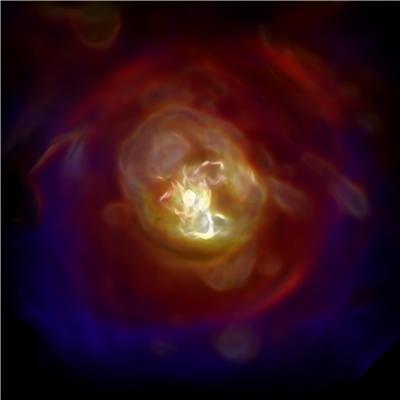
Why did our Milky Way galaxy survive while others failed?    Ill-defined, convenient catch-all dark matter gets the credit, according to a new paper.   Dark matter is thought to make up 85 per cent of the Universe’s mass and it may also be one of the building blocks of galaxy formation.

The researchers say that the early Milky Way, which had begun forming stars, held on to the raw gaseous material from which further stars would be made. This material would otherwise have been evaporated by the high temperatures generated by the “ignition” of the Universe about half-a-billion years after the Big Bang.
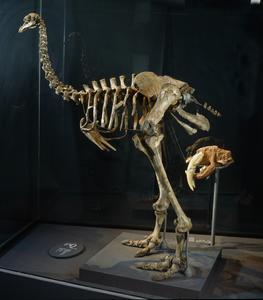
Welcome back, Moa.   Scientists say they have performed the first DNA-based reconstruction of the giant extinct moa bird using prehistoric feathers recovered from caves and rock shelters in New Zealand.

The researchers from the University of Adelaide and Landcare Research in New Zealand have identified four different moa species after retrieving ancient DNA from moa feathers believed to be at least 2500 years old.

The giant birds, measuring up to 2.5 meters and weighing 250 kilograms, were the dominant animals in New Zealand’s pre-human environment but were quickly exterminated after the arrival of the Maori around 1280 AD.

moa bird
Moa bird
Interested in Michael Jackson now that he is dead?   So are cyber criminals who are exploiting public interest in his death with spam messages that infect computers with a virus able to steal bank account numbers and passwords, according to Gary Warner, University of Alabama at Birmingham (UAB) director of research in computer forensics. Warner and the other researchers at the UAB Spam Data Mine began tracking the celebrity-focused spam early on Tuesday, June 30.

“We’ve been tracking the cyber criminals behind this spam and the associated virus for many weeks, but it is just today that they have shifted their strategy by embedding their virus into an e-mail that claims to link you to a Web site that will reveal Michael Jackson’s killer,” Warner said. 
With the increasing popularity of whitening teeth, and some studies showing negative effects of teeth whitening, researchers at the Eastman Institute for Oral Health at the University of Rochester Medical Center set out to learn if there are negative effects on the tooth from using whitening products.

Eastman Institute's YanFang Ren, DDS, PhD, and his team determined that the effects of 6 percent hydrogen peroxide, the common ingredient in professional and over-the-counter whitening products, are insignificant compared to acidic fruit juices. Orange juice markedly decreased hardness and increased roughness of tooth enamel.
A team of researchers from the University of Alcalá de Henares (UAH) says that human beings can develop echolocation, the system of acoustic signals used by dolphins and bats to explore their surroundings. Producing certain kinds of tongue clicks helps people to identify objects around them without needing to see them, obviously something that would be useful for the blind, if it's true.

The team has started a series of tests, the first of their kind in the world, they say, to make use of human beings' under-exploited echolocation skills.

Daredevil echolocation
Much cooler than Man-Bat.  ©Marvel Comics Group
There's a reason religious cults do things in groups; peer pressure and mutual awareness keeps them on message.   Likewise, young people are more likely to participate in conservation if their peers do - a tendency that should be exploited when it comes to protecting the environment, according to results of a new study.

The research, which focused on a mammoth government initiative called Grain-to-Green that pays Chinese farmers to convert cropland back to forest, is the first to focus on the phenomenon of social norms in the context of China's conservation efforts, said scientist Jianguo "Jack" Liu of Michigan State University (MSU).