Banner
Here's Where Your Backyard Was 300 Million Years Ago

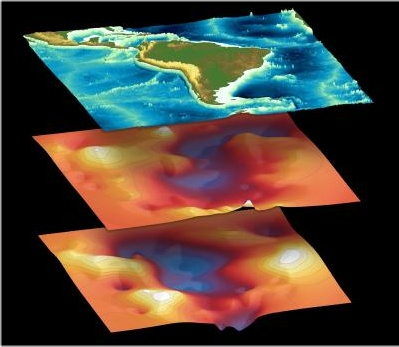
We may use terms like "grounded" and terra firma to mean stability and consistency but geology...

Convergent Evolution Cheat Sheet Now 120 Million Years Old

One tenet of natural selection is a random walk of genes but nature may be more predictable than...

Synchrotron Could Shed Light On Exotic Dark Photons

There are many hypothetical particles proposed to explain dark matter and one idea to explore how...

The Pain Scale Is Broken But This May Fix It

Chronic pain is reported by over 20 percent of the global population but there is no scientific...

User picture.
News StaffRSS Feed of this column.

News Releases From All Over The World, Right To You... Read More »

Blogroll
A team of scientists led by chemist and Netherlands Organization for Scientific Research (NWO) Pioneer laureate Piet Gros and medical microbiologist Jos van Strijp from Utrecht University have succeeded in 'freezing' a chain reaction of the immune system and they're calling it a breakthrough in the field of immunology.

One of the oldest defense mechanisms of our body is the complement system. Unlike white blood cells, which must learn to recognize pathogens, the complement system works from birth onwards. The system consists of proteins that initiate a chain reaction to kill bacteria and damaged cells. However the system is not perfect; it can run wild and attack our own healthy cells.
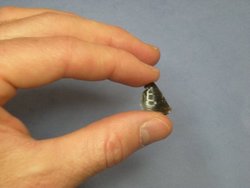
Archaeologists have used stone tools to answer many questions about human ancestors in both the distant and near past and now they are analyzing the origin of obsidian flakes to better understand how people settled and interacted in the inhospitable Kuril Islands.

Using X-ray fluorescence spectrometers, archaeologists from the University of Washington and the Smithsonian Institution have found the origin of 131 flakes of obsidian, a volcanic glass. These small flakes were discarded after stone tools were made from obsidian and were found at 18 sites on eight islands in the Kurils. The flakes were found with other artifacts that were dated over a time period spanning about 1,750 years, from 2500 to 750 years before the present.
Yesterday, the Brazilian national team overcame a 2 goal deficit to defeat the USA squad 3-2 in the final of the Confederations Cup.   The unheralded USA team was a surprise but  teams always are until they achieve big wins over a period of time.    Then it becomes predictable and expected, like Brazil.

But what makes a great footballer?   Being in excellent physical condition undoubtedly helps but few people actually believe that intense physical training alone can turn an average player into Cristiano Ronaldo - who is Portuguese.   Instead, there is something else that must be added.   Scientists from the University of Queensland have decided to study what this "something else" might be.  
Modern glaciers, such as those making up the Greenland and Antarctic ice sheets, are capable of undergoing periods of rapid change, according to new findings by paleoclimatologists at the University at Buffalo.  Their Nature Geoscience describes fieldwork to show that a prehistoric glacier in the Canadian Arctic rapidly retreated in just a few hundred years. 

The proof of such rapid retreat of ice sheets provides one of few confirmations that this phenomenon occurs.   Should the same conditions recur today, they would result in sharply rising global sea levels, which would threaten coastal populations. 
Worried about your child’s exposure to phthalates, the chemical compounds used as plasticizers in a wide variety of personal care products, children’s toys, and medical devices?   Phthalate exposure can begin in the womb and has been associated with negative changes in endocrine function.

A new study in The Journal of Pediatrics examines the possibility that in utero phthalate exposure contributes to low birth weight in infants. Low birth weight is the leading cause of death in children under 5 years of age and increases the risk of cardiovascular and metabolic disease in adulthood. 
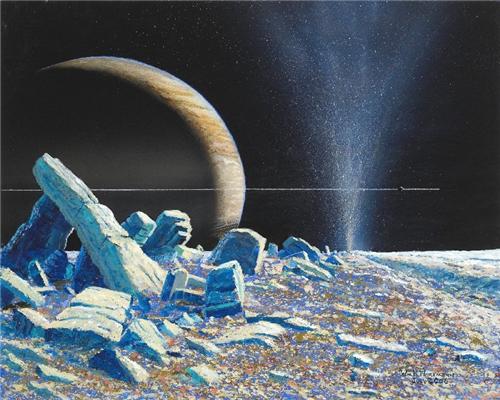
An enormous plume of water spurts in giant jets from the south pole of Saturn's moon Enceladus and a report published in Nature provides evidence that this magnificent plume is fed by a salty ocean.

The Cassini spacecraft made a surprising discovery about Saturn's sixth largest moon, Enceladus, on its exploration of the giant ringed planet in 2005. Enceladus ejects water vapor, gas and tiny grains of ice into space hundreds of kilometres above the moon's surface.