Banner
Here's Where Your Backyard Was 300 Million Years Ago

We may use terms like "grounded" and terra firma to mean stability and consistency but geology...

Convergent Evolution Cheat Sheet Now 120 Million Years Old

One tenet of natural selection is a random walk of genes but nature may be more predictable than...

Synchrotron Could Shed Light On Exotic Dark Photons

There are many hypothetical particles proposed to explain dark matter and one idea to explore how...

The Pain Scale Is Broken But This May Fix It

Chronic pain is reported by over 20 percent of the global population but there is no scientific...

User picture.
News StaffRSS Feed of this column.

News Releases From All Over The World, Right To You... Read More »

Blogroll
Humans aren't all that close to each other in a modern sense but in one way we may be a little closer than previously realized: the way fish learn could be closer to humans, suggests a new research study.

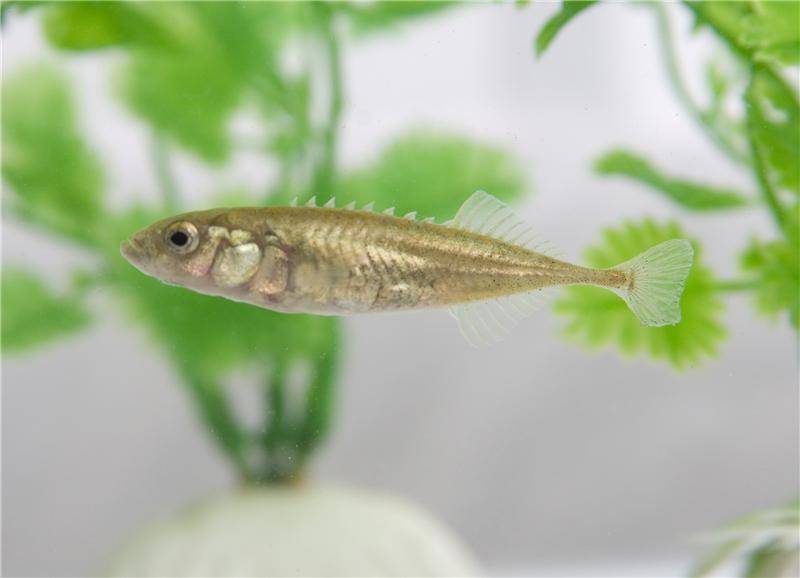
A common species of fish which is found across Europe called the nine-spined stickleback could be the first animal shown to exhibit an important human 'social learning' strategy.   Sticklebacks can compare the behavior of other sticklebacks with their own experience and make choices that lead to better food supplies, according to the study by St Andrews and Durham universities.

Same-sex behavior has been extensively documented in the non-human animal kingdom, concludes a new review of existing research.

Yep, homosexual behavior is common across species, from worms to frogs to birds - but there's a catch.   Same-sex 'behaviors' are not the same across species and researchers may be calling qualitatively different phenomena by the same name.
In revisiting a chemical reaction that's been in the literature for several decades and adding a new wrinkle of their own, researchers with Berkeley Lab and the University of California (UC) Berkeley have discovered a mild and relatively inexpensive procedure for removing oxygen from biomass. This procedure, if it can be effectively industrialized, could allow many of today's petrochemical products, including plastics, to instead be made from biomass. 

"We've found and optimized a selective, one-pot deoxygenation technique based on a formic acid treatment," said Robert Bergman, a co-principal investigator on this project who holds a joint appointment with Berkeley Lab's Chemical Sciences Division and the UC Berkeley Chemistry Department. 
Neurological diseases including Parkinson's, Tourette's, attention deficit hyperactivity disorder (ADHD), Alzheimer's, and schizophrenia are all associated with alterations in dopamine-driven function involving the dopamine transporter (DAT). Research published today BMC Neuroscience suggests that a number of estrogens acting through their receptors affect the DAT, which may explain trends in timing of women's susceptibility to these diseases.
University of Louisville neurologist Robert P. Friedland, M.D., questions the safety of eating farmed fish in the June issue of the Journal of Alzheimer's Disease.  A legitimate worry about the nation's food supply or a case of an anti-farmed fish agenda? 

Friedland and co-authors suggest, despite any evidence or anything outside their own speculation, that farmed fish byproducts rendered from cows, like bone meal, could transmit Creutzfeldt Jakob disease, commonly known as mad cow disease, to humans.   Despite the lack of evidence, they are urging government regulators to ban feeding cow meat or bone meal to fish until the safety of this common practice can be confirmed.   How can you further prove something is safe that has been in use for decades without issue?
University of Leicester researchers writing in the journal Chemical Research in Toxicology say they have found "convincing evidence" that cannabis smoke damages DNA and it could potentially increase the risk of cancer development in humans.

Using a newly developed highly sensitive liquid chromatography-tandem mass spectrometry method, the University of Leicester scientists say they have found clear indication that cannabis smoke damages DNA under laboratory conditions.

The researchers are Rajinder Singh, Jatinderpal Sandhu, Balvinder Kaur, Tina Juren, William P. Steward, Dan Segerback and Peter B. Farmer from the Cancer Biomarkers and Prevention Group, Department of Cancer Studies and Molecular Medicine and Karolinska Institute, Sweden.