Banner
Here's Where Your Backyard Was 300 Million Years Ago

We may use terms like "grounded" and terra firma to mean stability and consistency but geology...

Convergent Evolution Cheat Sheet Now 120 Million Years Old

One tenet of natural selection is a random walk of genes but nature may be more predictable than...

Synchrotron Could Shed Light On Exotic Dark Photons

There are many hypothetical particles proposed to explain dark matter and one idea to explore how...

The Pain Scale Is Broken But This May Fix It

Chronic pain is reported by over 20 percent of the global population but there is no scientific...

User picture.
News StaffRSS Feed of this column.

News Releases From All Over The World, Right To You... Read More »

Blogroll
The International Institute for Species Exploration at Arizona State University and an international committee of taxonomists – scientists responsible for species exploration and classification – today announce the top 10 new species for 2009, consisting of those described in 2008.  

Part 1 and Part 2

How were the Top 10 chosen?
The International Institute for Species Exploration at Arizona State University and an international committee of taxonomists – scientists responsible for species exploration and classification – today announce the top 10 new species described in 2008.

The International Institute for Species Exploration at Arizona State University and an international committee of taxonomists – scientists responsible for species exploration and classification – today announce the top 10 new species for 2009, consisting of those described in 2008.

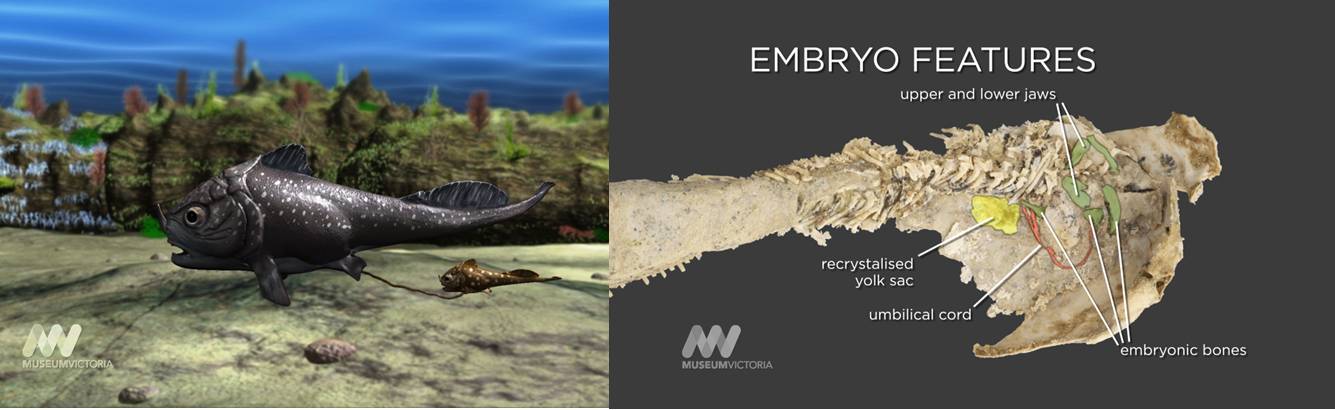
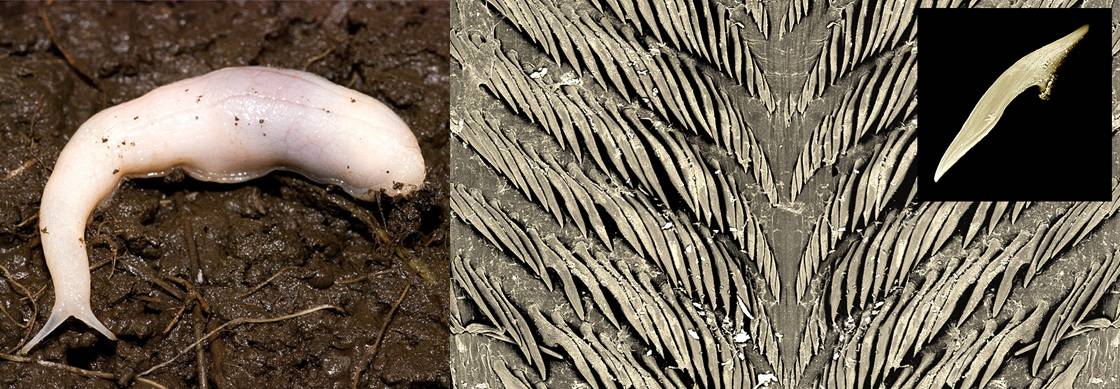
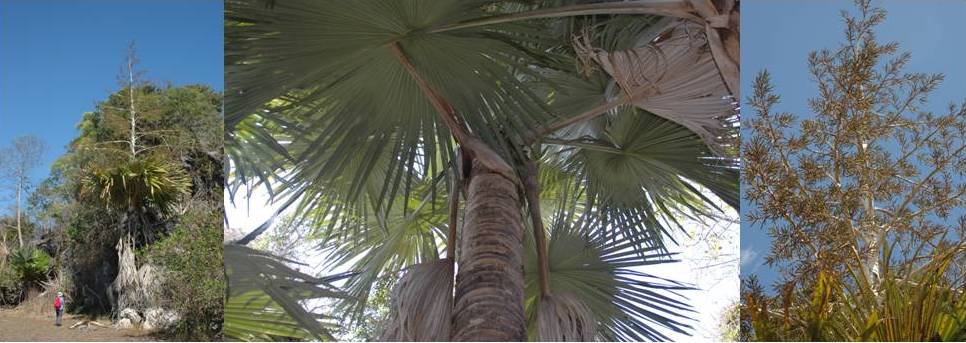
On the list are a pea-sized seahorse, caffeine-free coffee and bacteria that live in hairspray. The top 10 new species also include the very tiny (a snake just a slither longer than 4 inches or 104 millimeters), the very long (an insect from Malaysia with an overall length of 22.3 inches or 56.7 centimeters) the very old (a fossilized specimen of the oldest known live-bearing vertebrate) and the very twisted (a snail whose shell twists around four axes).

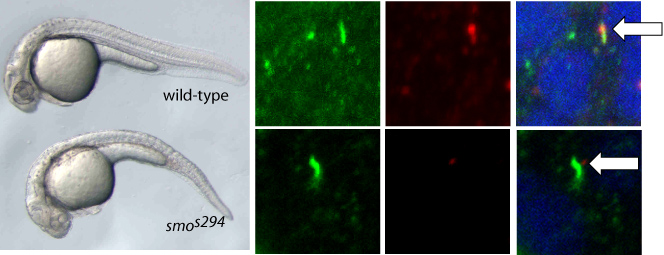
It is the concentration of a few signaling molecules that determines the fate of individual cells during the early development of organisms, say a team of molecular biologists writing in Current Biology.   Pia Aanstad of the University of Innsbruck and colleagues report that a variety of molecular mechanisms accounts for the interpretation of the concentration of the signaling molecule Hedgehog. 

The development of an organism is a complex process to which a dozen or hundreds of signaling molecules contribute. Some of these molecules have dozens of functions in the fruit fly and in humans alike.
Pulsars are superdense neutron stars, the remnants left after massive stars have exploded as supernovae. Their powerful magnetic fields generate lighthouse-like beams of light and radio waves that sweep around as the star rotates. Most rotate a few to tens of times a second, slowing down over thousands of years.
The Mars rover, Opportunity, surveyed the rim and interior of Victoria Crater on the Red Planet from September 2006 through August 2008. Key findings from that work, reported in the May 22 edition of Science, reinforce and expand what researchers learned from Opportunity's exploration of two smaller craters after landing on Mars in 2004.