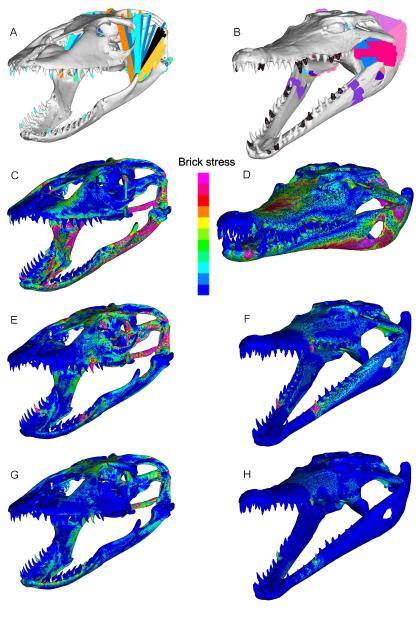
A new study has shown that the effectiveness of the Komodo Dragon bite is a combination of highly specialized serrated teeth and venom and the authors say this dismisses the widely accepted theory that prey die from septicemia caused by toxic bacteria living in the dragon's mouth.
Using sophisticated medical imaging techniques, an international team led by Dr Bryan Fry from the University of Melbourne have revealed that the Komodo Dragon (Varanus komodoensis) has the most complex venom glands yet described for any reptile, and that its close extinct relative Megalania was the largest venomous animal to have lived.
A team of Vanderbilt University Medical Center investigators say they have cracked one of clinical medicine's enduring mysteries – namely, why the once-effective tuberculosis vaccine no longer prevents the bacterial lung infection that kills more than 1.7 million people worldwide each year.
The solution could lead to an improved TB vaccine and also may offer a novel platform for vaccines against other pathogens.
The current TB vaccine, known as BCG (bacille Calmette-Guérin), has been around since the 1920s. It was made by weakening (attenuating) a strain of bacteria that causes tuberculosis in cows and that genetically is 98 percent identical to the human TB germ.
The secret to any good recipe is knowing how things happen in a system and the recipe for diseases is no different. Many diseases have crucial proteins which change the dynamics of cells from benign to deadly. New findings from an international collaboration involving McGill University, the Research Institute of the McGill University Health Centre (MUHC) and the Human Proteome Organisation (HUPO) just made identifying these changes one step easier. Their findings published in Nature Methods, show how to improve protein analysis to tease out relevant potential disease-causing molecules.
Since April 15 and 17, 2009, when the first two cases of novel influenza A (H1N1) infection were identified from two southern California counties, novel influenza A (H1N1) cases have been documented throughout the world, with most cases occurring in the United States and Mexico.
In the United States, early reports of illnesses associated with novel influenza A (H1N1) infection indicated the disease might be similar in severity to seasonal influenza, with the majority of patients not requiring hospitalization and only rare deaths reported, generally in persons with underlying medical conditions.
If you didn't know better, you might think the Oldoinyo Lengai volcano in Tanzania was proof of alchemy.
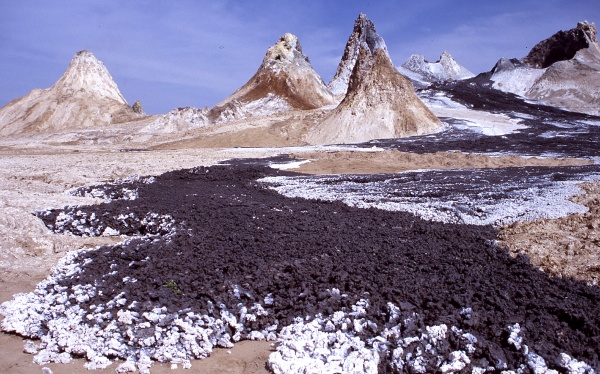
There, in the ancient East African Rift at a place known to local Maasai people as the Mountain of God, Oldoinyo Lengai spews forth carbon dioxide-laden lavas called carbonatites. The carbonatites line the volcano's flanks like snowballs. Oldoinyo Lengai is the only place on Earth where carbonatites currently erupt -- and where carbon dioxide from a volcano doesn't vanish into thin air as a gas.
In a paper published this week in the journal Nature, scientists report the results of a study of Oldoinyo Lengai's volcanic gas emissions, sampled by the team during a carbonatite lava eruption.
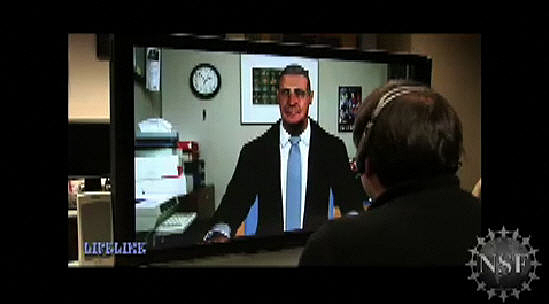
Is "Multiplicity" your favorite movie? Have you ever wished you could be in two places at once or create an evil twin (and name him Skippy)? A research project called LifeLike is trying to bring that a little closer to reality.
Project LifeLike is a collaboration between the Electronic Visualization Laboratory (EVL) at the University of Illinois at Chicago, and the Intelligent Systems Laboratory (ISL) at the University of Central Florida and aims to create visualizations of people, or avatars, that are as realistic as possible. While their current results are far from perfect replications of a specific person, their work has advanced the field forward and opens up a host of possible applications in the not-too-distant future.


 Here's Where Your Backyard Was 300 Million Years Ago
 Convergent Evolution Cheat Sheet Now 120 Million Years Old
 Synchrotron Could Shed Light On Exotic Dark Photons
 The Pain Scale Is Broken But This May Fix It