Banner
Here's Where Your Backyard Was 300 Million Years Ago

We may use terms like "grounded" and terra firma to mean stability and consistency but geology...

Convergent Evolution Cheat Sheet Now 120 Million Years Old

One tenet of natural selection is a random walk of genes but nature may be more predictable than...

Synchrotron Could Shed Light On Exotic Dark Photons

There are many hypothetical particles proposed to explain dark matter and one idea to explore how...

The Pain Scale Is Broken But This May Fix It

Chronic pain is reported by over 20 percent of the global population but there is no scientific...

User picture.
News StaffRSS Feed of this column.

News Releases From All Over The World, Right To You... Read More »

Blogroll
New research sheds light on how cocaine regulates gene expression in a crucial reward region of the brain to elicit long-lasting changes in behavior. The study in Neuron provides insight into the molecular pathways regulated by cocaine and may lead to new strategies for battling drug addiction.

It is well established that addictive drugs induce persistent changes in the brain's reward circuits. Previous research has indicated that addiction to drugs such as cocaine is associated with altered gene expression in the nucleus accumbens (NAc), a region of the brain that is involved in motivation, pleasure, and reward.
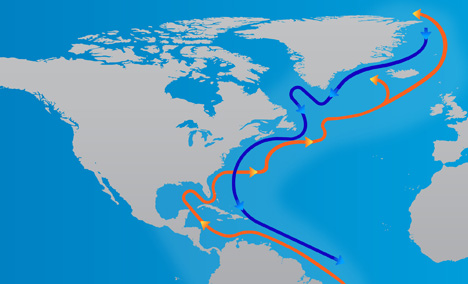
You probably envision ocean currents as a 'conveyor belt'  - that's okay, so do oceanographers.  But at least in the Atlantic, it doesn't work quite the way scientists have believed, according to new research led by Duke University and the Woods Hole Oceanographic Institution.  Their analyses showed that much of this water, originating in the sea between Newfoundland and Greenland, rather than flowing southward from the Labrador Sea, is diverted generally eastward by the time it flows as far south as Massachusetts. From there it disperses to the depths in complex ways that are difficult to follow.
Laboratory experiments have demonstrated the immunological effects of ginseng, say researchers writing in the Journal of Translational Medicine.  Their studies show that the herb, much used in traditional Chinese and other Asian medicine, does have anti-inflammatory effects.

The scientists treated human immune cells with different extracts of ginseng. They found that of the nine ginsenosides they identified, seven could selectively inhibit expression of the inflammatory gene CXCL-10. Allan Lau concludes, "Further studies will be needed to examine the potential beneficial effects of ginsenosides in the management of acute and chronic inflammatory diseases in humans."
Researchers in condensed matter physics at the University of Pennsylvania and the University of Chicago have created an experimental and computer model to study how jamming, the physical process in which collections of particles are crammed together to behave as solids, might affect the behavior of systems in which thermal motion is important, such as molecules in a glass.

The study presents the first experimental evidence of a vestige of the zero temperature jamming transition — the density at which large, loose objects such as gas bubbles in liquid, grains of sand or cars become rigid solids such as foam, sand dunes or traffic jams — in a system of small particles where thermal energy is important.

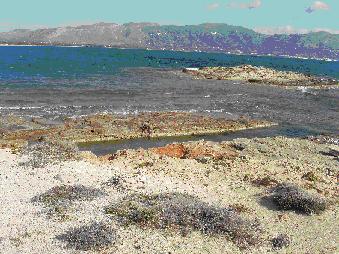
The oldest submerged town in the world is about to give up its secrets — with the help of equipment that could revolutionise underwater archaeology.

The ancient town of Pavlopetri lies in three to four metres of water just off the coast of southern Laconia in Greece. The ruins date from at least 2800 BC through to intact buildings, courtyards, streets, chamber tombs and some thirty-seven cist graves which are thought to belong to the Mycenaean period (c.1680-1180 BC). This Bronze Age phase of Greece provides the historical setting for much Ancient Greek literature and myth, including Homer’s Age of Heroes.

Bio-oil is an aqueous, acidic, highly oxidized mixture. However, its high oxygen content and instability turn out to have a negative impact: bio-oil cannot be used directly as a liquid fuel. It would, however, be highly interesting as a source of basic raw materials if it were possible to convert it to alkanes. Alkanes, which are also commonly called paraffins, are saturated hydrocarbons; they are among the most important raw materials for chemical industry, and in particular as starting materials for the production of plastics. Furthermore, they are among the primary fuels in the world's economy.