Banner
Here's Where Your Backyard Was 300 Million Years Ago

We may use terms like "grounded" and terra firma to mean stability and consistency but geology...

Convergent Evolution Cheat Sheet Now 120 Million Years Old

One tenet of natural selection is a random walk of genes but nature may be more predictable than...

Synchrotron Could Shed Light On Exotic Dark Photons

There are many hypothetical particles proposed to explain dark matter and one idea to explore how...

The Pain Scale Is Broken But This May Fix It

Chronic pain is reported by over 20 percent of the global population but there is no scientific...

User picture.
News StaffRSS Feed of this column.

News Releases From All Over The World, Right To You... Read More »

Blogroll
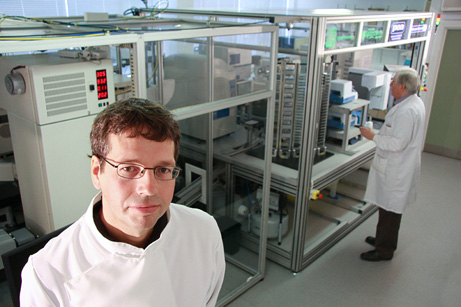
Scientists, this is your future research partner.    A 'Robot Scientist' named Adam has been created and the group behind it believe it is the first machine to have independently discovered new scientific knowledge. Adam is a computer system that fully automates the scientific process.
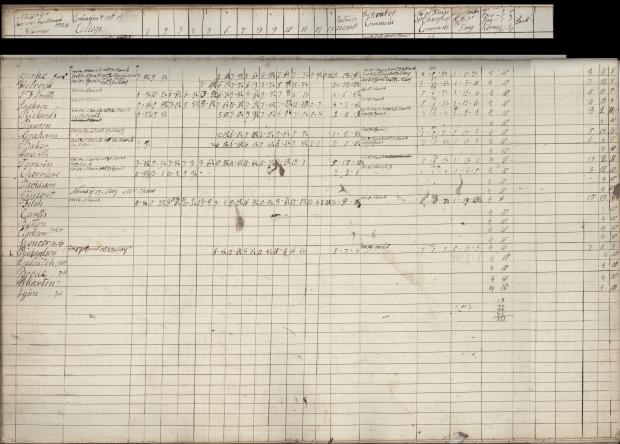
Yes, Charles Darwin did important things for science, but what we really want to know is how he squandered his money as a student.    Did he drink and smoke a lot?   Yeah, actually, which makes him all the more likable.   

200 years after the great naturalist's birth, his successors at Christ's College, Cambridge, have unearthed bills which record intimate details about the young Darwin's previously unknown day-to-day life during his student years.

The six record books were published online March 23rd at The Complete Work Of Charles Darwin Online (http://darwin-online.org.uk/), making them freely available to readers anywhere in the world.
Some of the symptoms of the autistic condition Asperger Syndrome, such as a need for routine and resistance to change, could be linked to levels of the stress hormone cortisol, suggests new research led by the University of Bath.

Normally, people have a surge of this hormone shortly after waking, with levels gradually decreasing throughout the day. It is thought this surge makes the brain alert, preparing the body for the day and helping the person to be aware of changes happening around them.

However, a study led by Dr Mark Brosnan and Dr Julie Turner-Cobb from the Department of Psychology at the University of Bath, and Dr David Jessop from the University of Bristol, has found that children with Asperger Syndrome (AS) do not experience this surge.
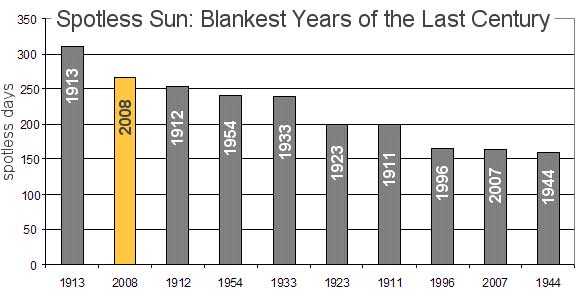
The sunspot cycle is behaving a little like the stock market. Just when you think it has hit bottom, it goes even lower. 

2008 was a bear. There were no sunspots observed on 266 of the year's 366 days (73 percent). To find a year with more blank suns, you have to go all the way back to 1913, which had 311 spotless days. Prompted by these numbers, some observers suggested that the solar cycle had hit bottom in 2008.

Maybe not. Sunspot counts for 2009 have dropped even lower. As of March 31st, there were no sunspots on 78 of the year's 90 days (87 percent).  

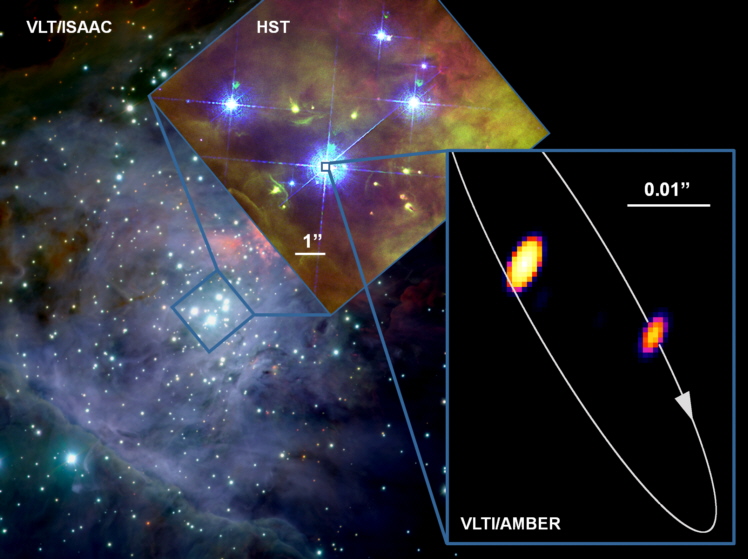
A team of astronomers, led by Stefan Kraus and Gerd Weigelt from the Max-Planck-Institute for Radio Astronomy (MPIfR) in Bonn, used ESO's Very Large telescope Interferometer (VLTI) to obtain the sharpest ever image of the young double star Theta 1 Ori C in the Orion Trapezium Cluster, the most massive star in the nearest high-mass star-forming region.
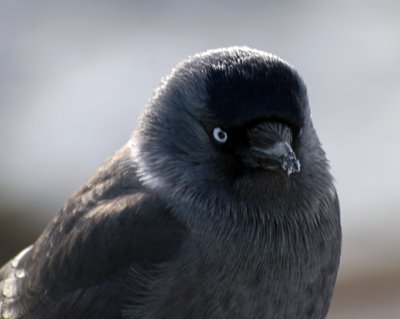
We all know that people sometimes change their behavior when someone is looking their way.   A new study in Current Biology shows that jackdaws, birds related to crows and ravens with eyes that appear similar to human eyes, can do the same. 

"Jackdaws seem to recognize the eye's role in visual perception, or at the very least they are extremely sensitive to the way that human eyes are oriented," said Auguste von Bayern, formerly of the University of Cambridge and now at the University of Oxford.