Banner
Here's Where Your Backyard Was 300 Million Years Ago

We may use terms like "grounded" and terra firma to mean stability and consistency but geology...

Convergent Evolution Cheat Sheet Now 120 Million Years Old

One tenet of natural selection is a random walk of genes but nature may be more predictable than...

Synchrotron Could Shed Light On Exotic Dark Photons

There are many hypothetical particles proposed to explain dark matter and one idea to explore how...

The Pain Scale Is Broken But This May Fix It

Chronic pain is reported by over 20 percent of the global population but there is no scientific...

User picture.
News StaffRSS Feed of this column.

News Releases From All Over The World, Right To You... Read More »

Blogroll
The NASA/ESA Hubble Space Telescope says a look into the heart of the Perseus galaxy has provided evidence that galaxies are embedded in halos of dark matter.   Small galaxies have remained intact while larger galaxies around them are being ripped apart by the gravitational tug of other galaxies.

The explanation?   The undisturbed galaxies are enshrouded by a "cushion" of dark matter that protects them.

Dark matter is a theoretical invisible form of matter that accounts for most of the Universe's mass. Astronomers have deduced the existence of dark matter by gravitational influences on normal matter, such as stars, gas and dust.
Are Americans bad at science?  If so, are they worse than anywhere else?   We know the answer to one of those questions.  A new national survey commissioned by the California Academy of Sciences and conducted by Harris Interactive  says that the U.S. public is unable to pass even a basic scientific literacy test. 

The good news; U.S. adults do believe that scientific research and education are important. About 4 in 5 adults think science education is "absolutely essential" or "very important" to the U.S. healthcare system (86%), the U.S. global reputation (79%), and the U.S. economy (77%). 
When a single female antbird is nearby, those with male partners will sing over the songs of their betrothed in an apparent attempt to keep their messages from getting through, according to a new report in Current Biology.

Males, of course, then change their tune.

This may be the first evidence that such "signal jamming" and "jamming avoidance" (literal cock-blocking) occurs between mates, according to the researchers. 
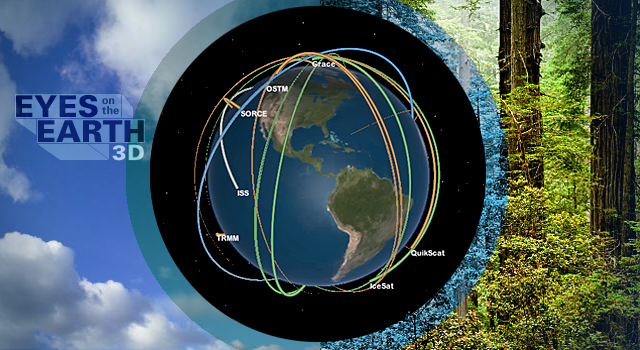
New interactive features on NASA's Global Climate Change Web site give the public the opportunity to "fly along" with NASA's fleet of Earth science missions and observe Earth from a global perspective in an immersive, 3-D environment. 

Developed using a state-of-the-art, browser-based visualization technology, "Eyes on the Earth 3-D" displays the location of all of NASA's 15 currently operating Earth-observing missions in real time. These missions constantly monitor our planet's vital signs, such as sea level height, concentration of carbon dioxide in our atmosphere, global temperatures and extent of sea ice in the Arctic, to name a few.
A new study challenges the prevailing assumption that you must pay attention to something in order to learn it. Research in the journal Neuron says that stimulus-reward pairing can elicit visual learning in adults ... even without awareness of the stimulus presentation or reward contingencies. 
The story’s Superman figure doubts if humanity is worth saving. Its Batman is impotent. Its Wonder Woman has mommy issues. And its closest thing to a protagonist also is a murderous sociopath.

Welcome to the world of Watchmen, considered by many to be the greatest comic book ever written. Dalhousie University english professor Anthony Enns, who teaches the course “Cartoons and Comics,” appreciates why people feel that way. He remembers Alan Moore’s comic being a sensation from the moment it first hit shelves over 20 years ago.

“If you were into comics then, everyone was taking about it, all the time,” he says. “People would gather and have these endless debates about what would happen next issue.”