Banner
Here's Where Your Backyard Was 300 Million Years Ago

We may use terms like "grounded" and terra firma to mean stability and consistency but geology...

Convergent Evolution Cheat Sheet Now 120 Million Years Old

One tenet of natural selection is a random walk of genes but nature may be more predictable than...

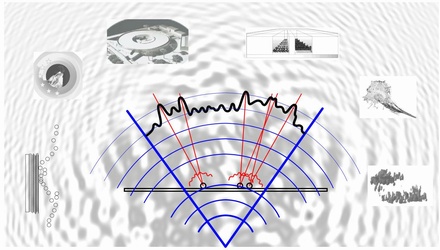
Synchrotron Could Shed Light On Exotic Dark Photons

There are many hypothetical particles proposed to explain dark matter and one idea to explore how...

The Pain Scale Is Broken But This May Fix It

Chronic pain is reported by over 20 percent of the global population but there is no scientific...

User picture.
News StaffRSS Feed of this column.

News Releases From All Over The World, Right To You... Read More »

Blogroll
A recent theory of aging says that caloric restriction may do the trick but the research is inconsistent; the mice in the most promising studies were weaned that way, something unlikely to happen in human children.    New research says even those studies may not be entirely accurate and that for lean mice – and therefore lean humans, if prior mouse studies were to be taken at face value  – caloric restrictions as an anti-aging strategy may be a pointless, frustrating and even dangerous exercise.

But for fat mice, dieting makes sense and will extend life, the researchers say.   That goes for people as well.
The movement of facial skin and muscles around the mouth plays an important role not only in the way the sounds of speech are made, but also in the way they are heard according to a study by scientists at Haskins Laboratories, a Yale-affiliated research laboratory. 

"How your own face is moving makes a difference in how you 'hear' what you hear," said first author Takayuki Ito, a senior scientist at Haskins Laboratories.

When, Ito and his colleagues used a robotic device to stretch the facial skin of "listeners" in a way that would normally accompany speech production they found it affected the way the subjects heard the speech sounds. 
To prolong the shelf life of foods, manufacturers often add hydrogen to natural oils, a process called hydrogenation. But hydrogenation also results in the production of trans fats, which have adverse health effects such as raising bad cholesterol and increasing the risk for coronary heart diseases.   Trans fats are found in vegetable shortenings, some margarines, crackers, cookies and snacks. Health authorities worldwide recommend that people reduce their consumption of trans fats.

UC Riverside chemists have designed a catalyst  (a substance that accelerates a chemical reaction) that allows hydrogenated oils to be made while minimizing the production of trans fats.

The American Peanut Council continues to work with the US Food and Drug Administration (FDA) to investigate which products may be affected by a manufacturer's recall due to salmonella contamination. It advises consumers that at this time, there is no indication that any jars of peanut butter sold in retail stores are linked to the recall by Georgia-based Peanut Corporation of America (PCA).

While none of this product was sold at retail to the general public, some of the peanut butter and peanut paste manufactured by PCA is used as ingredients in other products.

Manhattan Research, a global healthcare and pharmaceutical market research company, today announced the release of Taking the Pulse(R) Europe v8.0, its European physician study and strategic advisory service. It offers in-depth market data and analysis of how physicians across Western Europe integrate the Internet and technology into their practises. Taking the Pulse(R) Europe also looks at key trends in pharma company/sales rep interactions and electronic detailing.

According to the study, European physicians are more reliant than ever on technology - over 80% who are online reported that the Internet is essential to their practice.

The Conservancy of Southwest Florida has filed a petition with Secretary Salazar of the United States Department of the Interior to provide additional legal protection for the endangered Florida panther to help prevent its extinction.

Only an estimated 90 to 100 Florida panthers remain today, almost all within South Florida. Because of these low numbers, they are considered at extremely high risk of extinction. Although there are provisions to protect the panther provided by the Endangered Species Act (ESA), designation of critical habitat, a key component of the Act, has yet to be undertaken.