Banner
Why Antarctic Sea Ice Stopped Growing In 2015

Though numerical models and popular films like An Inconvenient Truth projected Arctic ice...

Wealth Correlated To Loneliness

You may have read that Asian cultures respect the elderly more than Europe but Asian senior citizens...

Ousiometrics Analysis Says All Human Language Is Biased

A new tool drawing on billions of uses of more than 20,000 words and diverse real-world texts claims...

Wavelengths Of Light Are Why CO2 Cools The Upper Atmosphere But Warms Earth

There are concerns about projected warming on the Earth’s surface and in the lower atmosphere...

User picture.
News StaffRSS Feed of this column.

News Releases From All Over The World, Right To You... Read More »

Blogroll
Archaeologists have found evidence of an ancient gold trade route between the south-west of the UK and Ireland, which would mean people were trading gold between the two countries as far back as the early Bronze Age, 2500 B.C.

The finding was made after measuring the chemical composition of early gold artifacts in Ireland and discovering that the objects were actually made from imported gold, rather than Irish. The gold is most likely to have come from Cornwall, which means the symbiotic link between Ireland and England is even farther back then believed.


Lunula and discs. Credit National Museum of Ireland
Physics at the UAB have found the “formula” to construct a quantum thermometer with enough precision to detect minute fluctuations in temperature in regions as small as the inside of a cell. The research appears today in the journal Physical Review Letters.

Researchers from the UAB and the University of Nottingham, in an article published today in Physical Review Letters, have fixed the limits of thermometry, i.e., they have established the smallest possible fluctuation in temperature which can be measured. The researchers have studied the sensitivity of thermometers created with a handful of atoms, small enough to be capable of showing typical quantum-style behaviours.
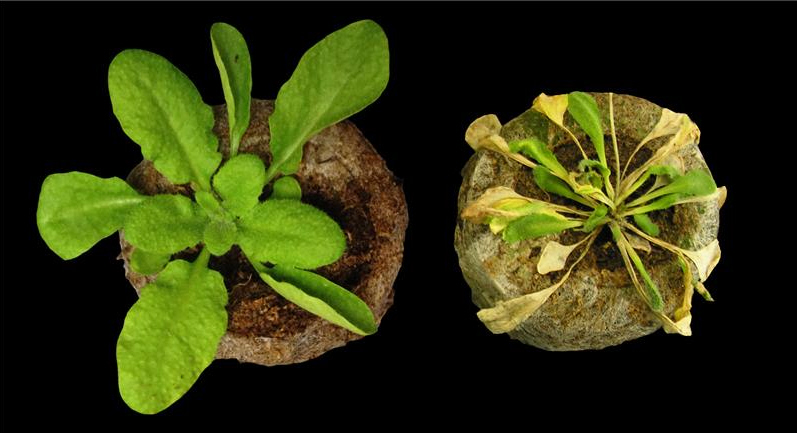
In the animal kingdom, predators use a full range of strategies, such as camouflage, speed and optical illusions, to catch their prey. Meanwhile, prey species resort to the same tactics to escape from their predators. Such tricks are also used at the molecular level, as discovered by researchers from the CNRS, INRA, CEA and INSERM in one of the most devastating bacterial plant pathogens in the world, which bypasses plant cell defenses by preventing an immune signaling from being triggered.

Even more surprising is the fact that plant cells have developed a receptor incorporating a decoy intended to catch the invader in its own trap. 

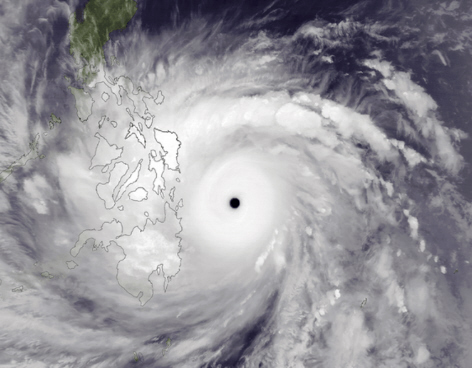
Every year, typhoons over the western North Pacific – the equivalent to hurricanes in the North Atlantic – cause considerable damage in East and Southeast Asia.

Super Typhoon Haiyan of 2013, one of the strongest ocean storms ever recorded, devastated large portions of the Philippines and killed at least 6,300 people. It set records for the strongest storm at landfall and for the highest sustained wind speed over one minute, hitting 315 kilometers (194 miles) per hour when it reached the province of Eastern Samar.

In recent years, the biopharmaceutical industry has seen an explosion in the availability of Big Data that can generate valuable insights. Despite this, the inherent costs and challenges that come with utilizing Big Data have caused the biopharmaceutical sector to embrace Big Data analytics much slower than other industries.

According to a recent study by benchmarking firm, Best Practices, LLC, 53% of participants already have a Big Data team or function in place; however, these organizations are still in the early stages of utilizing large data sets from different sources to inform critical aspects of Medical Affairs operations.

A new research study showed why threatened Caribbean star corals sometimes swap partners to help them recover from bleaching events. The findings are important to understand the fate of coral reefs as ocean waters warm due to climate change.