Banner
Why Antarctic Sea Ice Stopped Growing In 2015

Though numerical models and popular films like An Inconvenient Truth projected Arctic ice...
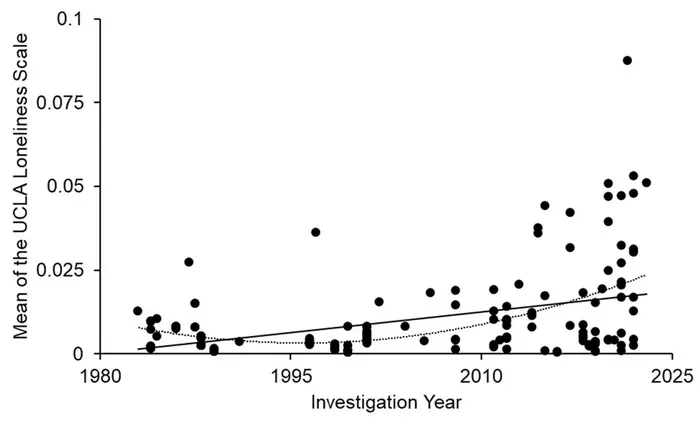
Wealth Correlated To Loneliness

You may have read that Asian cultures respect the elderly more than Europe but Asian senior citizens...

Ousiometrics Analysis Says All Human Language Is Biased

A new tool drawing on billions of uses of more than 20,000 words and diverse real-world texts claims...

Wavelengths Of Light Are Why CO2 Cools The Upper Atmosphere But Warms Earth

There are concerns about projected warming on the Earth’s surface and in the lower atmosphere...

User picture.
News StaffRSS Feed of this column.

News Releases From All Over The World, Right To You... Read More »

Blogroll

A University of Colorado Cancer Center study published in the journal Nicotine & Tobacco Research shows a new dimension to the marginalization of smokers: people who smoke are less likely to vote than their non-smoking peers.

"One on hand, the result is intuitive. We know from previous research that smokers are an increasingly marginalized population, involved in fewer organizations and activities and with less interpersonal trust than nonsmokers. But what our research suggests is that this marginalization may also extend beyond the interpersonal level to attitudes toward political systems and institutions," says Karen Albright, PhD, assistant professor at the Colorado School of Public Health, and the paper's first author.

Many of those who should get it, don't. And many of those who shouldn't, do. That's the story of a common screening test for osteoporosis, according to new research.

Some blind individuals use echoes from tongue or finger clicks to recognize objects in the distance, such echolocation can almost be a radar 'replacement' for vision. 

Recent research showed that echolocation in blind individuals is a full form of sensory substitution, and that blind echolocation experts recruit regions of the brain normally associated with visual perception when making echo-based assessments of objects.

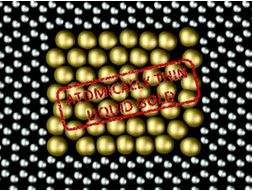
Computer simulations have predicted a new phase of matter: atomically thin two-dimensional liquid.

Playing natural sounds such as flowing water in offices could boosts worker moods and improve cognitive abilities in addition to providing speech privacy, according to a new study.

An increasing number of modern open-plan offices employ sound masking systems that raise the background sound of a room so that speech is rendered unintelligible beyond a certain distance and distractions are less annoying. Sound masking systems are custom designed for each office space by consultants and are typically installed as speaker arrays discretely tucked away in the ceiling. For the past 40 years, the standard masking signal employed is random, steady-state electronic noise -- also known as "white noise."

Enrollment of the first patients into STEADFAST (Single Trial Evaluating Alzheimer's Disease Following Addition to Symptomatic Therapy), vTv's Phase 3 placebo controlled trial of azeliragon, an oral antagonist of the Receptor for Advanced Glycation Endproducts (RAGE) for treatment of mild Alzheimer's disease has begun. Phase 3 begins following a Phase 2 trial that demonstrated positive results in slowing cognitive decline with 5 mg/day of azeliragon in patients with mild to moderate Alzheimer's Disease.