Banner
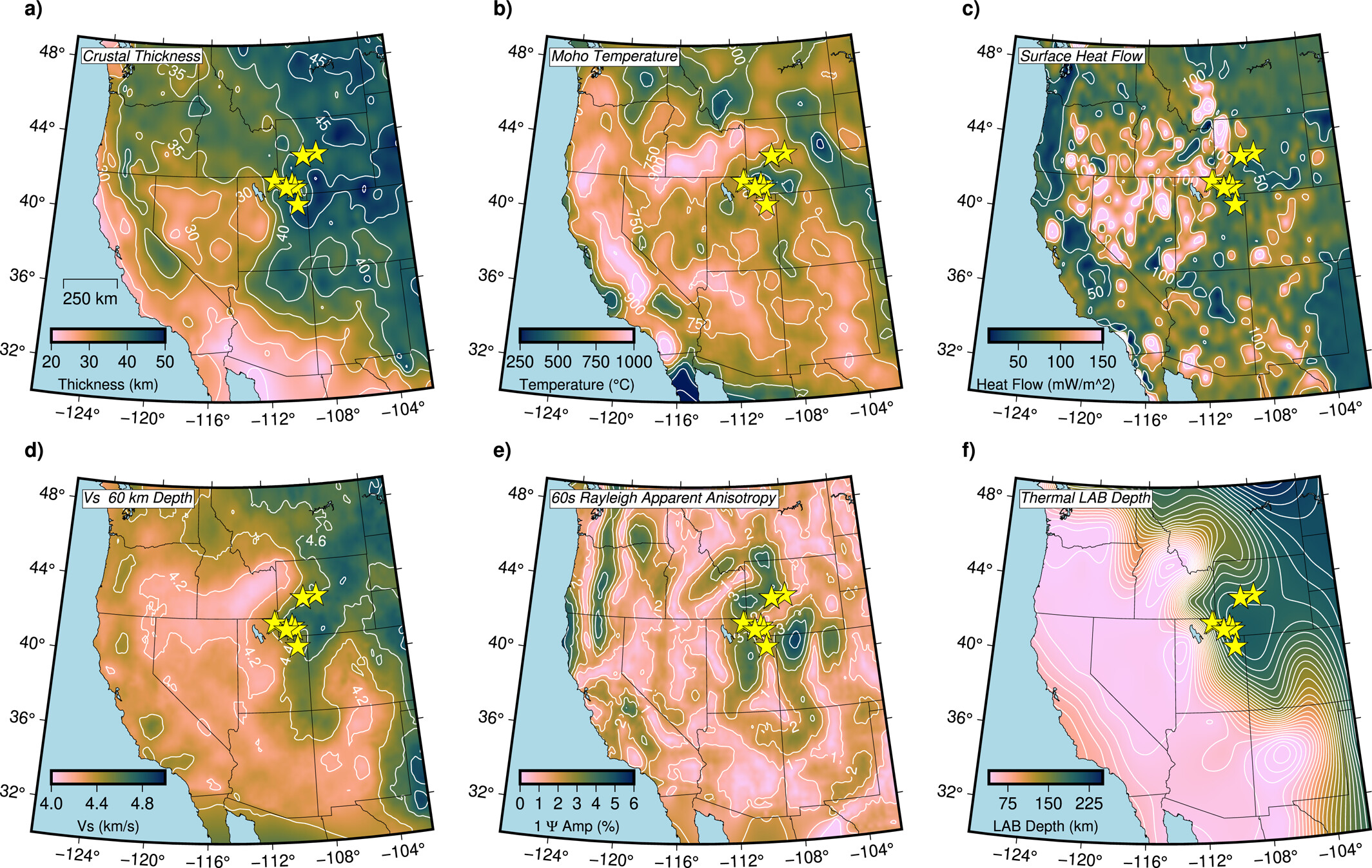
You Didn't Feel Continental Mantle Earthquakes, But They Happened. A Lot

A 1979 seismic event was a different kind of earthquake, and it is has intrigued scientists ever...
How To Overcome Leadership Battles

In times of social rancor and strife, most will fight each other, but societies are saved by those...
Thousands Of Unpublished Studies Show Why Conservation Efforts Miss The Mark

Europe alone has so much unpublished, un-catalogued biological data that it is challenging to take...

Why Antarctic Sea Ice Stopped Growing In 2015

Though numerical models and popular films like An Inconvenient Truth projected Arctic ice...

User picture.
News StaffRSS Feed of this column.

News Releases From All Over The World, Right To You... Read More »

Blogroll
Ground sharks (Carcharhiniformes) are the most diverse shark group living today, with over 200 different species, and they are one of the major groups that survived the Cretaceous–Palaeogene mass extinction which is why we have the Tiger, Hammerhead, and Blacktip Reef sharks and lamniforms by the Great White and Mako sharks.

Before the mass extinction that killed-off non-bird dinosaurs and marked the end of the Cretaceous period and the Mesozoic era 66 million years ago, dinosaurs dominated terrestrial environments and Mackerel sharks (Lamniformes) were the dominant shark forms of the sea.
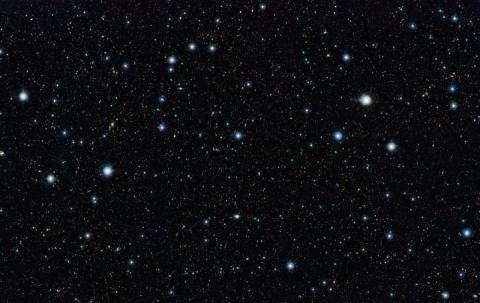
In the journal Monthly Notices of the Royal Astronomical Society and in a presentation at the European Week of Astronomy and Space Science in Liverpool, a team announced one of the largest 3D maps of the infant Universe.

And along with it almost 4,000 early galaxies, many of which will have evolved into galaxies like our own Milky Way. 


The COSMOS field in the constellation of Sextans, seen in infrared light. Credit:  ESO/UltraVISTA team. Acknowledgement: TERAPIX/CNRS/INSU/CASU

Looking back in time: 16 different epochs between 11 and 13 billion years ago
 If you have seen a face in the clouds or you have been part of a phenomenon called "pareidolia" - a willingness to recognize a non-face object as a human face.

Humans sometimes perceive an inherently meaningless object such as a pattern, landscape or object as another object, one that has meaning. It's why alternative science proponents, the Jeffrey Smith's and Pete Myers of the world, believe in spirit photographs. 

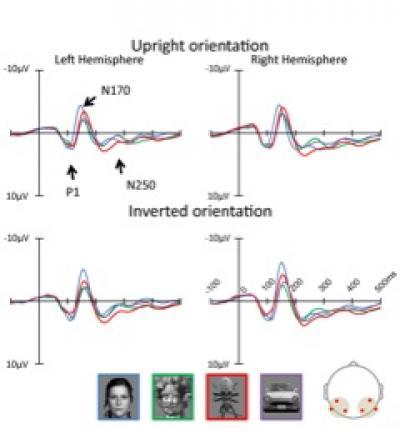
Some have even argued that pareidolia occurs in relatively low-level visual processing, and a new paper examines the relation between behavior when a face-like object is viewed and brain activity to reveal the level of visual processing at which face-likeness is recognized.
Bumblebee safety alert; don't put holograms in that meadow or near the urban beehive you probably regret buying.  A new study shows that bees, which are already confounded by lots of different things, are mystified by iridescent colors, colors that seem to change based on the angle you view them from. Like bubbles do.
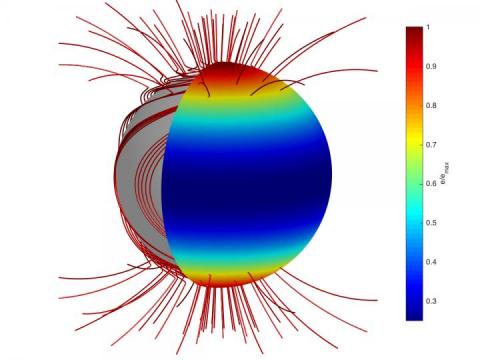
You may have trouble finding a hotspot in that store you are visiting, but there is one place they are persistent: inside neutron stars. A new study shows that instabilities can create intense magnetic hot spots that survive for millions of years, even after the star's overall magnetic field has decayed significantly. 

When a massive star consumes its nuclear fuel and collapses under its own gravity in a supernova explosion, it can result in a neutron star. These very dense objects have a radius of about 10 kilometers and yet are 1.5 times more massive than the Sun. They have very strong magnetic fields and are rapid rotators, with some neutron stars spinning more than 100 times per second round their axis. 

In the 1980s, environmentalists and epidemiologists began to statistically correlate attention problems in children and lower scores on tests with flame retardants used in furniture, chemicals that had become popular because parents and fire departments wanted to prevent "flashover" events during house fires - explosions in closed rooms.