Banner
Here's Where Your Backyard Was 300 Million Years Ago

We may use terms like "grounded" and terra firma to mean stability and consistency but geology...

Convergent Evolution Cheat Sheet Now 120 Million Years Old

One tenet of natural selection is a random walk of genes but nature may be more predictable than...

Synchrotron Could Shed Light On Exotic Dark Photons

There are many hypothetical particles proposed to explain dark matter and one idea to explore how...

The Pain Scale Is Broken But This May Fix It

Chronic pain is reported by over 20 percent of the global population but there is no scientific...

User picture.
News StaffRSS Feed of this column.

News Releases From All Over The World, Right To You... Read More »

Blogroll
One of the most effective arguments for science solutions to agriculture issues is the misuse of pesticides.  It's one area where activists and scientists agree.

Brown planthoppers are one of a rice farmer's worst fears. Considered a major scourge in rice-producing countries, planthoppers cause considerable damage by sucking sap from rice plants, causing them to wilt and die. They also transmit three viral diseases that stunt rice plants and prevent grain formation. The obvious solution of the past few decades has been to rely on pesticides but beneficial insects that prey on planthoppers are killed inadvertently when insecticides are misused or are used indiscriminately.
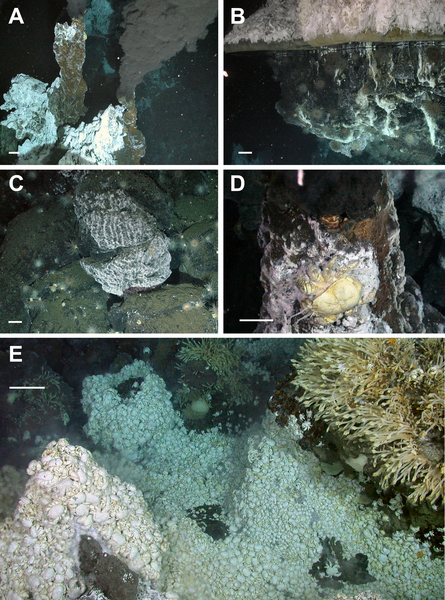
In the East Scotia Ridge deep beneath the Southern Ocean, hydrothermal vents including 'black smokers' reaching temperatures of up to 382 degrees Celsius have created a unique environment that lacks sunlight, but is rich in certain chemicals.

It also has communities of species previously unknown to science on the seafloor.

This hot, dark environment surrounding hydrothermal vents was explored using a Remotely Operated Vehicle (ROV) and the researchers found new species of yeti crab, starfish, barnacles, sea anemones, and potentially an octopus.
Two recent studies are providing a foundation for a more complete understanding of distinct kidney cancer subtypes, which could pave the way for better treatments.

In a study published in Cancer Cell led by Kyle Furge, Ph.D. and Aikseng Ooi, Ph.D. of Van Andel Research Institute, they provide a more complete understanding of the biology of Type 2 papillary renal cell carcinoma (PRCC2), an aggressive type of kidney cancer with no effective treatment, which lays the foundation for the development of effective treatment strategies.

The previous year has forced us to confront difficult science questions: Was processing patents Einstein’s real strength? Are there any other planets out there like Earth? Why is the universe composed of matter instead of antimatter? 2011 had a bumper crop of fascinating science and technology stories, so many that it’s impossible to call ten stories "the top” but the audience expects it.  So, courtesy of Ysabel Yates at Txchnologist, here are ten notable events from a long list, in no particular order and slightly edited.

A study in Cancer Discovery says mutations in the ATM gene may increase the hereditary risk for pancreatic cancer.

Pancreatic cancer is one of the most morbid cancers, with less than 5 percent of those diagnosed with the disease surviving to five years. Approximately 10 percent of patients come from families with multiple cases of pancreatic cancer.

Using next-generation sequencing, including whole genome and whole exome analyses, they identified ATM gene mutations in two kindreds with familial pancreatic cancer. When those initial findings were examined in a large series for patients, ATM mutations were present in four of 166 subjects with pancreatic cancer but were absent in 190 spousal control subsets. 

An international clinical trial shows that treating ovarian cancer with the drug bevacizumab ("Avastin") delays the disease and may also improve survival. 

The findings in the New England Journal of Medicine report that the drug halted the cancer's return for two months overall but for women with the highest risk disease, the delay was five to six months and the findings also indicate a strong trend to improved overall survival, which is being analyzed until 2013. 

The seven-year study began in 2004 and enrolled 1,528 women with ovarian cancer at 263 centres, including 20 in Canada. Avastin was added to chemotherapy treatment and given intravenously every three weeks for 12 months.