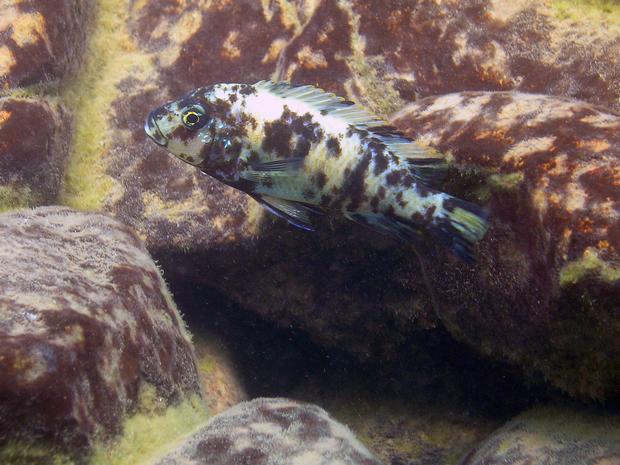
Biologists from the University of Maryland writing in Science have described the genetic basis for two co-existing systems of sexual determination in cichlid fish from Lake Malawi and, in doing so, identified a mechanism by which new sex chromosomes may evolve.
In nearly all mammals, the SRY gene determines the sex of offspring and is located on the Y chromosome, which is much smaller than the X chromosome but in many other animal groups the genetic mechanism of sex determination evolves quite rapidly and the differences between sex chromosomes are harder to observe.
By thinking about packaging size and shape, major environmental gains can be made, says Renee Wever, who will defend his thesis on this topic at Delft University of Technology (The Netherlands) on Monday 5 October. This is a different focus than recycling, the traditional method of environmental savings which hasn't really worked out.
Smaller-sized, more easily handled boxes require less transport and the Dutch packaging industry alone is worth billions of dollars annually. More cleverly designed packaging options could result in significant savings, suggests Wever. According to him, there are also considerable environmental benefits to be achieved, though by focusing on different aspects than usual.
Estimates can be funny things because usually they're brought up by people with agendas rather than people interested in objective analysis. Some estimates in competitive sports put athletic doping usage at 95%, for example, which sounds ridiculously high unless your slippery slope meter works overtime.
What about academia? The non-medical use of methylphenidate and amphetamine is as high as 25% on some US college campuses, particularly in colleges with more competitive admission criteria, says Vince Cakic of the Department of Psychology at the University of Sydney. And the use of smart drugs - "nootropics" - to boost academic performance is increasing.
A research team led by Dr Howard Falcon-Lang from Royal Holloway, University of London, analyzed spectacular discoveries of 300-million-year-old rainforests in Illinois coal mines and came to a conclusion that won't surprise most - Mother Nature is resilient.
Climate change wreaked havoc on these early rainforests but they quickly bounced back, they write in Geology. The ancient rainforests date from the Carboniferous period, 300 million years ago, when most of the world's coal resources were formed.
Researchers writing in BMC Cancer say that post-menopausal women who engage in moderate or vigorous exercise have reduced risk of breast cancer.
Over 110,000 post menopausal women were asked to rate their level of physical activity at ages 15-18, 19-29, 35-39, and in the past 10 years. It was found, over 6.6 years of follow up, that women who engaged in more than 7 hours per week of moderate-to-vigorous exercise for the last ten years were 16% less likely to develop breast cancer than those who were inactive. However, no link was observed between breast cancer risk and physical activity in women who were active at a younger age.
There's drama in two galaxies in the Virgo Cluster, NGC 4522 and NGC 4402. An extremely hot X-ray emitting gas known as the intra-cluster medium lurks between galaxies within clusters and, as galaxies move through this intra-cluster medium, strong winds rip through galaxies distorting their shape and even halting star formation - a process known as "ram pressure stripping".
Result: Peculiar looking galaxies.
Ram pressure is the drag force that results when something moves through a fluid — much like the wind you feel in your face when bicycling, even on a still day — and occurs in this context as galaxies orbiting about the centre of the cluster move through the intra-cluster medium, which then sweeps out gas from within the galaxies.


 Here's Where Your Backyard Was 300 Million Years Ago
 Convergent Evolution Cheat Sheet Now 120 Million Years Old
 Synchrotron Could Shed Light On Exotic Dark Photons
 The Pain Scale Is Broken But This May Fix It