Banner
Social Media Is A Faster Source For Unemployment Data Than Government

Government unemployment data today are what Nielsen TV ratings were decades ago - a flawed metric...

Gestational Diabetes Up 36% In The Last Decade - But Black Women Are Healthiest

Gestational diabetes, a form of glucose intolerance during pregnancy, occurs primarily in women...

Object-Based Processing: Numbers Confuse How We Perceive Spaces

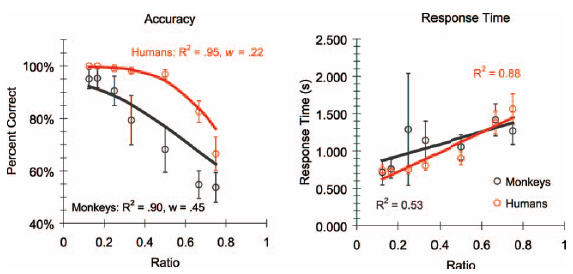
Researchers recently studied the relationship between numerical information in our vision, and...

Males Are Genetically Wired To Beg Females For Food

Bees have the reputation of being incredibly organized and spending their days making sure our...

User picture.
News StaffRSS Feed of this column.

News Releases From All Over The World, Right To You... Read More »

Blogroll

A team led by a Cardiff University archaeologist has reconstructed a 3,000-year-old glass furnace, showing that Ancient Egyptian glassmaking methods were much more advanced than previously thought.

Dr Paul Nicholson, of the University’s School of History and Archaeology, is leader of an Egypt Exploration Society team working on the earliest fully excavated glassmaking site in the world. The site, at Amarna, on the banks of the Nile, dates back to the reign of Akhanaten (1352 - 1336 B.C.), just a few years before the rule of Tutankhamun.

It was previously thought that the Ancient Egyptians may have imported their glass from the Near East at around this time.

New observations by NASA's Cassini spacecraft indicate the rings of Saturn, once thought to have formed during the age of the dinosaurs, instead may have been created roughly 4.5 billion years ago when the solar system was still under construction.

Professor Larry Esposito, principal investigator for Cassini's Ultraviolet Imaging Spectrograph at CU-Boulder, said data from NASA's Voyager spacecraft in the 1970s and later NASA's Hubble Space Telescope had led scientists to believe Saturn's rings were relatively youthful and likely created by a comet that shattered a large moon, perhaps 100 million years ago.

When humans began to migrate out of Africa about 100,000 years ago, their skin color gradually changed to adapt to their new environments. And when the last Ice Age ended about 10,000 years ago, marine ancestors of ocean-dwelling stickleback fish experienced dramatic changes in skin coloring as they colonized newly formed lakes and streams.

New research shows that despite the vast evolutionary gulf between humans and the three-spined stickleback fish, the two species have adopted a common genetic strategy to acquire the skin pigmentation that would help each species thrive in their new environments.

Researchers at the University of Massachusetts Medical School, gained new insights into autophagy -- a cellular degradation process associated with a form of programmed cell death -- by studying the salivary gland cells of the fruit fly.

Since its initial discovery in the 1960s, programmed cell death has been a primary focus of studies for investigators across a wide array of scientific disciplines.

An essential mechanism in development and homeostasis, programmed cell death allows for the clean intracellular destruction of unnecessary or damaged cells. While apoptosis is the most understood type of programmed cell death, recently scientists have begun to take a closer look at autophagy— a highly regulated, catabolic process that essentially allows a cell to eat itself.

As a step towards designing tomorrow's super-fast optical communications networks, a Duke University-led research team has demonstrated a way to transfer encoded information from a laser beam to sound waves and then back to light waves again.

Swapping data between media like this would allow information to be captured and retained for very brief intervals. Data could be stored within pockets of acoustic vibration created when laser beams interact along a short strand of optical fiber, the team reported in Science.

The Duke experiments address a barrier to efforts at developing computer networks that can run on light instead of electrons.

No one will be farther from home than the astronauts aboard the International Space Station, circling Earth at 17,500 mph and orbiting 16 times each day. NASA is giving the public an opportunity to send personalized holiday greetings to the orbiting crew.

NASA astronaut Peggy Whitson and Flight Engineer Yuri Malenchenko, a Russian cosmonaut, have been on the station since Oct. 12. Flight Engineer Dan Tani, a U.S. astronaut, joined them Oct. 25.