Banner
Social Media Is A Faster Source For Unemployment Data Than Government

Government unemployment data today are what Nielsen TV ratings were decades ago - a flawed metric...

Gestational Diabetes Up 36% In The Last Decade - But Black Women Are Healthiest

Gestational diabetes, a form of glucose intolerance during pregnancy, occurs primarily in women...

Object-Based Processing: Numbers Confuse How We Perceive Spaces

Researchers recently studied the relationship between numerical information in our vision, and...

Males Are Genetically Wired To Beg Females For Food

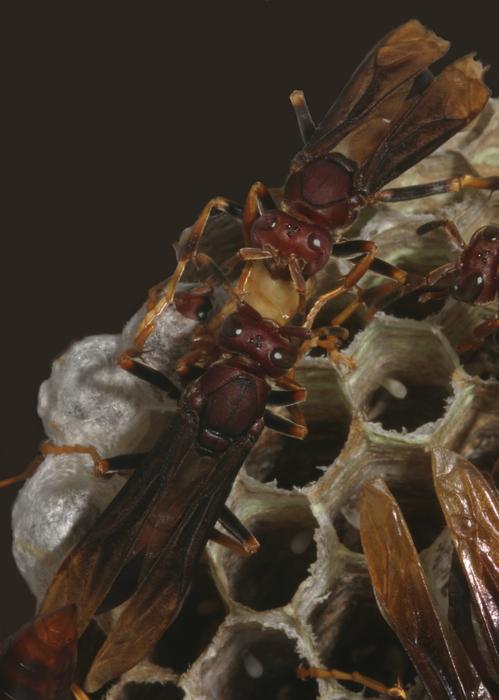
Bees have the reputation of being incredibly organized and spending their days making sure our...

User picture.
News StaffRSS Feed of this column.

News Releases From All Over The World, Right To You... Read More »

Blogroll

In obese individuals, fat cells are bloated and inflamed because they receive too many nutrients, including lipids. In these cells, various components cannot work properly anymore and, instead, they activate new proteins to cope with the situation. One of the most challenged organelles in obese fat cells is a maze-like compartment called the endoplasmic reticulum (ER) that makes proteins and lipid droplets and senses the amount of nutrients that enter the cell.

Margaret F. Gregor and Gokhan S. Hotamisligil review current knowledge about how the ER works in fat cells and is modified in obesity. They show that when a fat cell receives too many nutrients, the ER is overwhelmed and triggers a process called the unfolded protein response (UPR).

Scientists have discovered that a lipid known to protect the heart from inflammation and to cause skin allergic reactions also reduces inflammation of the kidneys. The discovery could help devise new ways of treating inflammatory kidney diseases.

The lipid, called sphingosylphosphorylcholine (SPC), has been shown to cause an increase in urine production in the kidneys and an abnormal accumulation of salt in the urine. But how SPC works in the kidneys is not completely understood.

Andrea Huwiler and colleagues examined the various proteins activated by SPC in kidney cells and showed for the first time that SPC triggers proteins known to reduce inflammation.

Single-walled carbon nanotubes (SWCNTs) can kill bacteria like the common pathogen E. coli by severely damaging their cell walls, according to a recent report from Yale researchers in the American Chemical Society (ACS) journal Langmuir.

“We began the study out of concerns for the possible toxicity of nanotubes in aquatic environments and their presence in the food chain,” said Menachem Elimelech, professor and chair of chemical and environmental engineering at Yale and senior author on the paper.

Engineers at the University of Washington are working with Harborview doctors to create new emergency treatments right out of Star Trek: a tricorder type device using high-intensity focused ultrasound rays. This summer, researchers published the first experiment using ultrasound to seal punctured lungs.

"No one has ever looked at treating lungs with ultrasound," said Shahram Vaezy, a UW associate professor of bioengineering. Physicists were skeptical it would work because a lung is essentially a collection of air sacs, and air blocks transmission of ultrasound. But the new experiments show that punctures on the lung's surface, where injuries usually occur, heal with ultrasound therapy.

"The results are really impressive," Vaezy said.

A drug that shuts down a critical cell-signaling pathway in the most common and aggressive type of adult brain cancer successfully kills cancer stem cells thought to fuel tumor growth and help cancers evade drug and radiation therapy, a Johns Hopkins study shows.

In a series of laboratory and animal experiments, Johns Hopkins scientists blocked the signaling system, known as Hedgehog, with an experimental compound called cyclopamine to explore the blockade’s effect on cancer stem cells that populate glioblastoma multiforme. Cyclopamine has long been known to inhibit Hedgehog signaling.

Yes, last week science said Song Debunked: Breaking Up Actually Not So Hard To Do but it's a new week and this is a different study.

They use the same song example, though.

Dr. Bronwen Lichtenstein, UA assistant professor of criminal justice who specializes in women’s issues, recently completed a study of the health risks women over age 35 faced when they returned to the dating scene after the breakup of a long-term relationship.

Lichtenstein was investigating the theory that after an older woman leaves a long-term relationship she may make risky dating choices.