

Banner
You Didn't Feel Continental Mantle Earthquakes, But They Happened. A Lot

A 1979 seismic event was a different kind of earthquake, and it is has intrigued scientists ever...

How To Overcome Leadership Battles

In times of social rancor and strife, most will fight each other, but societies are saved by those...
Thousands Of Unpublished Studies Show Why Conservation Efforts Miss The Mark

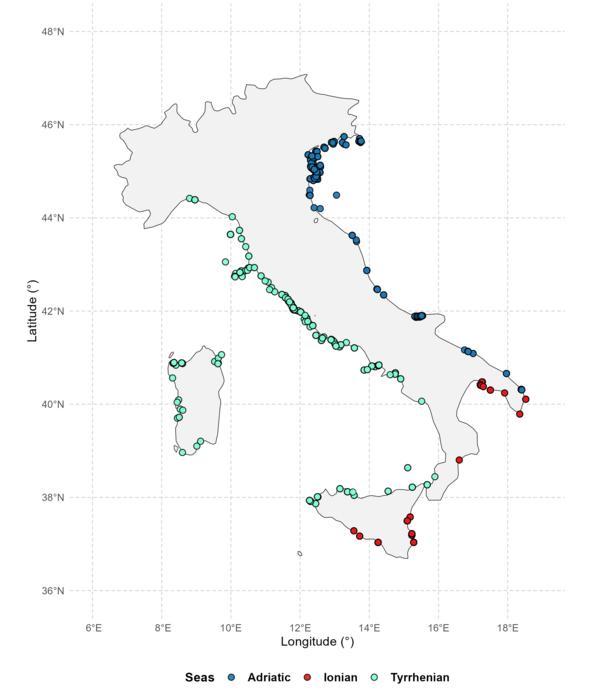
Europe alone has so much unpublished, un-catalogued biological data that it is challenging to take...

Why Antarctic Sea Ice Stopped Growing In 2015

Though numerical models and popular films like An Inconvenient Truth projected Arctic ice...

User picture.
News StaffRSS Feed of this column.

News Releases From All Over The World, Right To You... Read More »

Blogroll

The majority of advertising exposure occurs when the audience’s attention is focused elsewhere, such as while flipping through a magazine or browsing a web site. However, a new study reveals that even this incidental exposure to advertising may have a positive effect on consumer attitudes. Forthcoming in the June issue of the Journal of Consumer Research, the study revises existing theories of exposure advertising, specifically repeated views of web-based banner ads.

Nutritionists have long endorsed fish as part of a heart-healthy diet, and now some studies suggest that omega-3 fatty acids found in the oil of certain fish may also benefit the brain by lowering the risk of Alzheimer’s disease. In order to test whether an omega-3 fatty acid can impact the progression of Alzheimer’s disease, researchers supported by the National Institute on Aging (NIA), part of the National Institutes of Health, will evaluate one in a clinical trial, the gold standard for medical research.

Scientists have discovered how ocean circulation is working in the current that flows around Antarctica by tracing the path of helium from underwater volcanoes. The details are published in Nature this week.

The team, led by Alberto Naveira Garabato of the National Oceanography Centre, Southampton (formerly based at the University of East Anglia), has discovered a 'short-circuit' in the circulation of the world's oceans that could aid predictions about future climate change.

Shape Up Somerville: Eat Smart. Play Hard.™ a community-based environmental change intervention to prevent obesity in culturally diverse, early elementary school children reduced weight gain over one school year.

The program was designed and implemented by researchers from the Friedman School of Nutrition Science and Policy at Tufts University and the Tufts University School of Medicine in close collaboration with the community.

People who use Swedish moist snuff (snus) run twice the risk of developing cancer of the pancreas. This is the main result of a follow-up study conducted by Karolinska Institutet researchers amongst almost 300,000 male construction workers. The study is published today online in the prestigious medical journal The Lancet.

The causes of "broken heart syndrome" remain a mystery, but doctors will soon have an easier time recognizing and treating this rare, life-threatening condition, thanks to data being reported at the 30th Annual Scientific Sessions of the Society for Cardiovascular Angiography and Interventions (SCAI), May 9–12, 2007, in Orlando, FL.

Researchers from Brown University in Providence, RI, have developed the largest registry of patients in the United States with Takotsubo cardiomyopathy, informally known as broken heart syndrome because it is often preceded by an emotional or physical shock of some kind and almost always strikes women. One thing is certain: Patients are usually critically ill during the first 48 hours.





