Banner
You Didn't Feel Continental Mantle Earthquakes, But They Happened. A Lot

A 1979 seismic event was a different kind of earthquake, and it is has intrigued scientists ever...

How To Overcome Leadership Battles

In times of social rancor and strife, most will fight each other, but societies are saved by those...
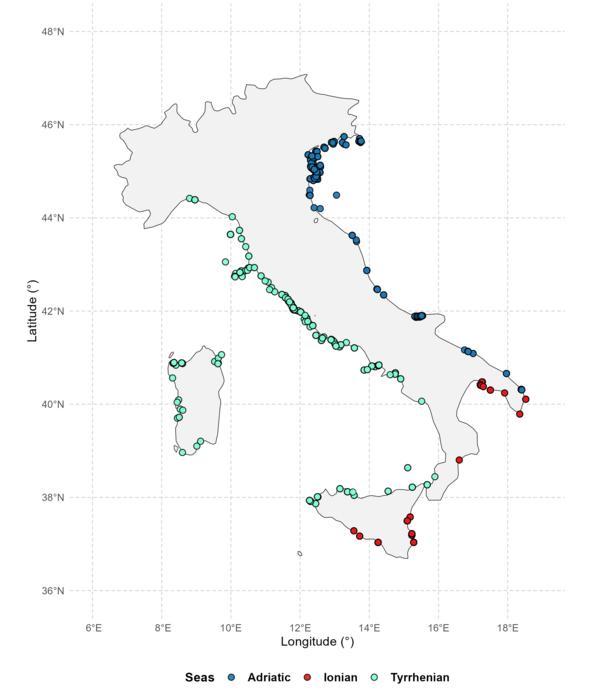
Thousands Of Unpublished Studies Show Why Conservation Efforts Miss The Mark

Europe alone has so much unpublished, un-catalogued biological data that it is challenging to take...

Why Antarctic Sea Ice Stopped Growing In 2015

Though numerical models and popular films like An Inconvenient Truth projected Arctic ice...

User picture.
News StaffRSS Feed of this column.

News Releases From All Over The World, Right To You... Read More »

Blogroll

The growing premature birth rate in the United States appears to be strongly associated with increased use of pesticides and nitrates, according to work conducted by Paul Winchester, M.D., professor of clinical pediatrics at the Indiana University School of Medicine.

Railway sleepers made from waste plastic, including recycled bumper scrap and old computer cases could be putting in an appearance on UK railway tracks soon, writes Patrick Walter in Chemistry & Industry, the magazine of the SCI.

UK company Micron, which makes sleepers from waste polystyrene and polyethylene, has already approached UK rail track operator Network Rail with the aim of forming a partnership. Polystyrene is commonly used in disposable coffee cups, and polyethylene is more likely to be seen hanging from trees in the form of carrier bags. But the longevity of this plastic means that railway sleepers made using it can potentially last for centuries. This compares to a few decades for sleepers made from wood or concrete.

Exposure to trauma may create enough changes in the brain to sensitize people to overreact to an innocuous facial gesture years later, even in people who don’t have a stress-related disorder, says new research. It appears that proximity to high-intensity traumas can have long lasting effects on the brain and behavior of healthy people without causing a current clinical disorder. But these subtle changes could increase susceptibility to mental health problems later on.

According to a new brain study, even people who seemed resilient but were close to the World Trade Center when the twin towers toppled on Sept. 11, 2001, have brains that are more reactive to emotional stimuli than those who were more than 200 miles away.

That is the finding of a new Cornell study that excluded people who did not have such mental disorders as post-traumatic stress disorder (PTSD) or major depression. One of the first studies to look at the effects of trauma on the brains of healthy people, it is published in the May issue of the journal Emotion.

Some high blood pressure medicines may help protect older adults from declines in memory and other cognitive function, according to new research from Wake Forest University School of Medicine, reported today at the annual meeting of the American Geriatrics Society in Seattle.

When we have a conversation with someone, we not only hear what they say, we see what they say. Eyes can smolder or twinkle. Gazes can be direct or shifty. “Reading” these facial expressions gives context and meaning to the words we hear.

In a report to be presented May 5 at the International Meeting for Autism Research in Seattle, researchers from UCLA will show that children with autism can’t do this. They hear and they see, of course, but the areas of the brain that normally respond to such visual cues simply do not respond.