Banner
You Didn't Feel Continental Mantle Earthquakes, But They Happened. A Lot

A 1979 seismic event was a different kind of earthquake, and it is has intrigued scientists ever...

How To Overcome Leadership Battles

In times of social rancor and strife, most will fight each other, but societies are saved by those...

Thousands Of Unpublished Studies Show Why Conservation Efforts Miss The Mark

Europe alone has so much unpublished, un-catalogued biological data that it is challenging to take...

Why Antarctic Sea Ice Stopped Growing In 2015

Though numerical models and popular films like An Inconvenient Truth projected Arctic ice...

User picture.
News StaffRSS Feed of this column.

News Releases From All Over The World, Right To You... Read More »

Blogroll

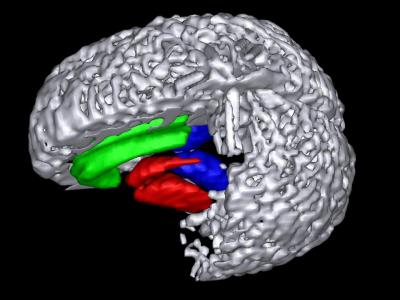
Within the mind of every smoker trying to quit rages a battle between the higher-order functions of the brain wanting to break the habit and the lower-order functions screaming for another cigarette, say researchers at Duke University Medical Center. More often than not, that cigarette gets lit.

Brain scans of smokers studied by the researchers revealed three specific regions deep within the brain that appear to control dependence on nicotine and craving for cigarettes. These regions play important roles in some of the key motivations for smoking: to calm down when stressed, to achieve pleasure and to help concentration.

Researchers have made an important advance in the emerging field of ‘spintronics’ that may one day usher in a new generation of smaller, smarter, faster computers, sensors and other devices, according to findings reported in today's issue of the journal Nature Nanotechnology.

The research field of ‘spintronics’ is concerned with using the ‘spin’ of an electron for storing, processing and communicating information.

A new study suggests how a notorious cancer gene may contribute to tumor growth.

The insight emerged from a long-running study of a protein called PMR1, the key player in an unusual mechanism that cells use to quickly stop production of certain important proteins.

Researchers discovered that PMR1 is activated – or “turned on – by another molecule, an energy-packing protein called Src (pronounced “sark”).

Playground roughhousing has long been a tradition of children and adolescents, much to the chagrin of several generations of parents who worry that their child will be hurt or worse, become accustom to violence and aggression. But animal research may paint a different portrait of rough and tumble play; one that suggests that social and emotional development may rely heavily on such peer interaction.

Nearly one in three women still experience painful sexual intercourse a year after their baby is born and more than half have at least one sex-related health problem, according to research in the March issue of Journal of Clinical Nursing.

482 women who had attended maternity units in Birmingham, UK, took part in a self-administered questionnaire at least a year after their most recent birth.

"87 per cent complained of at least one health problem" says Midwife Amanda Williams, who is currently on secondment to the city's Perinatal Institute.

We take "self-assembly" for granted when it is carried out by the biopolymers which are our hair, teeth, or skin. But when scientists devise new ways for molecules to self assemble into new materials, it is an important achievement.

Researchers with the Macromolecules and Interfaces Institute (MII www.mii.vt.edu) at Virginia Tech report such a development in the online issue for the Journal of the American Chemical Society, in the article, "Aggregation of Rod-Coil Block Copolymers Containing Rigid Polyampholyte Blocks in Aqueous Solution" (10.1021/ja070422+) and at the 233rd National Meeting of the American Chemical Society (ACS) in Chicago, March 25-29.