Banner
Could Niacin Be Added To Glioblastoma Treatment?

Glioblastoma, a deadly brain cancer, is treated with surgery to remove as much of the tumor as...

At 2 Months, Babies Can Categorize Objects

At two months of age, infants lack language and fine motor control but their minds may be understanding...

Opportunistic Salpingectomy Reduces Ovarian Cancer Risk By 78%

Opportunistic salpingectomy, proactively removing a person’s fallopian tubes when they are already...

Environmental Activists Hate CRISPR - And They're Dooming People With HIV

Existing treatments control HIV but the immune system does not revert to normal. They is why people...

User picture.
News StaffRSS Feed of this column.

News Releases From All Over The World, Right To You... Read More »

Blogroll

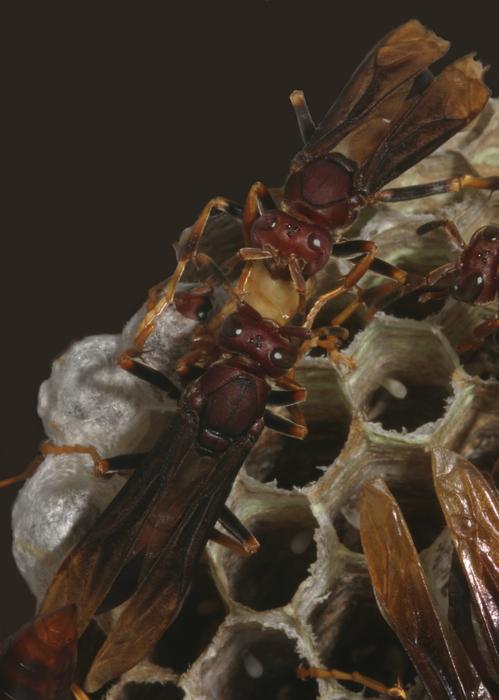
Scientists at the University of Illinois have conducted a genetic analysis of vespid wasps that revises the vespid family tree and challenges long-held views about how the wasps’ social behaviors evolved.

In the study, published in the Feb. 21 Proceedings of the National Academy of Sciences, the researchers found genetic evidence that eusociality (the reproductive specialization seen in some insects and other animals) evolved independently in two groups of vespid wasps.

These findings contradict an earlier model of vespid wasp evolution, which placed the groups together in a single lineage with a common ancestor.

Eusocial behavior is quite rare, and generally involves the breeding of different reproductive classes within a colony.

There is no clear benefit from a hormone commonly prescribed to enhance the effectiveness of infertility treatments, according to a new review of studies.

The steroid hormones called glucocorticoids have potent effects on the body’s inflammatory and immune responses, so many fertility specialists prescribe them in hopes of making the lining of the uterus more receptive to embryo implantation. But lead review author Carolien Boomsma says that routine practice should stop.

“This meta-analysis shows that empirical use of glucocorticoids is not supported by evidence from studies,” she said. “Moreover, we don’t know enough about the possible adverse effects of glucocorticoids in early pregnancy.

Researchers at the University of Illinois have found that a molecular pathway known to have a role in the progression of bone cancer in humans is also critical to the pathology of skeletal tumors in dogs and cats. Their work could lead to advances in the palliative care of companion animals afflicted with osteosarcoma.

The research team, which included U. of I. pathobiology professor Anne Barger, examined the homeostatic role of an enzyme, receptor activator of nuclear factor kappa-B (known as RANK), and two key modulators of its activity: RANK ligand (RANK-L) and osteoprotegrin (OPG). RANK is one of a family of receptors that regulates bone and immune homeostasis. In health, RANK, RANK-L and OPG together keep the continual process of bone growth and resorption in balance.

New research has examined the usefulness of bone marrow stem cells for treating male infertility, with promising results. The related report by Lue et al, “Fate of bone marrow stem cells transplanted into the testis: potential implication for men with testicular failure,” appears in the March issue of The American Journal of Pathology.

When a couple experiences infertility, the man is just as likely as the woman to be the cause. Male infertility may arise from failed proliferation and differentiation of the germ cells (precursors of sperm) or from dysfunction of the supporting cells. New research is looking to stem cells as a means of replacing nonfunctioning cells, whether germ cells or supporting cells.

Researchers, directed by Dr. Ronald S.

A new study from Joslin Diabetes Center may shed light on why some people can eat excessive amounts of food and not gain weight or develop type 2 diabetes, while others are more likely to develop obesity and this most common form of diabetes on any diet. The study, which used two strains of mice with differing tendencies to gain weight and develop diabetes on a high-fat diet, identified genetic and cellular mechanisms that may prevent certain mice on a calorie-dense diet from gaining weight and developing metabolic syndrome.

“Although this study was done with mice, it points out new mechanisms that may underlie the ability of genetically different mice -- and perhaps genetically different people -- to not gain much weight on high caloric diets,” said lead investigator C.

A wedge of sediment, pushed up by glacial movement, may be a buffer against moderate sea level rise, pointing to ocean temperature rise as the key factor in glacial retreat, according to two papers published today (March 1) in Science Express.

"Sediment beneath ice shelves helps stabilize ice sheets against retreat in response to rise in relative sea level of at least several meters," says Richard Alley, the Evan Pugh professor of geosciences, Penn State.