A mystery of evolution is why an extra chromosome can be common across plants and animals yet have such drastically different results. A human with an extra chromosome may have Down syndrome while a cat may just be a male Calico. And plants may not only not have a negative effect, it may be downright beneficial
Contrary to short-term consensus beliefs, El Niño has not been getting stronger because of global warming, says Benjamin Giese, a professor of oceanography at Texas A&M who specializes in ocean modeling, but he found a link between El Niño and the severe flu pandemic 91 years ago.
Coincidence? The 1918 El Niño was apparently one of the strongest of the 20th century but how is it relevant to flu?
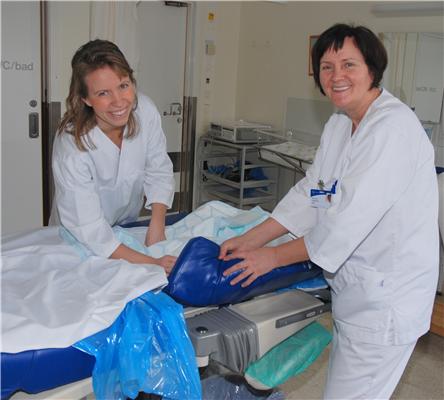
Astrid Skreosen worked for many years as an auxiliary nurse in the maternity ward in Skien Hospital and became fed up with the little mats which were supposed to lie under women who were giving birth that were intended to soak up waste products and fluids so she began to look into the possibility of producing a specially modified super-absorbent bed sheet.
After stumbling around in the dark for a while with inventors’ consultants and patent offices, she rang SINTEF (Skandinavias største uavhengige forskningsorganisasjon) Materials and Chemistry and spoke with Per Stenstad.
An international team of researchers say they have discovered a blueprint for a general understanding of the evolution of the "machinery" of our cells providing more evidence, at the molecular level, in support of one of the key tenets of Darwin's Theory of Evolution.
A non-Darwinian explanation, from believers of Intelligent Design, proposed these complex machines to be "irreducibly complex". In other words they are so neatly complex and complete that they couldn't have evolved but rather must have been designed by an intelligent entity.
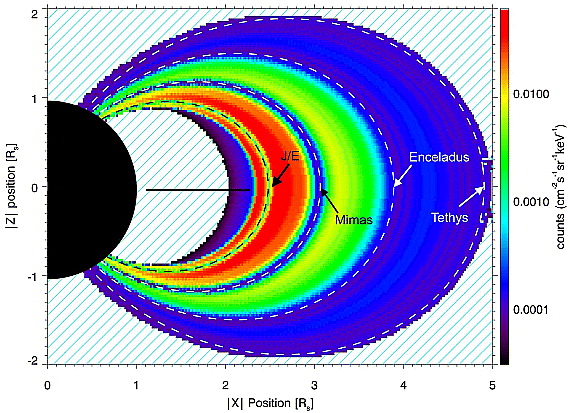
The Cassini spacecraft's Magnetospheric Imaging instrument (MIMI) has detected a temporary radiation belt around Dione, one of the moons of Saturn. The discovery will be presented at the European Planetary Science Congress in Potsdam by Dr Elias Roussos on Monday, September 14th.
Radiation belts, like Earth’s Van Allen belts, have been discovered at Jupiter, Saturn, Uranus and Neptune but it has only been possible to observe the variability of their intensity at Earth and Jupiter. Cassini has been orbiting Saturn for more than five years so it has been possible to assess changes in Saturn’s radiation belts.
The monthly book club here at Adaptive Complexity has been on hiatus for the summer, and its revival is long overdue. Join me here on the second Sunday of each month to discuss a great (hopefully) science read. I don't limit my book reviews to Sundays or once per month, but the Sunday Science Book Club is set up so that you can read along and put in your thoughts, in the comments or on your own blog.
So here is the schedule through December:
October 11 - The Strangest Man, a new biography of physics giant Paul Dirac
Polymer solar cells don't have the high efficiencies of the silicon kind yet, which isn't saying much, but they can be printed in roll-to-roll processes and at very high speeds so in time the technology could be very cost-effective. Polymer solar cells are also flexible and lightweight so they could be used on vehicles or clothing or to be incorporated in the design of objects.
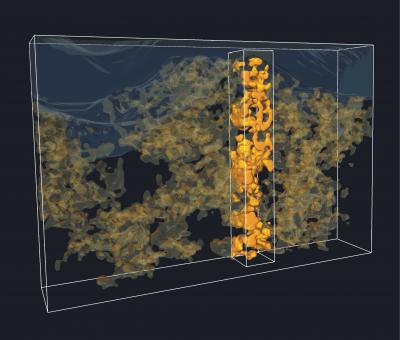
Researchers from the Eindhoven University of Technology and the University of Ulm have made the first high-resolution 3D images of the inside of a polymer solar cell, giving them new insights in the nanoscale structure of polymer solar cells and its effect on the performance.
Mother Teresa said, “Suffering is a gift of God.” Well, it may be true that suffering tends to build character, but it also sometimes builds bitterness and criminals. In any case, we would naturally prefer to do without it, especially the extreme forms of it.
We can derive much toward answering the question from a basic knowledge of the evolution of life. Ernst Mayr succinctly summed up the process of natural selection: “Natural selection is a two-step process: (1) variations produced, and (2) variations sorted, with the elimination of the less fit so that you end up with a ‘selection’ of the best." Fitness may involve cooperative abilities as well as competitive, and the ability to adjust to varying environmental conditions.
One of Doug Futuyma's great quotes is this one:
"...no biologist today would think of publishing a paper on ‘new evidence for evolution’... it simply hasn’t been an issue in scientific circles for more than a century."
- Futuyma, 1998 Evolution Biology, 3rd edition
Press officers are a different story.
Here's one from the University of California, Riverside:
Molecular decay of enamel-specific gene in toothless mammals supports theory of evolution
New beautiful images from the Hubble Space Telescope (HST) have been released recently, and they are, as always, a pleasure to behold. The HST was serviced in a mission by the Space Shuttle Atlantis crew last May, to replace some broken gyroscopes and drained batteries, and perform a number of additional important tasks that will allow operation to continue for many years to come.
Among the new installed instruments the new HST sports an improved wide field camera, WFC3, which promises a significant improvement of the quality of telescope's imaging capabilities.