Our life on earth began in water but how did it 'evolve'?
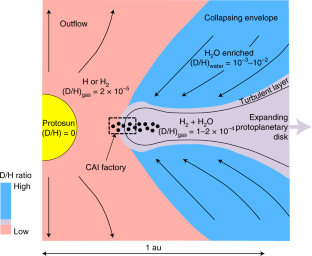
To get an understanding of the link between the chemistry of carbon and water, scientists can track the various forms, or isotopes, of its constituent hydrogen and oxygen atoms over the history of the universe, like a giant treasure hunt.
Recently, researchers from the CNRS, Paris-Saclay University, the French Alternative Energies and Atomic Energy Commission (CEA), and the University of Pau and the Pays de l’Adour (UPPA), with support from the Muséum National d’Histoire Naturelle (MNHN), have followed the trail of the isotopic composition of water back to the start of the solar system, in the inner regions where Earth and the other terrestrial planets were formed.
Implicit Racism tests say you are a bigot, it is only a question of how much. Social justice warriors and others in the humanities insist that even a field like astronomy is inevitably a reflex of the power of the socially privileged.
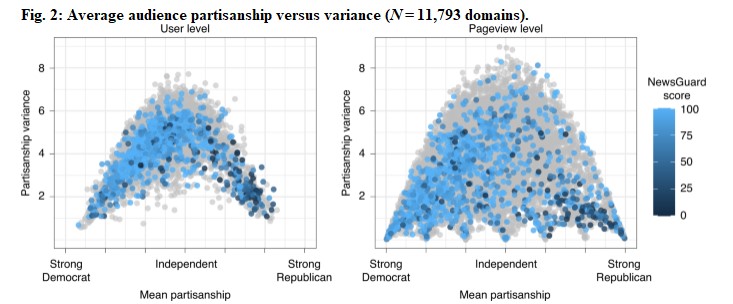
Given that science is always under fire from all sides, is there a way for science to guide technology on ways to help the public find trustworthy sources without 'Who Watches The Watchmen' and 'Follow The Money' claims polluting the discourse?
Brad Pitt’s Make It Right Foundation built 109 eye-catching and affordable homes in New Orleans for a community where many people were displaced by damage wrought by Hurricane Katrina in 2005. Now this housing development is in disarray.
A group of vegetarian activists argue that the COVID-19 Omicron variant is good reason for people to adopt a plant-based diet.
Women in sexual relationships with men whom they perceive as having more fragile masculine ideas change their own behavior to protect the feelings of the men.
They reported more faked orgasms and lower sexual satisfaction the more they reported their partner’s sense of masculinity as fragile.
Unlike more surveys, these new studies examine the subject from the perspective of women who seek to protect their partners’ sense of masculinity, perhaps at their own expense.
Last year, when CNN journalist Chris Cuomo was recovering from COVID-19,
he endorsed all sorts of homeopathy and alternatives to medicine. It's no surprise, he is married to an influencer who just happens to sell those placebos to other wealthy, white elites. He's not alone. A surprising number of celebrities have spouses that promote nonsense.(1)
If you are a follower of Science20, you probably know that I have always been very liberal in this column about what deserves to be mentioned as a possible new idea in Physics. I even invited some "non-conventional", independent scientists to write about their own ideas and pet theories here, in many occasions. I do not think this collides with the main purpose of this blog, which is to discuss real science and do some proper outreach and dissemination. In fact, I find it instructive and enlightening on what really Science is.
A new analysis of data shows the medical community may need to rethink the optimal strategy for treating blood clots and bleeding in hospitalized COVID-19 patients. Patients with COVID-19 in the intensive care unit (ICU) prescribed full-dose blood thinners were significantly more likely to experience heavy bleeding than patients prescribed a smaller yet equally effective dose - nearly 1 in 7 COVID-19 patients in the ICU experienced severe bleeding when given full-dose blood thinners. Almost all patients who experienced significant bleeding were mechanically ventilated and receiving full-dose anticoagulants (blood thinners).
The Centers for Disease Control and Prevention has changed its guidelines about masks and respirators a number of times over the past two years and gave its most recent update on Jan. 14, 2022. The update states that cloth face coverings offer the least protection from the coronavirus compared with surgical masks or N95-style masks. Christian L'Orange is a mechanical engineer who has been testing the performance of masks for the state of Colorado since the beginning of the pandemic. He explains the new CDC guidelines and the science of what makes for a good mask.
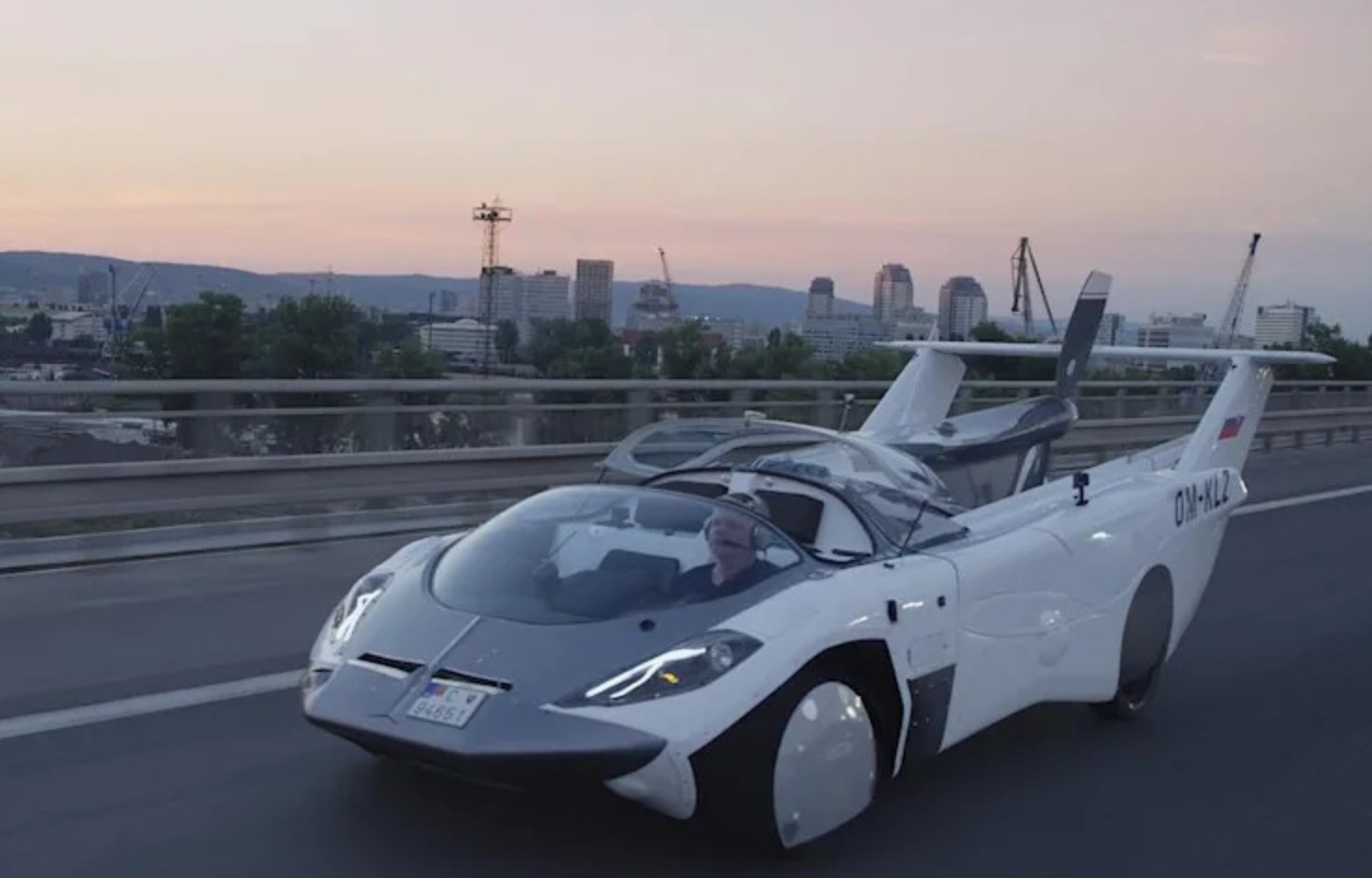
In the United States, flying cars have been almost here since the 1980s but, like Tubesat for personal satellites, it's basically involved a lot of money raised and no actual delivery.
In Slovakia, a 1.6L BMW engine in a two-seat prototype has changed all that. After a successful demonstration last year, AirCar has performed 70 hours of flight testing compatible with European Aviation Safety Agency (EASA) standards, including over 200 takeoffs and landings. They even did it on autopilot. It can go from ground driving to air travel in under 3 minutes.