

In my previous post, I defended a 'post-modern' stance in science, as I consider quest for singular concepts to explain all kinds of things to be somewhat outdated. Or, to be more precise, it is rather stupid to consider oneself a 'complexity thinker' and then believe that singular concepts can explain everything. This tie between post-modernism and complexity has been elucidated in a much better way than I can, by philosopher of complexity Paul Cilliers in his ground-breaking book, so I will not delve into this issue further.

Methodological Stuff:

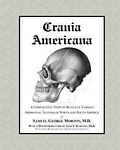
Samuel George Morton (1799 – 1851) was an American physician and scientist, perhaps best known for his Crania Americana, in which he described the results of the measurements, with a focus on cranial capacity, he performed on his ‘American Golgotha’, a collection of almost one thousand human skulls.

People still believe in secret societies because there are secret societies - some groups just don't want attention, even if they do anonymous charity work - but secret cabals that control a nation or the world are irrational, yet belief in them persists.

Go ahead, ask some left wing kook about George Bush and they will trail off into gibberish about the Skull&Crossbones and list all all these other people that were in it, as if being in a dinner group made them successful as opposed to being smart enough to get into an Ivy League school.   Really, if I am believing some secret Yale cabal is controlling America, I am going with The Whiffenpoofs.   Nothing else explains the popularity of "Glee".
Ettore Majorana was maybe the most brilliant student of Enrico Fermi, and an outstanding physicist. He disappeared on March 25th 1938 at the age of 32 years, under mysterious circumstances and leaving no trace behind. The hypothesis that he committed suicide appears weak in the face of his withdrawing a conspicuous amount of money from his bank on the eve of his disappearance -he had a rational mind and such an action would have made little sense. Other hypotheses include an escape to Argentina, and even a collaboration with the third reich in Germany, where he had previously worked -Majorana had expressed anti-jew ideas in the past.
"Physicists seek simplicity in universal laws. Ecologists revel in complex interdependencies. Together, these two approaches may help solve the problems of global warming," wrote John Harte, professor at Berkeley, in Physics Today.

Republicans are more skeptical of global warming than Democrats yet about the same when it comes to acknowledging climate change.   And global warming skeptics conserve energy just as much as believers.
We've all seen Jurassic Park. An ancient petrified piece of tree sap (or amber) is found, containing a mosquito that has been sucking dinosaur blood before its demise. A little bit of this blood is gathered, and from it (Hocus Pocus) real dinosaur DNA is extracted. Not too much later, baby dinosaurs are being born, growing up to become man-eaters.

Science fiction, of course. Or not? 
E. Coli - Tracing The Source

In a few words, most reports are false, and the timidity of men acts as a multiplier of lies and untruths.
Clausewitz

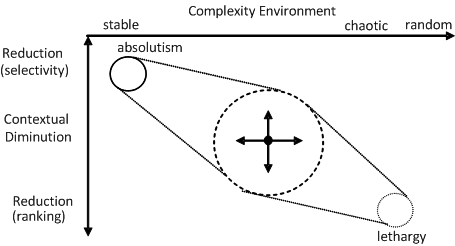
The Pattern of Contextual Diminution

This pattern is a bit more involved,as it combines a number of other patterns. It also adds to theself-referential nature of PAC, as it describes the dynamics of anepistemological system, such as PAC.

MethodologicalStuff:

  1. Introduction

  2. Patterns

  3. Patterns, Objectivity and Truth

There are often heated discussions about the Big Bang.  The Big Bang is well defined as the high density state that you get if you extrapolate the today observable cosmic Hubble expansion backward into the past.  This definition has been the same one all along; it did not change; it is still valid today.


What does this entail?


1) The Big Bang tells you nothing about the absolute size of the universe at any time! As far as the definition is concerned, it may have been infinite all along. The Big Bang is not where the universe has zero size.

