






A launch window – the period during which a rocket must be launched to reach its destination – opens on August 29 for the first flight to the Moon since 1972 by a spacecraft designed to carry humans there. If all goes well, the Artemis project will be on track to meet its goal of putting humans back on the Moon in 2025.

The standing desk fad, and disastrous future outcomes for those who followed it, happened because epidemiologists correlated sitting and 'higher risk' of death. Obviously there is a 100 percent chance of dying but correlation looks for rows of behaviors, like eating cilantro or skydiving, and disease outcomes. Find enough correlation and you can declare statistical significance. Unfortunately, you can even do that with coin flips to show coins are prejudiced against landing on heads. Or tails.
In over 15 years of blogging, in this and previous sites, I have mostly stayed away from the topic of climate change, the environmental catastrophe we are creating with our "perennial growth" myths and our disdain of our planet and the other species that inhabit it, and the continuous slaughter of over a billion animals every year for our unnecessarily opulent lunch tables. 
Whole Foods and other high-priced alternatives like Farmer's Markets sell imagery of pretty, thin people carrying bountiful produce, but the icky reality is that, unless it is canned or frozen, most food purchased rots quickly.

It is nature at work. Rot caused by microorganisms spoils half of all food harvested. The strange good news is that because plants also volatile organic compounds into the environment, science can detect those and tackle plant disease faster, which will prevent food loss. 
Once upon a time, terms like 'primate' and 'Neanderthal' were used as joke insults, but they are both entirely true, and the latter even more so now.

Unlike databases of where people live such as companies like Ancestry uses to claim 'you are 12 percent Irish', biology is not a marketing gimmick. Once the science is settled, social fields like anthropology and other exploratory studies can fill in some gaps.

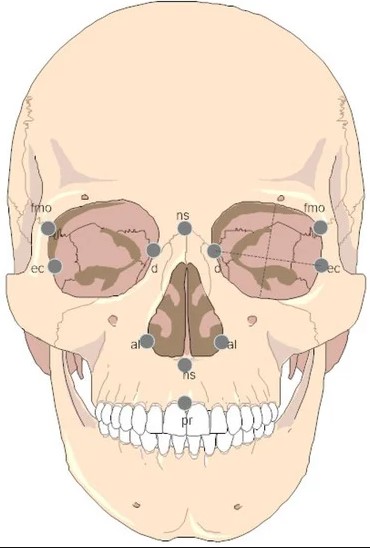
A new exploratory paper assessed the facial structure of prehistoric skulls, hoping to support the hypothesis that a lot of Neanderthal-Modern interbreeding took place in the Near East – the region ranging from North Africa to Iraq.
It's no secret that a lot of people eat when they are depressed, and that social distancing, fear, and isolation during COVID-19 lockdowns and other government restrictions caused some depression to be worse.

Being young is always a time of struggle and the pandemic saw a resulting surge in obesity, which has meant a surge in type 2 diabetes.
People who buy electric cars don't understand a lot about energy generation. They may believe that solar panels and wind are providing the energy, but even after $3 trillion in subsidies, those have not changed the percentage of energy generated by mainstream sources, like natural gas.

Their second introduction to reality is charging. If you are sleeping, and can sleep well knowing your electric car charging is equivalent load to an entire extra house on the grid, long charging times are fine, but it makes long trips a source of anxiety for most.
Mitochondria provide the lion’s share of energy that cells need to function normally, so genetic defects in mitochondria can cause severe diseases that can be devastating if not caught and treated early.

Mitochondria remain important throughout our lives. People with higher mitochondria function age 'better.' 

Yet how mitochondrial defects lead to disease and aging has not been well understood. A paper published today in Aging Cell links mitochondrial dysfunction to the shortening of telomeres,  specialized DNA sequences that act as caps that stabilize the ends of chromosomes, and premature aging. 
The good news for public health is that there have been significant decreases in past-month cigarette smoking by young adults and recreational use of opioid medications in the past year compared to 10 years ago. The same goes with alcohol, which is still the most used substance but has seen declines in past-year, past-month, and daily drinking.
A common first step in embryonic development is that an egg meets a sperm but in a Weizmann Institute of Science study published today in Cell, researchers have grown synthetic embryo models of mice outside the womb by starting solely with stem cells cultured in a petri dish.

Without the use of fertilized eggs.

