




Have you ever used a public charging station to charge your mobile phone when it runs out of battery? If so, watch out for “juice jacking”.

Cybercriminals are on the prowl to infect your mobile devices such as smartphones and tablet computers and access your personal data, or install malware while you charge them.

Specifically, juice jacking is a cyber attack in which criminals use publicly accessible USB charging ports or cables to install malicious software on your mobile device and/or steal personal data from it.

NGC 4490, nicknamed the "Cocoon Galaxy" because of its shape, has "a clear double nucleus structure," according to a new paper.

It's only realized now because while one nucleus can be seen in optical wavelengths, the other is hidden in dust and can only be seen in infrared and radio wavelengths.

The work started when first author Allen Lawrence was taking undergraduate astronomy classes at the University of Wisconsin-Madison. He had the chance to study one of two galaxy systems and picked NGC 4490, which is interacting with a smaller galaxy, NGC 4485. The system is about 20 percent of the size of the Milky Way, located in the Northern Hemisphere and about 30 million light years from Earth.
Intelligence Squared recently had a debate on nuclear energy kicked off by Bill Nye, the famous Science Guy, and moderated by John Donvan.

On the pro-nuclear side were Daniel Poneman, Deputy Secretary of Energy under President Obama, and Kirsty Gogan, co-founder of Energy for Humanity, while on the anti-science side was Gregory Jaczko, Obama's chairman of the US Nuclear Regulatory Commission(NRC), and Arjun Makhijani, President of the Institute for Energy and Environmental Research.(1)

What was missing? An actual nuclear physicist.

Would you have a debate on vaccine safety without a doctor? A debate on climate change without a climate scientist? When it comes to nuclear energy, everyone is such an expert actual expertise seems to be irrelevant. 
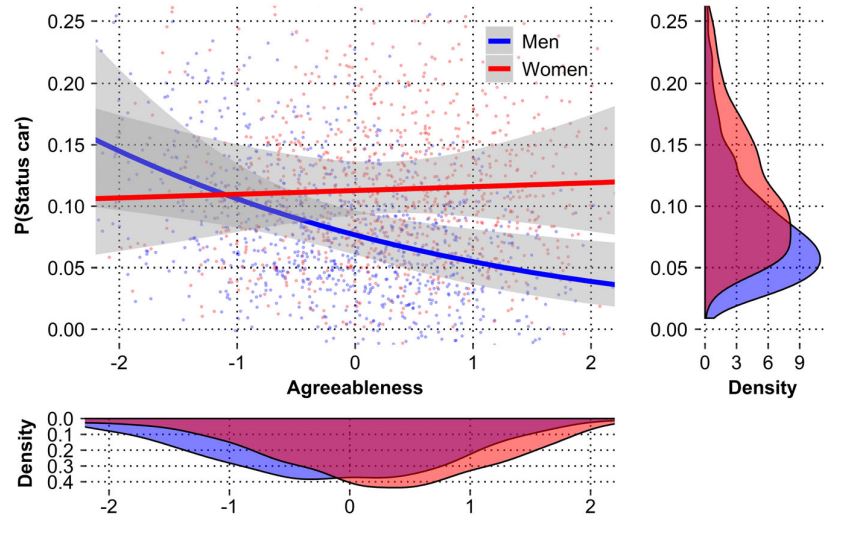
It doesn't seem like it if you watch political news but humans are unusually cooperative. We are unique in that we often cooperate with genetically unrelated strangers.

Nurses, firefighters, helping someone who dropped a package, standing in line, there is no natural selection benefit to that. In a natural selection-dominated world, the cheats, nepotists, and cronies would always win but unlike most of the animal kingdom, those behaviors are considered deviant.

Why do we cooperate? Language, intelligence, religion, the desire to hunt large game, there is no shortage of speculation about why we became Apex Cooperators. 

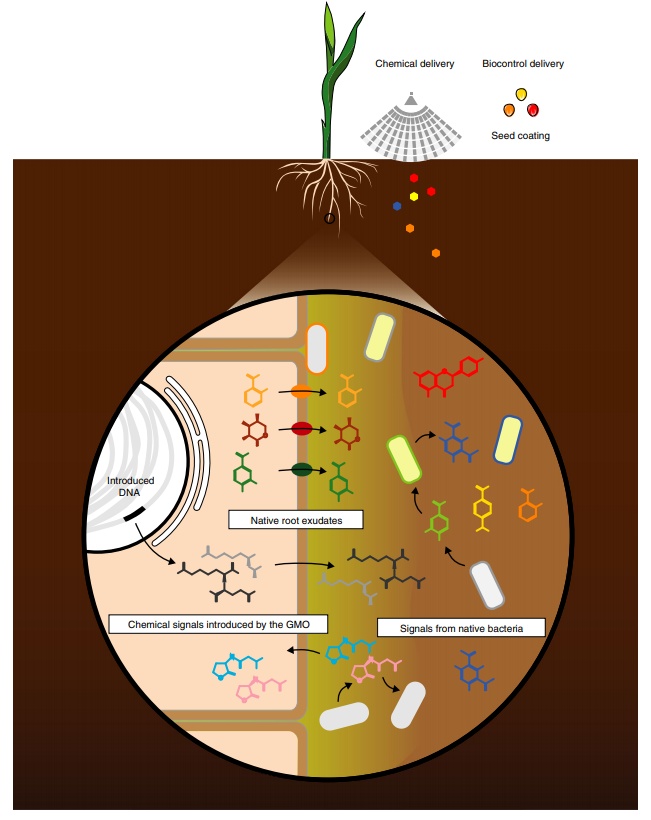
Everyone has heard of the nutrient, nitrogen, but why is it important to plants?

Despite flying being the single fastest way to grow our individual carbon footprint, people still want to fly. Passenger numbers even grew by 3.3% globally last year alone. The hype around “Flygskam” – a global movement championed by climate activist Greta Thunberg that encourages people to stop traveling by plane – seems to have attracted more media attention than actual followers.

If you have never heard of the Journal of International Psychology, you are not alone.

As desert locusts ravage African crops, EU-funded NGOs maneuver in the Kenyan parliament to leave farmers defenseless. Caught flat-footed by the emergency, the FAO struggles to purchase enough pesticides to avert catastrophe.

Experts fear it may be too late to avert famine.

Neanderthal DNA sequences are more common in modern Africans than previously known, and different non-African populations have levels of Neanderthal ancestry surprisingly similar to each other, according to a new study in Cell.

Researchers arrived at these findings by developing a new statistical method, called IBDmix, to identify Neanderthal sequences in the genomes of modern humans. The results also suggest that African genomes contain Neanderthal sequences in part due to back-migration of ancestors of present-day Europeans. 
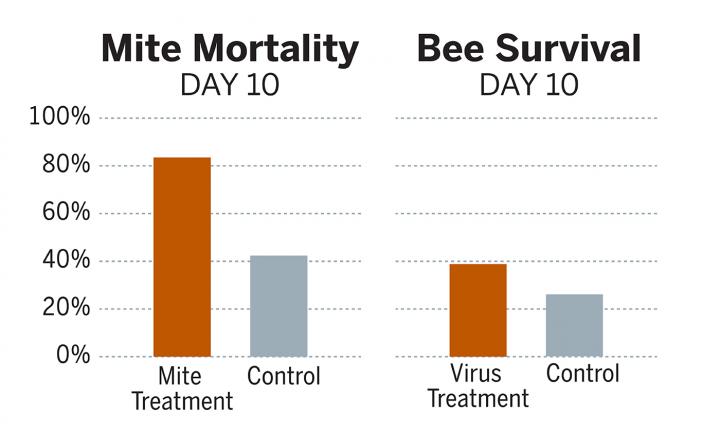
Sometimes bees die off in large groups. Since the first beekeeping recorded in history, in the 10th century, there have been documented cases where entire hives perished. Some blamed bad bee husbandry, some blamed weather, and then in recent cases some tried to blame pesticides.

