Neurons within the brain's neocortex behave much like people in social networks, with a small population of highly active members who give and receive more information than the majority of other members, says Alison Barth, associate professor of biological sciences at Carnegie Mellon in new research. By identifying these neurons, scientists could increase understanding of the neocortex, thought to be the brain's center of higher learning.
The following is a neat little experiment, the result of which may be counter-intuitive to some of those who embrace the “all bodies fall the same way inside earth’s gravity” doctrine.
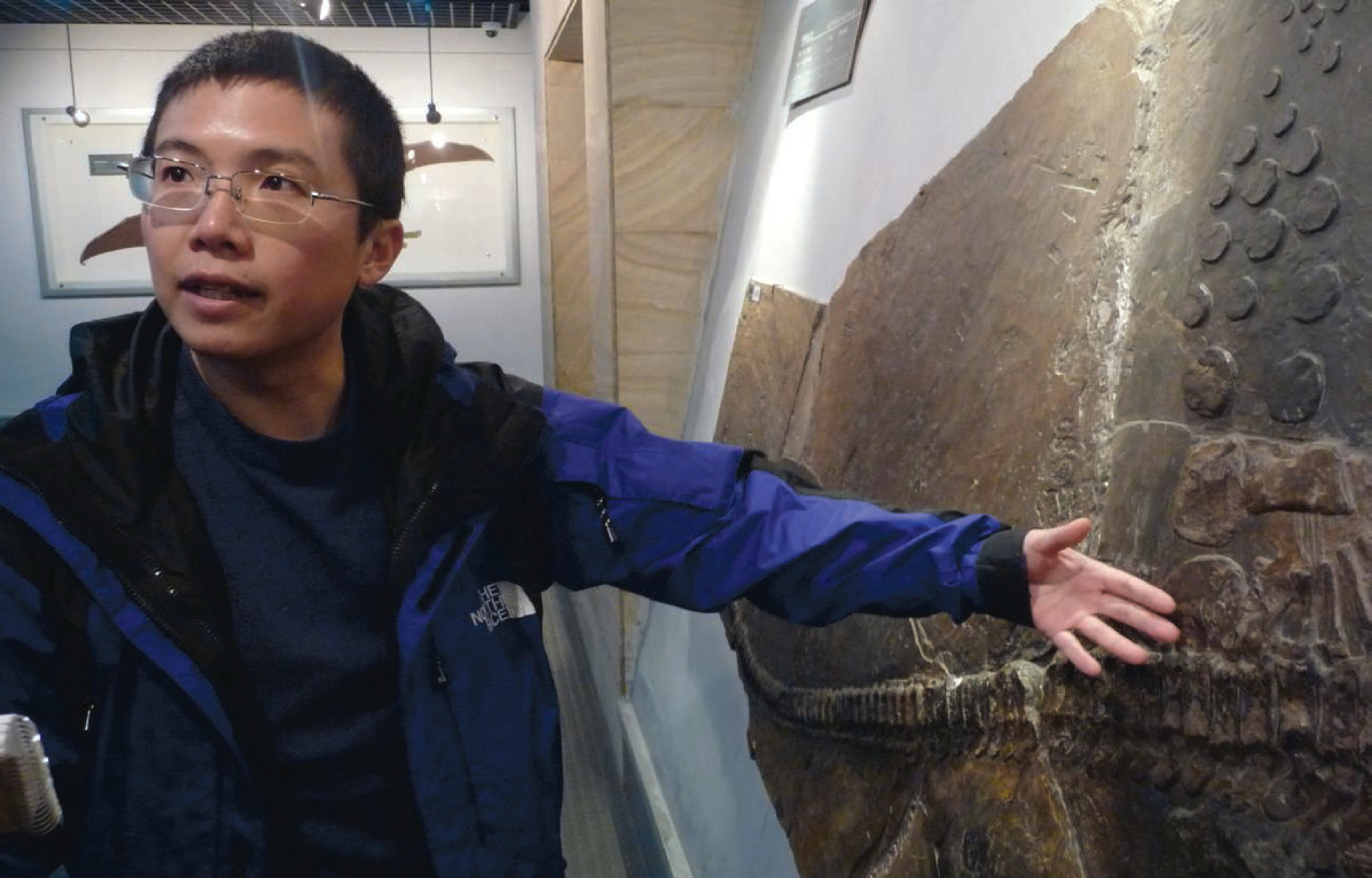
In a piece by Richard Stone in this week’s Science, it was pointed out that in Chinese Museums, it is likely that up to 80% of the marine reptiles on display have been altered or artificially combined to some degree. This seems like a shocking figure, but it is more understandable when it is considered that few of these museums have palaeontologists as staff, and that many of these fossils are unearthed by Chinese farmers that dress their finds up so that a museum is more likely to buy them. Of late there has been a boom, both in the numbers of museums, but also in the acquisition funds set aside for accessioning fossils; this, coupled with prizes for the best specimens, means that finding (or fabricating) a complete fossil can prove to be quite lucrative.
The compound resveratrol found in grapes displays not only antioxidant but other positive properties, according to a study published this week in the Journal of Biological Chemistry.
Resveratrol stimulates the expression of adiponectin, a hormone derived from cells that manufacture and store fat, the research team found. Adiponectin has a wide range of beneficial effects on obesity-related medical complications, said senior author Feng Liu, Ph.D., professor of pharmacology at the University of Texas Health Science Center at San Antonio and member of the Barshop Institute of Longevity and Aging Studies at the Health Science Center.
I
said there were two things keeping me busy and away from Science 2.0 for the last couple of months. The second thing was my transition to Editor-in-Chief of
Technological Forecasting&Social Change, as of January 1.
TFSC is the world’s premier scholarly journal on technology assessment and futures. With its long history and a current download rate of 275,000 articles per year, TFSC also is one of Elsevier’s most widely read international journals.
Very cool new research on feeding in ancient ammonites! (Thanks to
R. Olley for the link.)
Ammonites, though not the direct ancestors of modern-day cephalopods, are their ancient cousins--and they were the most successful cephalopods of all time, in terms of diversity and sheer abundance.
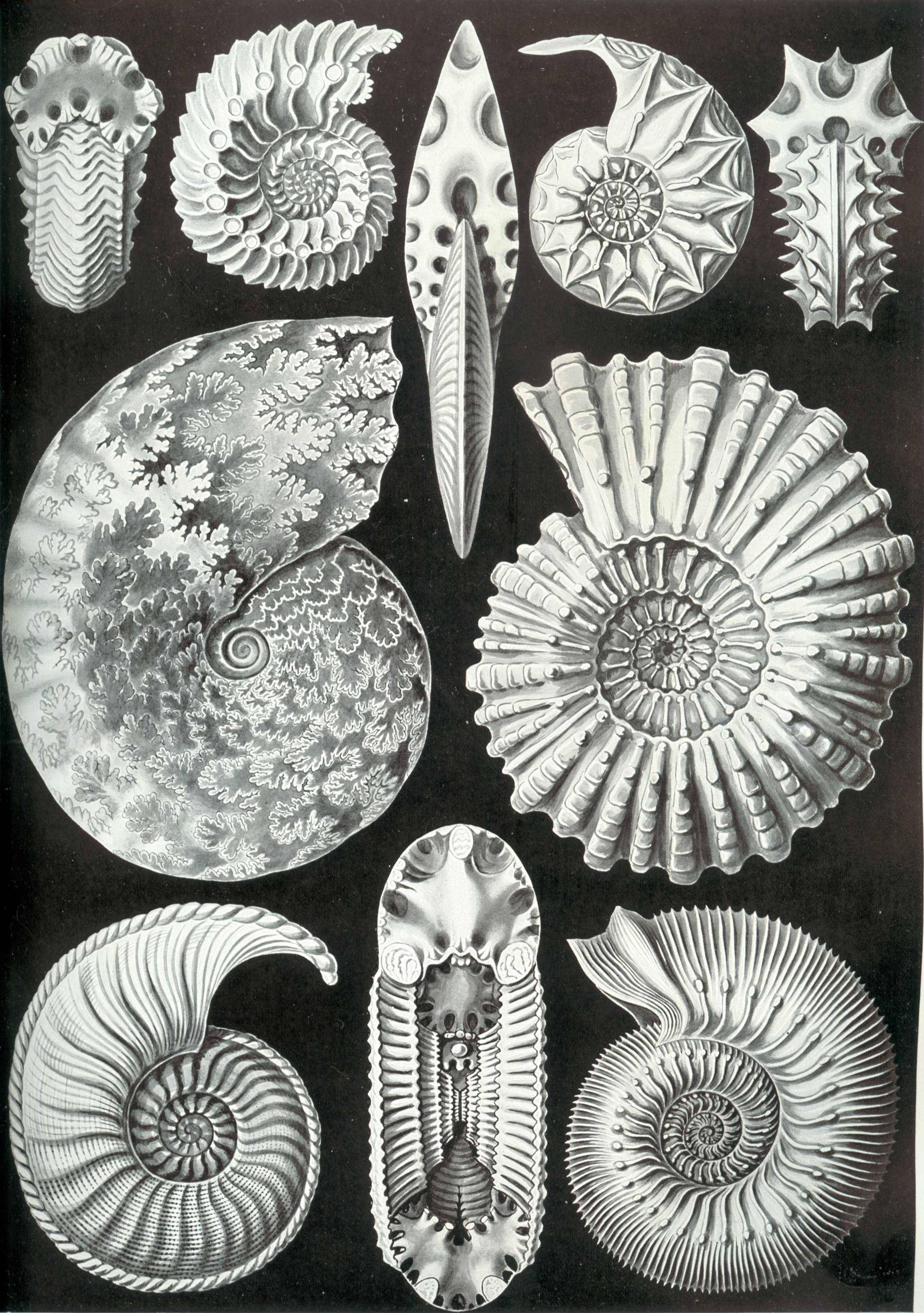 Ammonites from Ernst Haeckel's 1904 Kunstformen der Natur (Artforms of Nature).
There is a theory in economics known as the median voter theorem, attributed to Duncan Black in 1948. The theory has been used to justify the two party, winner take all system, mathematically by political economists, as the best possible system.
Its conclusions are that given his assumptions, a two politician model maximizes the likelihood of a policy outcome to be closest to the policy preference of the citizens, because a politician maximize his chances of winning by choosing the mean voters policy preference.
New important information on high-energy particle physics has recently been released by the CDF experiment, one of the two detectors scrutinizing the 2-TeV proton-antiproton collisions copiously produced by the Fermilab Tevatron collider located near Batavia, Illinois (see aerial view of the site below). The CDF experiment has ruled out the existence of so-called "Z' bosons" (particles extraneous to the Standard Model which are predicted by a number of new physics models) for Z' masses below one Tera-electronvolt.
Are you thinking about majoring in science or engineering? Want to get into a good college and leap out into a job? Here's some advice for science-curious students in high school.
As a HS junior, take HS Physics, Biology, or Chemistry-- whichever matches your major. For engineering or physics or astronomy, HS Physics. For biology, HS Biology and Chemistry. For chemistry, HS Chemistry. For pre-med, heck, take them all.
You should also take any and all Advanced Placements (all topics-- Sci, Math, English). AP gives you free credits, so you can go right into stuff you want and sprinkle your electives more freely during your four years-- or even graduate in 3.5 years.